
Silencing the Chaos: How AI is Rewiring the Airport Lounge Experience in 2026
From neutralizing the Lombard Effect to deploying the 72BPM Neuro-Hack, discover how Agentic AI transforms stressful transit hubs into ultimate luxury sanctuaries.
By
Ananya Iyer
Published
Jun 18, 2026

Air travel is inherently stressful. By the time a global traveler clears check-in, navigates the sprawling security lines, and finally locates their departure gate, their cortisol levels have spiked significantly. The airport lounge exists to serve as the ultimate antidote to this transit exhaustion—a premium, hushed sanctuary promising exclusivity, comfort, and decompression. But what happens when that sanctuary sounds just as chaotic as the main terminal? In 2026, relying on standard corporate Muzak, repetitive smooth jazz loops, or manually managed playlists completely fails the modern luxury traveler. If the acoustic environment of a first-class lounge is neglected, the space quickly devolves into a stressful cacophony of clinking glasses, rolling luggage, and overlapping business calls. To combat this acoustic degradation, elite hospitality operators are deploying intelligent spatial software. By integrating Tringbox's Airport Lounge Music, facilities are utilizing Agentic AI to actively regulate the emotional state of their guests. Here is a deep dive into the psychoacoustics of decompression, the technical reality of the Lombard Effect, and how intelligent sound design is redefining airport luxury.
1. Combating the Lombard Effect in High-Stress Hubs
2. The 72BPM Neuro-Hack: Engineering Decompression
3. Cross-Modal Sensory Alignment
4. Enterprise Architecture: The Multi-Zone Compliance Shield
5. Frequently Asked Questions (Q&A)
A: No. Tringbox is a 100% cloud-native, hardware-agnostic platform. It is designed to plug directly into your existing commercial amplifiers and ceiling speaker arrays. You simply deploy the lightweight edge-software, eliminating the need for expensive, proprietary satellite receivers.
A: Not at all. The Tringbox system is designed for seamless enterprise integration. It easily connects with standard PA override systems, automatically ducking or muting the background soundscape the exact moment a public address microphone is activated, ensuring critical transit information is always heard perfectly.
A: Yes, global scalability is the core of the platform. Using the centralized enterprise dashboard, corporate brand managers can lock in the exact sonic architecture for lounges in London, Dubai, and Mumbai simultaneously, guaranteeing absolute, unwavering brand consistency worldwide.
A: Tringbox utilizes advanced edge-caching resiliency. The system securely encrypts and downloads hours of upcoming audio directly to the local device's memory. Even if the terminal experiences a massive network outage, your premium lounge will never suffer from buffering or dead silence.
Conclusion
The modern luxury traveler demands far more than just comfortable seating and a premium buffet. They require a holistic, sensory-optimized environment that actively counteracts the exhaustion of global transit. Treating your lounge's acoustic architecture as an afterthought—or relying on legally risky, manual playlists—actively degrades the perceived value of your space and subjects your guests to the stressful chaos of the Lombard Effect. By integrating Tringbox's Agentic AI, you transform your venue from a simple waiting room into a dynamic, responsive emotional sanctuary. Deploy the ultimate sensory luxury and legally protect your enterprise with Tringbox today.
Never miss music licensing & industry updates
Add Tringbox as a preferred source to see our breakthrough guides, PPL/IPRS compliance updates, and acoustic trends first on Google Search & Discover.
Recommended for you
Brand-Safe Music Rules: How to Prevent Explicit, Inappropriate or Off-Brand Tracks
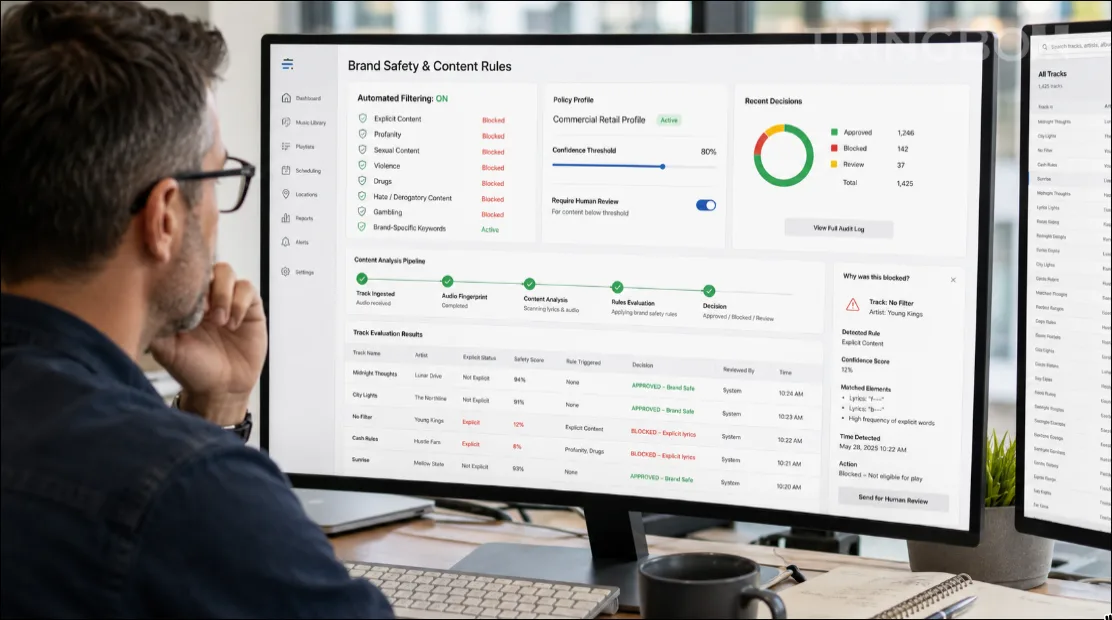
In commercial audio programming, an incredibly common and dangerous misconception is that “clean lyrics” automatically equate to “brand-safe music.” This is fundamentally false. A track can contain absolutely zero traditional profanity and still be wildly inappropriate for a family restaurant, a healthcare environment, a luxury retail store, or a corporate workplace.
A song about deep grief, graphic violence, political rebellion, or excessive drug use might pass a basic profanity filter while completely destroying the psychological comfort of your customers. For multi-location enterprises, brand safety cannot rely on a simple "Explicit/Clean" toggle on a consumer app. It requires a sophisticated, layered content policy that evaluates audio through a rigorous corporate lens.
Protecting your physical spaces requires a governance framework that understands context, nuance, and regional sensitivity. In this comprehensive operational guide, we dissect how to move beyond basic explicit-content filtering, how to govern sensitive themes, and how Tringbox AI ensures that every track played across your network mathematically aligns with your corporate risk tolerance.
Explainable AI for Business Music: Why “The Algorithm Chose It” Is Not Enough
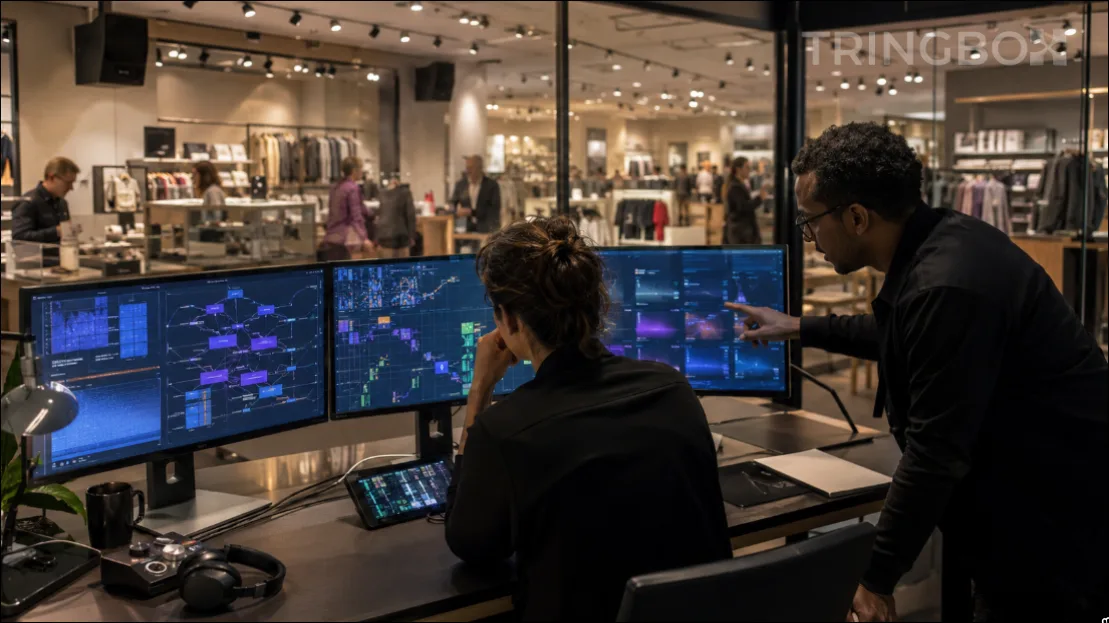
Artificial intelligence can effortlessly make thousands of complex music sequencing decisions across hundreds of store locations without a single moment of human intervention. However, in an enterprise corporate environment, mathematical scale is completely useless if the business cannot trust the boundaries of the system. When a regional operations manager calls headquarters to ask why a highly unusual or off-brand track played during the Friday evening rush, answering with “the algorithm chose it” is a fundamentally unacceptable operational response.
Modern commercial automation requires deep operational explanations. Store managers, brand directors, and legal teams need to understand the precise mechanical logic behind their acoustic environment. The solution to this 'black box' problem is a rapidly growing field of computer science known as Explainable AI (XAI).
In commercial audio, explainability transforms subjective musical curation from a mysterious digital magic trick into a highly auditable, governable business process. In this technical guide, we explore why enterprise brands require explainable AI, how to map algorithmic decisions to concrete business logic, and how Tringbox AI utilizes transparent decision pipelines to guarantee ultimate brand safety.
How to Measure In-Store Music Without Making Fake ROI Claims
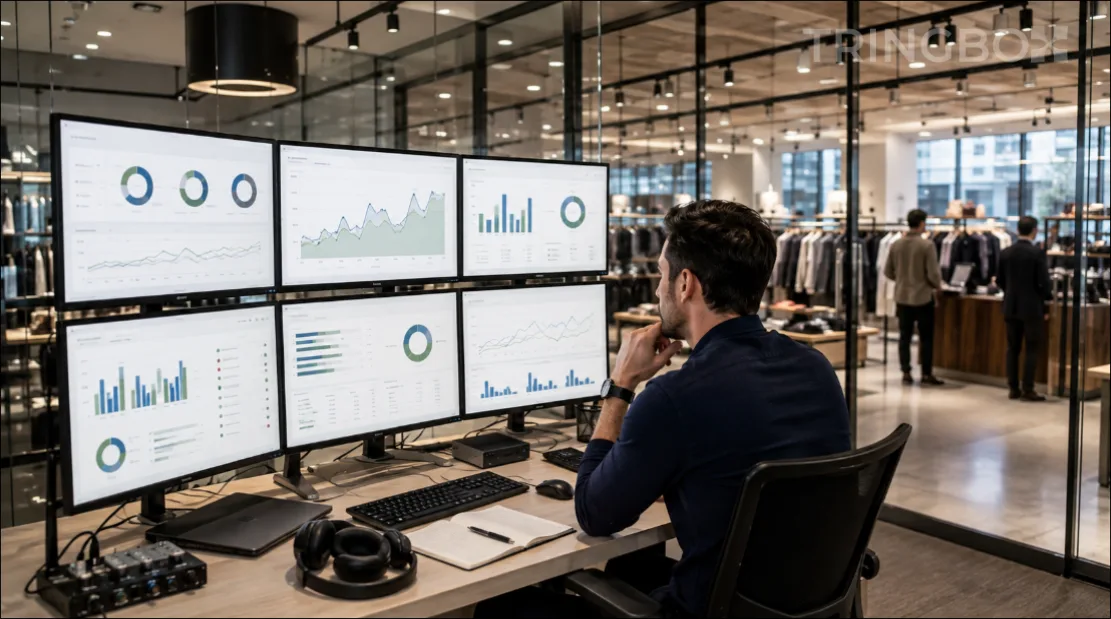
The absolute fastest way to destroy the credibility of a serious in-store music strategy is to march into a Chief Financial Officer's office and promise a precise, guaranteed sales increase without a valid experimental framework. Physical retail and hospitality spaces are incredibly complex, multi-variable ecosystems. Daily revenue is heavily influenced by footfall, flash promotions, staffing levels, visual merchandising, local weather, inventory availability, and broader economic pricing trends.
While background music absolutely contributes to the atmosphere and can shape consumer behavior, isolating its exact financial effect requires rigorous scientific care. When vendors jump straight to claiming that a specific playlist tempo 'releases dopamine and guarantees a 15% revenue bump,' they cross the line from evidence-based marketing into dangerous pseudoscience.
However, responsible measurement is still entirely possible—it simply needs to be structured in intelligent layers. You cannot measure a revenue increase if you cannot first prove the music actually played. In this comprehensive guide, we provide a practical, three-tiered framework to legitimately measure in-store music ROI, conduct valid physical retail experiments, and build a trustworthy executive scorecard using Tringbox AI.
How to Migrate 100 Stores From Manual Playlists to Central Music Management
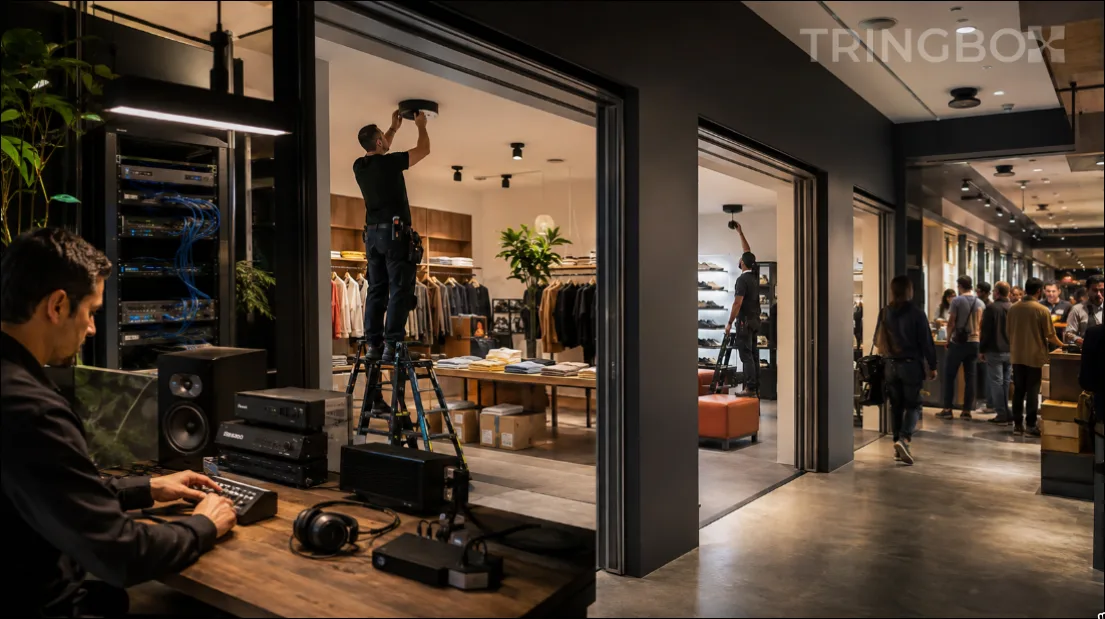
Replacing staff-managed playlists across a large multi-location store network is not primarily a software installation project. It is a massive change-management project involving complex brand rules, commercial licensing rights, hardware devices, local network stability, ingrained staff habits, and corporate IT support.
When enterprise retail and hospitality brands scale, the transition from local auxiliary cables to centralized cloud control becomes inevitable. The absolute safest, most effective migration path is a tightly controlled, phased rollout. In this practical operational guide, we provide a step-by-step roadmap for migrating your first 100 stores from chaotic manual playlists to a fully governed, AI-driven business music operating system.
The Hidden Operating Cost of Employee-Managed Store Playlists
Letting store employees manage music feels incredibly inexpensive because the direct software cost on the monthly P&L is close to zero. The illusion is simple: a store manager plugs in their personal phone, opens a consumer app, and the store has music. However, the real cost of this setup is completely hidden, distributed across dozens of small, daily operational failures: time spent choosing music, inconsistent atmosphere, painfully repeated songs, inappropriate lyrical content, account login problems, severe copyright rights risk, and headquarters having absolutely zero visibility or control.
At one single location, these issues may feel mildly annoying but manageable. Across a scaling national chain of fifty or five hundred stores, they compound into massive operational friction and legal liability. In this analysis, we unpack the invisible labour, brand drift, and copyright risks of employee-managed playlists, and why centralizing music is an urgent operational requirement.
Why Spotify and Apple Music Are Not Business Music Systems
Spotify and Apple Music are undeniably extraordinary consumer products. They feature sleek, world-class user interfaces, host infinite music libraries spanning tens of millions of songs, and can be activated on any smartphone in a matter of seconds. That exact convenience is precisely why retail store clerks, cafe baristas, and restaurant supervisors instinctively plug their personal phones into the store amplifier whenever background music is required.
However, consumer streaming and enterprise business audio are two completely different use cases—both contractually and operationally. Paying for a personal Spotify Premium or Apple Music individual subscription does not give a business the legal or operational right to broadcast that audio across a commercial venue.
When multi-location enterprises rely on consumer apps, they expose their brand to catastrophic statutory copyright fines, destroy store-level governance, and subject their customers to unpredictable, off-brand playlists. In this comprehensive guide, we unpack the explicit legal terms governing consumer streaming in India, examine the operational vulnerabilities of personal apps, and demonstrate why dedicated platforms like Tringbox AI are essential for enterprise brand protection.
Commercial Music Licensing in India in 2026: A Practical Rights Map for Businesses
Commercial music licensing becomes confusing when businesses ask one broad question: “Is this song licensed?” A more useful approach is to ask which right, for which use, in which repertoire, and by whom. In 2026, that distinction is especially important because Phonographic Performance Limited (PPL India) was officially reinstated as a copyright society for sound recordings by the Government of India on 11 June 2026. PPL's current materials describe public-performance licensing for its represented sound-recording repertoire. Concurrently, IPRS publishes licensing information for musical works and accompanying literary works. This article serves as an operational overview for multi-location brands—not formal legal advice.
What Music Science Does Not Prove: A Guide to Avoiding Overclaims in Retail
Music is undeniably and profoundly emotionally powerful, which makes it incredibly easy for marketers to overstate what academic research actually proves. In the retail and hospitality industry, vendor marketing material frequently jumps from a reasonable, peer-reviewed conclusion—like 'music influenced customer behaviour in one controlled study'—to a massive, unscientific leap like 'this specific tempo releases dopamine and guarantees a 20% increase in sales.'
Those are two fundamentally different claims. A trustworthy, enterprise-grade business must intimately understand the difference between observed behavioral correlation and neurochemical causation. Relying on exaggerated 'audio neuroscience' to drive your store operations creates false expectations and flawed strategies.
In this comprehensive review, we deconstruct the most pervasive myths in commercial music psychology, explore the critical importance of null results, and provide a framework for evaluating in-store music science responsibly. By grounding your strategy in reality rather than marketing hyperbole, platforms like Tringbox AI help brands design effective, evidence-aware acoustic environments.
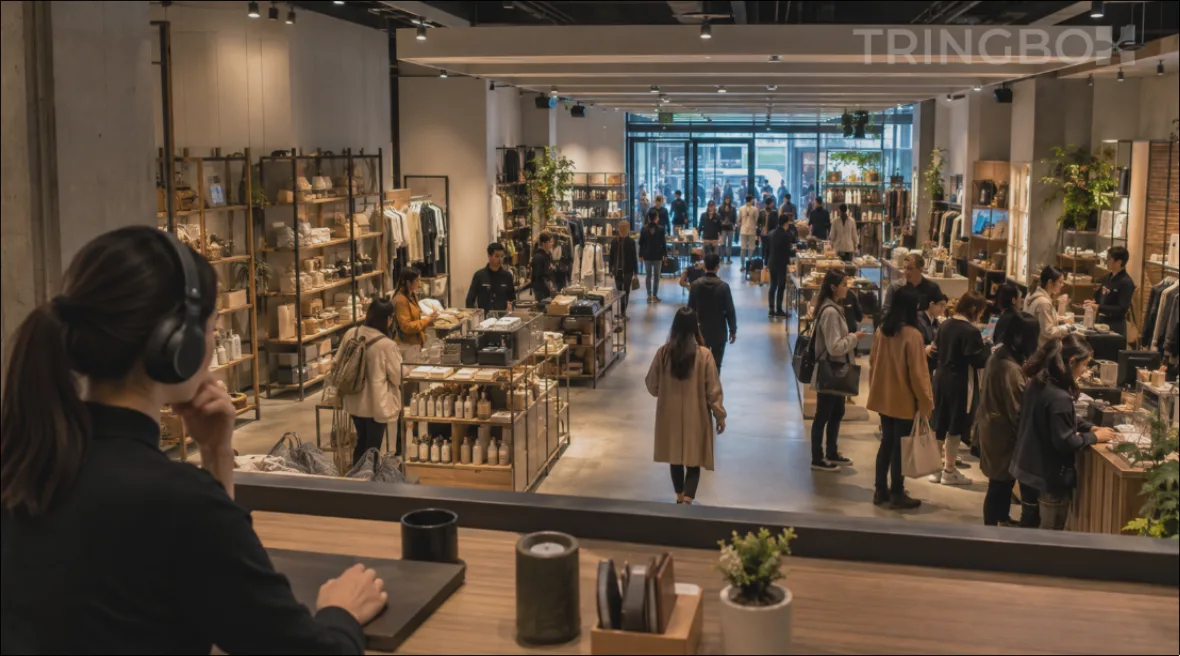
What 30+ Years of Research Actually Says About Music in Retail
Background music has been rigorously studied in commercial environments for over four decades. Yet, a quick search on the internet often reduces this vast, nuanced academic literature to a handful of highly dramatized, clickbait statistics promising instant revenue multipliers. Blogs frequently declare that slow music guarantees higher spending, or that loud music instantly drives fast-food table turnover, presenting these concepts as unbreakable laws of physics.
A closer, more responsible reading of the actual scientific literature reveals something far more useful and complex: music absolutely possesses the power to influence customer responses, but those effects depend heavily on contextual variables, acoustic fit, and the specific operational outcome being measured. There is no magical playlist that guarantees a 15% increase in sales across every vertical.
For enterprise operations and marketing leaders, understanding the real science is critical to designing a robust sonic strategy. In this comprehensive review, we strip away the marketing folklore and examine what over thirty years of peer-reviewed research actually proves about in-store music, how acoustic congruence drives brand equity, and how Tringbox AI operationalizes this data to build evidence-aware commercial environments.
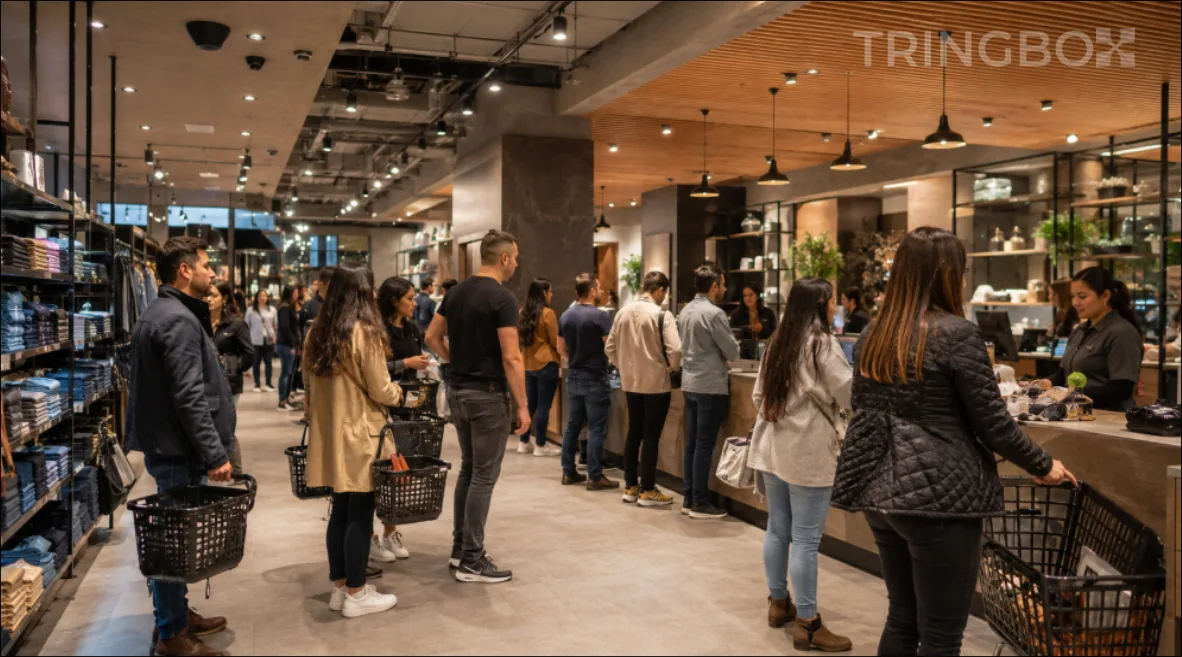
Music and Waiting: Can the Right Sound Make Queues Feel Better?
Waiting is undeniably one of the most emotionally sensitive and volatile moments in any customer journey. A long queue at a retail checkout, a delay at a premium salon reception, an extended wait in a healthcare clinic, or a crowded restaurant host stand can feel agonizingly slow when customers are bored, anxious, or physically uncomfortable. In these high-friction moments, the entire brand experience is placed under a microscope, and customer satisfaction can plummet in a matter of minutes.
For decades, commercial venue operators have instinctively used background music to improve these spaces, operating under the widespread assumption that playing the right songs will magically make the wait feel shorter. However, behavioral science and acoustic research do not support this simplistic claim. The psychological relationship between background music, time perception, and customer emotion is vastly more complex.
Music absolutely possesses the power to rescue a frustrating waiting experience, but it does so by altering the customer's emotional state, not necessarily by manipulating their internal clock. In this operational breakdown, we explore the academic research behind musical tempo and time perception, why generic 'relaxing' music often fails, how to zone your waiting areas effectively, and how Tringbox AI utilizes journey-based programming to soothe customer anxiety precisely when it matters most.