
Humanizing the Machine: How Adaptive Soundscapes Elevate High-Tech AI & Robotics Showrooms
In 2026, humanoid robotics and autonomous tech centers face an unexpected challenge: cold mechanical acoustics. Discover how AI audio bridges the human-robot trust gap.
By
Priya Nair
Published
Jul 22, 2026
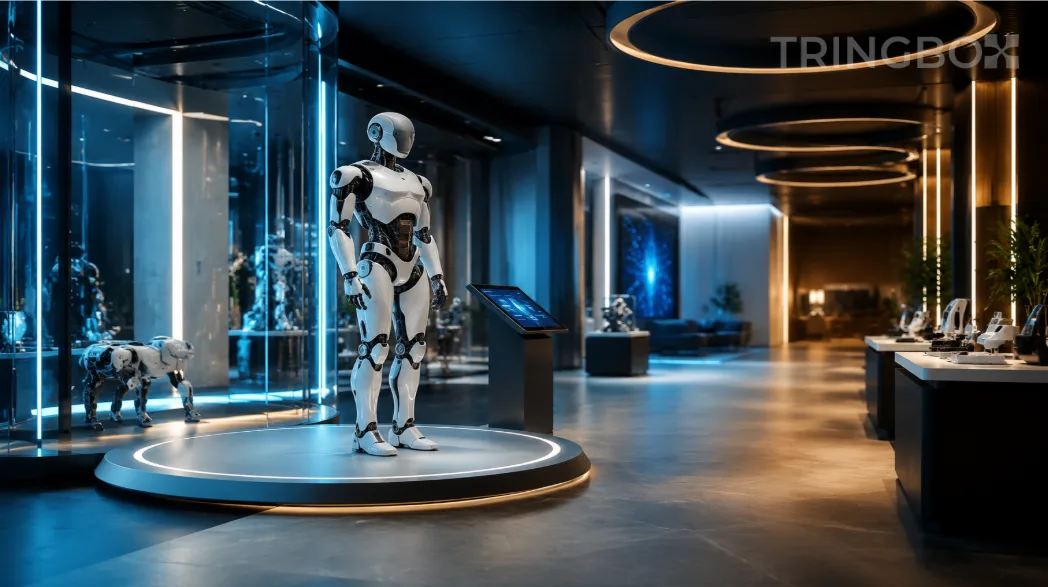
Step into a flagship humanoid robotics showroom or autonomous tech experience center in 2026, and you step directly into the future. From sleek silicon surfaces and glowing diagnostic arrays to live demonstrations of bipedal robots and AI home assistants, every physical asset is engineered to project cutting-edge innovation. However, showroom directors face a subtle psychological obstacle: mechanical alienation. Leaving a high-tech demonstration floor echoing with servo motor whirs, cooling fan hums, and hard metallic floor reverberations creates an eerie, sterile environment that heightens consumer hesitation. To bridge this emotional divide and foster deep buyer trust, forward-thinking robotics firms are radically redesigning their spatial soundscapes. For an in-depth breakdown of human-centric acoustic engineering, the research division at Tringbox recently published a groundbreaking study on how responsive background frequencies lower cognitive friction and build warmth in automated spaces. Syncing your showroom's audio environment with human psychological comfort is the ultimate strategy for high-tech adoption.
The Psychology of the Uncanny Valley in Commercial Acoustics
Autonomous Energy Calibration via Agentic AI
Zero-Hardware Cloud Infrastructure for Next-Gen Tech Flagships
Conclusion
A next-generation robotics showroom shouldn't just showcase advanced engineering—it needs to cultivate an inviting, human-centric sensory sanctuary. By treating your background soundscape as a core infrastructure element in your spatial design, you can build a deeply reassuring environment that inspires trust and turns futuristic concepts into confident investments. Stop letting uncurated, sterile audio undermine your technology narrative. Partner with Tringbox today, activate your 72-hour AI training period, and let our autonomous engine craft the ultimate acoustic backdrop for your innovation space.
Never miss music licensing & industry updates
Add Tringbox as a preferred source to see our breakthrough guides, PPL/IPRS compliance updates, and acoustic trends first on Google Search & Discover.
Recommended for you
Background Music App for Shops, Restaurants and Cafes: What Features Actually Matter?
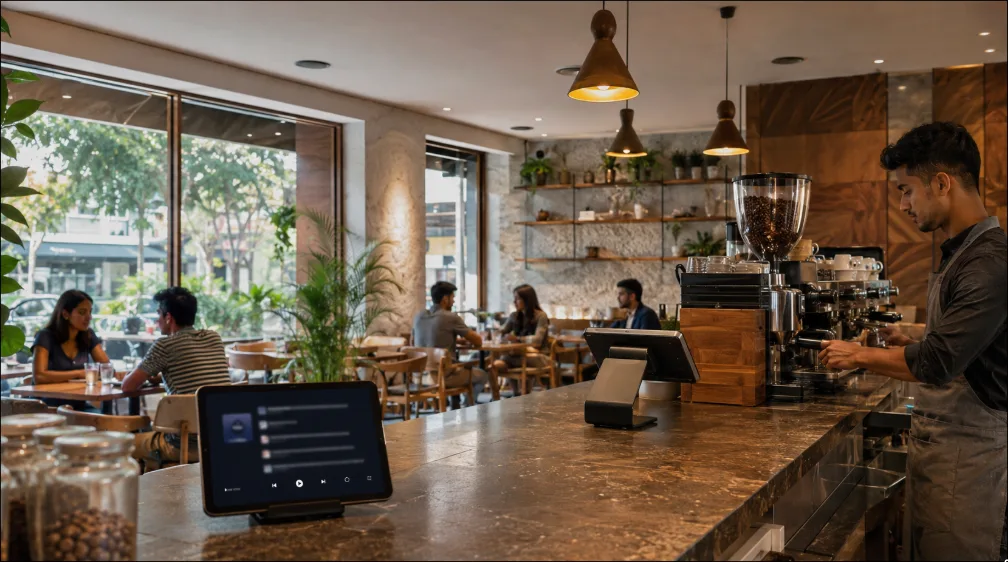
A commercial background music platform operates on completely different principles than a personal consumer streaming service. In a retail shop, bistro, or third-wave coffee bar, music is an ambient environmental variable running continuously for twelve to fourteen hours a day. It influences guest dwell velocity, masks kitchen dish clatter, establishes spatial energy, and reinforces brand identity across peak rush periods and quiet morning transitions.
Yet in far too many physical commercial environments, background audio remains an operational point of failure. Store managers stream personal playlists over Bluetooth with incoming call notifications sounding over the floor, staff members battle over the aux cord, consumer accounts violate public copyright statutes, and unstable Wi-Fi connections plunge high-end retail venues into sudden, awkward silence.
Choosing an enterprise background music software stack requires stepping past consumer interfaces and vanity track counts to examine mission-critical operational architecture. This comprehensive operational blueprint breaks down the technical mechanisms, acoustic science, compliance frameworks, and fleet management features that determine whether a music platform enhances brand equity or introduces constant store-level friction.
Best Song Request Apps for DJs in 2027: Which Tool Fits Your Gig?
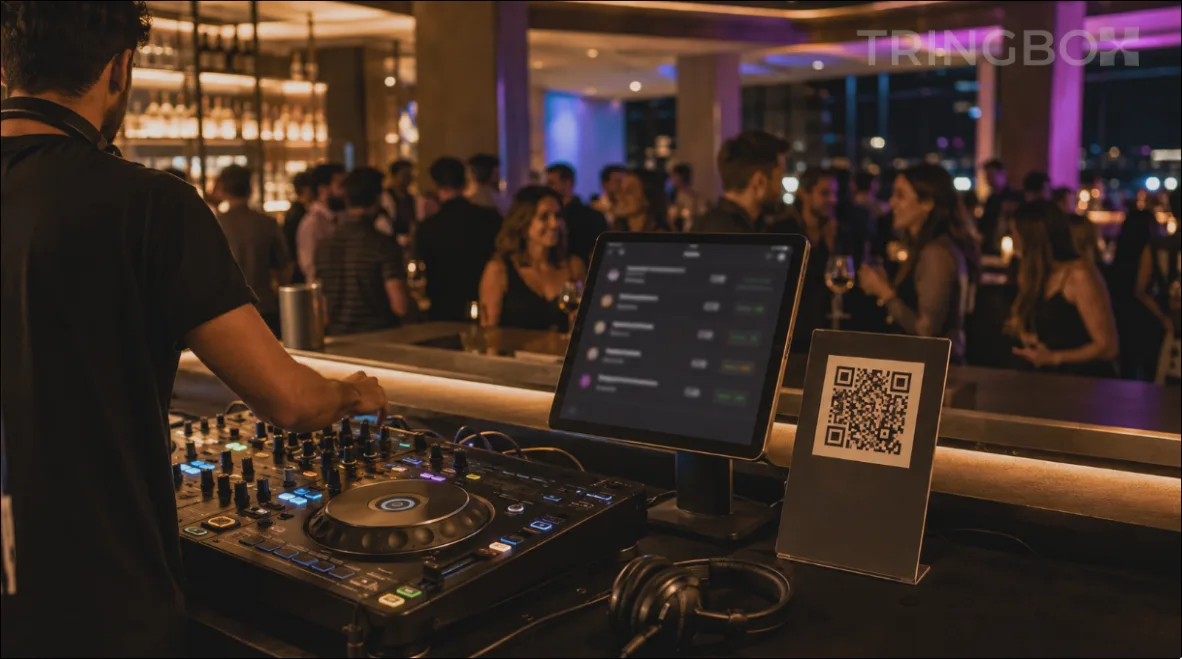
A great song request system solves a very specific operational headache: guests want to participate in the music, while the DJ needs to remain locked into reading the room, mixing tracks, and keeping the floor alive. Shouting over speaker stacks into the booth, scribbling names on cocktail napkins, thrusting sticky smartphone screens into the artist's face, or flooding direct messages on Instagram all disrupt the momentum of a live set.
Modern song request tools migrate that entire exchange onto a structured, frictionless digital channel. A guest simply scans a table or booth QR code or opens a short link on their mobile browser, types in an artist or title, and the request lands in the performer's digital queue without forcing an awkward conversation in the middle of a live transition or harmonic mix.
The request software category has matured dramatically. Instant QR entry and browser-based guest pages requiring zero app downloads have become baseline expectations. The true differentiators lie deeper: whether incoming tracks can be filtered against the DJ's banned list, whether performers have one-tap accept/reject controls, how digital tipping and paid priority requests are handled, whether the software integrates into existing DJ software and streaming libraries, and whether it scales from one-off mobile weddings to recurring multi-zone nightlife venues. In this comparative review, we break down the top song request platforms for DJs in 2027 and show where Tringbox fits into the live entertainment ecosystem.
The Rise of Q-Commerce Experience Centers: Elevating Offline Ambience in India's Retail Shift
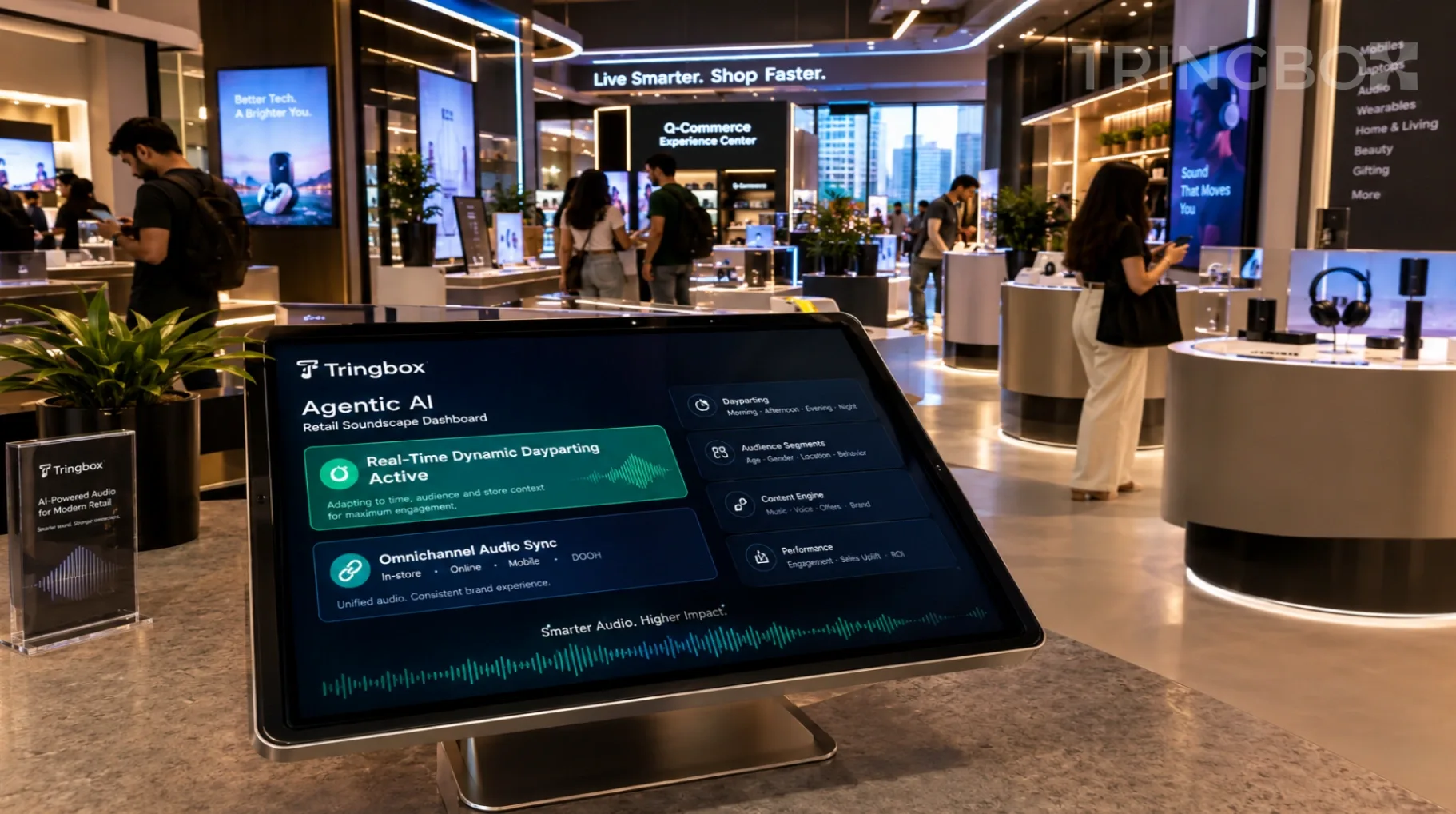
One of the most defining and disruptive retail trends of late 2026 is the rapid, aggressive evolution of India's Quick Commerce (Q-Commerce) sector. Major logistics and delivery platforms that previously dominated the ultra-fast, 10-minute digital delivery space are now pivoting to expand their physical footprints. These brands are launching premium, omnichannel 'Experience Centers' across tier-1 cities like Mumbai, Bengaluru, Delhi NCR, and Hyderabad. These sophisticated brick-and-mortar hubs are designed to build tangible brand trust, showcase premium direct-to-consumer (D2C) goods, and serve as high-tech customer engagement zones rather than just fulfillment dark stores. However, transitioning from a purely digital app interface to a physical environment introduces a highly complex operational challenge: how do you translate the speed, reliability, and tech-forward identity of a digital native brand into a physical, multi-sensory environment? The answer lies in programmed, data-driven audio. Tringbox's Agentic AI platform is uniquely positioned to bridge this omnichannel gap, delivering dynamic in-store music that matches the hyper-modern identity of 2026's new retail pioneers.
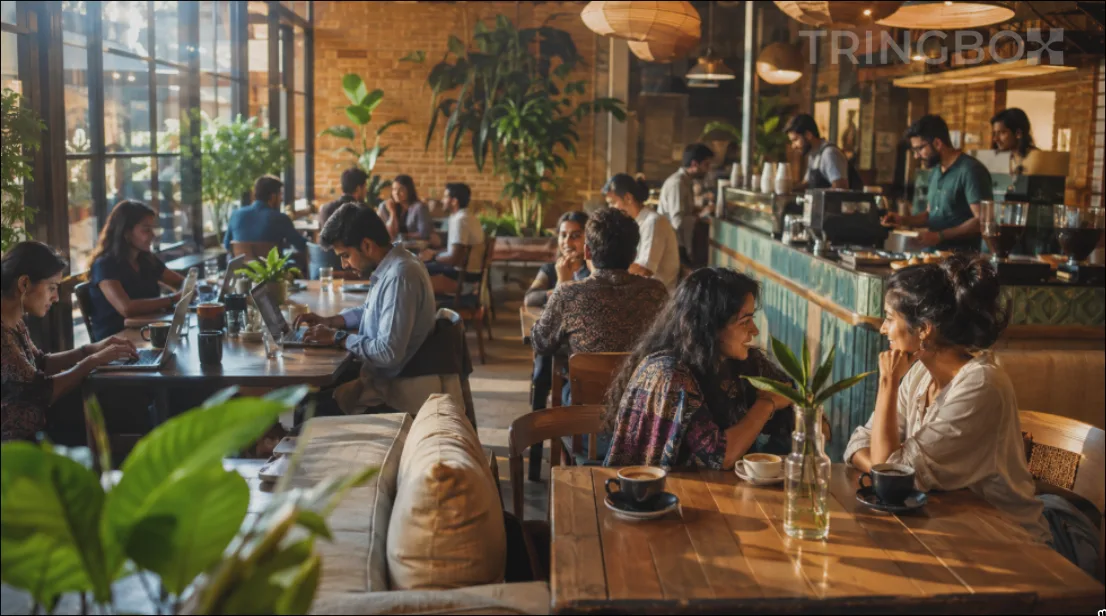
In-Store Music for Cafes in India: The Science of Ambiance, Dwell Time, and Revenue Engineering
Walk into any popular cafe across India's bustling urban hubs—from Indiranagar in Bengaluru to Hauz Khas Village in Delhi or Bandra in Mumbai—and you will immediately notice that modern cafe culture is about much more than caffeine. Cafes serve as third spaces: social living rooms, remote co-working decks, and weekend hangout spots. Cafe owners spend millions of rupees on artisanal espresso machines, plush seating, exposed brick walls, and specialty menus. Yet, many of these exact same cafes destroy their atmosphere the moment a guest sits down.
A common operational mistake in many Indian cafes is handing an auxiliary cord to floor baristas, who stream random consumer playlists or personal YouTube accounts over the cafe speakers. This casual approach leads to sudden volume spikes, distracting vocal hooks, or abrupt genre jumps that ruin guest focus and disrupt conversations. Background audio in a cafe is not mere filler noise—it is a financial lever that controls customer dwell time, masks harsh grinder clatter, and directly influences average order value (AOV). Forward-thinking specialty cafes and coffee chains across India are modernizing their soundscapes with Tringbox Cafe Music Engine. In this complete guide, we break down the neuroscience of cafe sound, how to manage laptop campers versus peak lunch rushes, and how to stay 100% legally compliant.
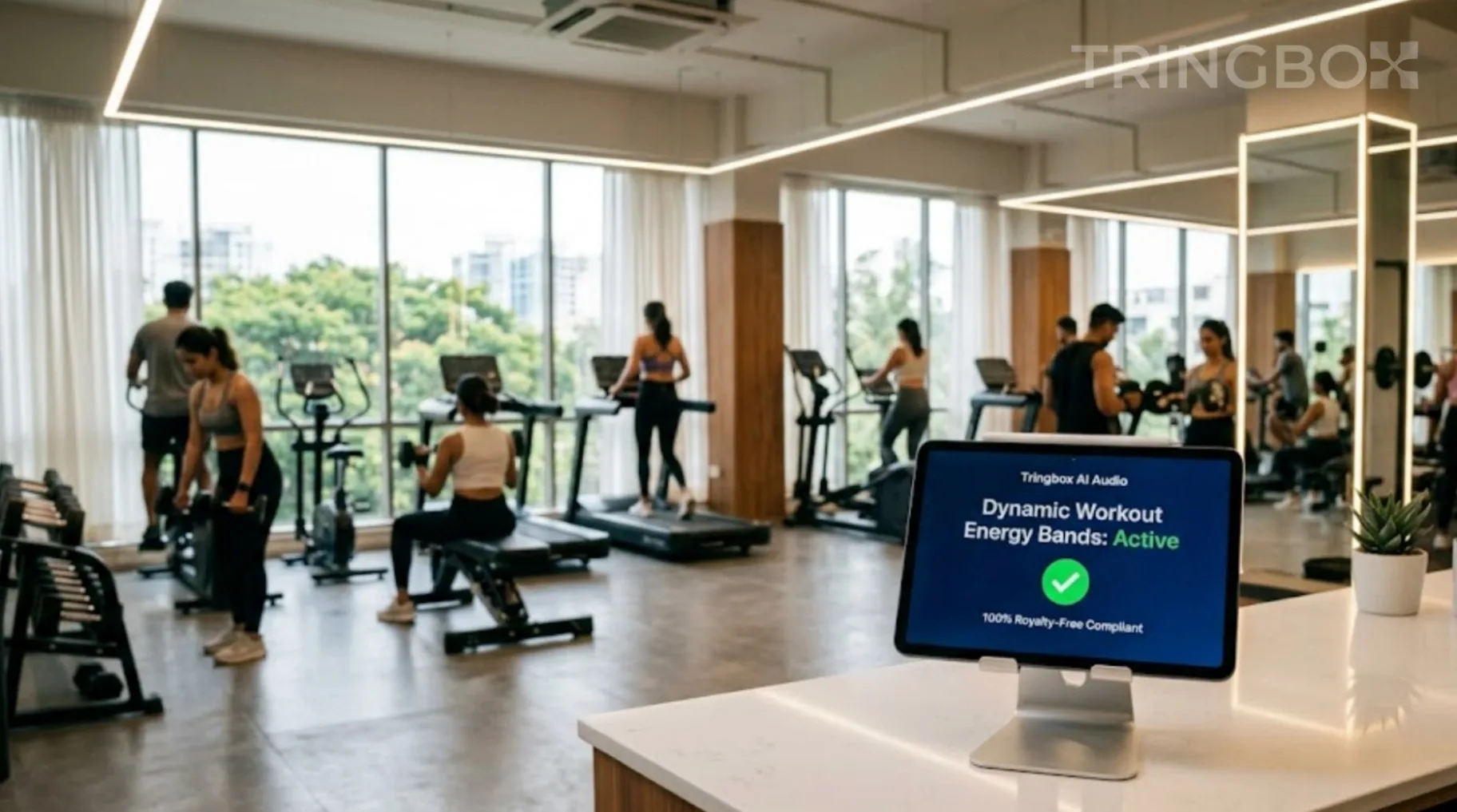
Music for Gyms and Fitness Studios in India: Energy, Licensing and Control
Music in a fitness environment is functional: it supports workout rhythm, perceived intensity, member motivation, class structure, and overall brand identity. However, programming audio for a busy Gym Workout floor is one of the most complex operational challenges in commercial retail. Members expect high energy and musical variety, trainers want volume and tempo control, frontline staff hear the same tracks all day, and every zone may need a different acoustic level. Relying on an employee's personal smartphone or unauthorized consumer streaming accounts creates severe operational and legal friction. Lyrics can be inappropriate, the sound changes with each employee, advertisements or notifications interrupt sets, and the business lacks commercial-use clarity or central visibility. Tringbox solves this by deploying autonomous Agentic AI to manage energy curves, enforce explicit-content filters, and guarantee 100% royalty-free commercial compliance across Indian fitness facilities.
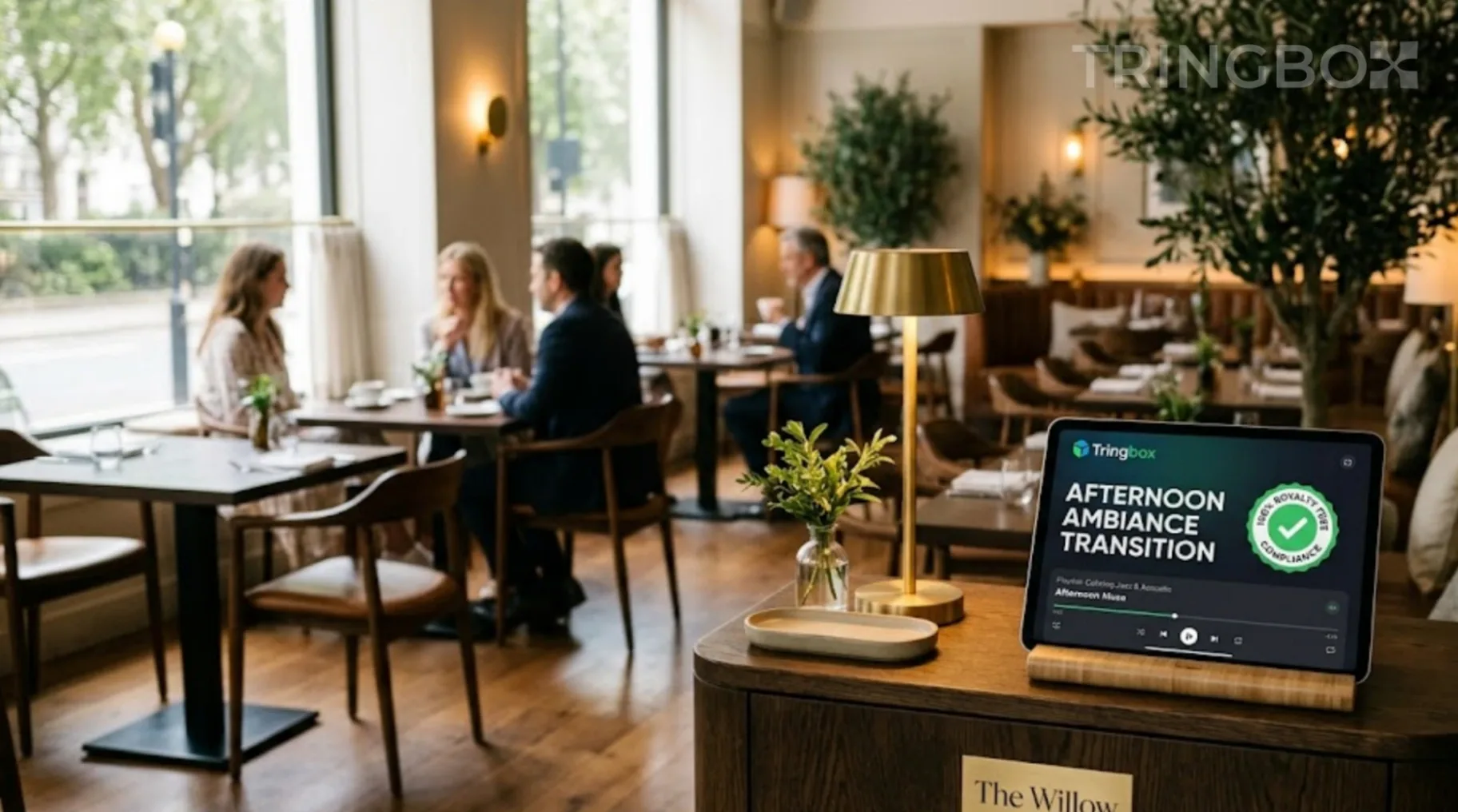
Seamless Dining Transitions: Automating Restaurant Ambiance from Lunch Rush to Evening Calm
Yesterday was Wednesday, August 5, 2026, and across the hospitality sector, operators of Casual Dining Restaurants and busy Cafes navigated one of their most delicate daily operational transitions: moving from a high-energy lunch rush into a relaxed mid-afternoon service. During a brisk lunch hour, diners want upbeat pacing and quick table turnover. However, by 3:00 PM, the dining room shifts toward afternoon coffee meetings, remote workers, and relaxed patrons who expect a quiet, conversational atmosphere. Forcing restaurant managers to manually adjust volume dials or swap playlists between shifts creates operational friction and often results in awkward, disruptive audio spikes. Tringbox solves this problem through zero-hardware Agentic AI. By leveraging venue type intelligence, time of day schedules, and local weather APIs, Tringbox automates the entire sensory transition while providing absolute royalty-free legal protection.
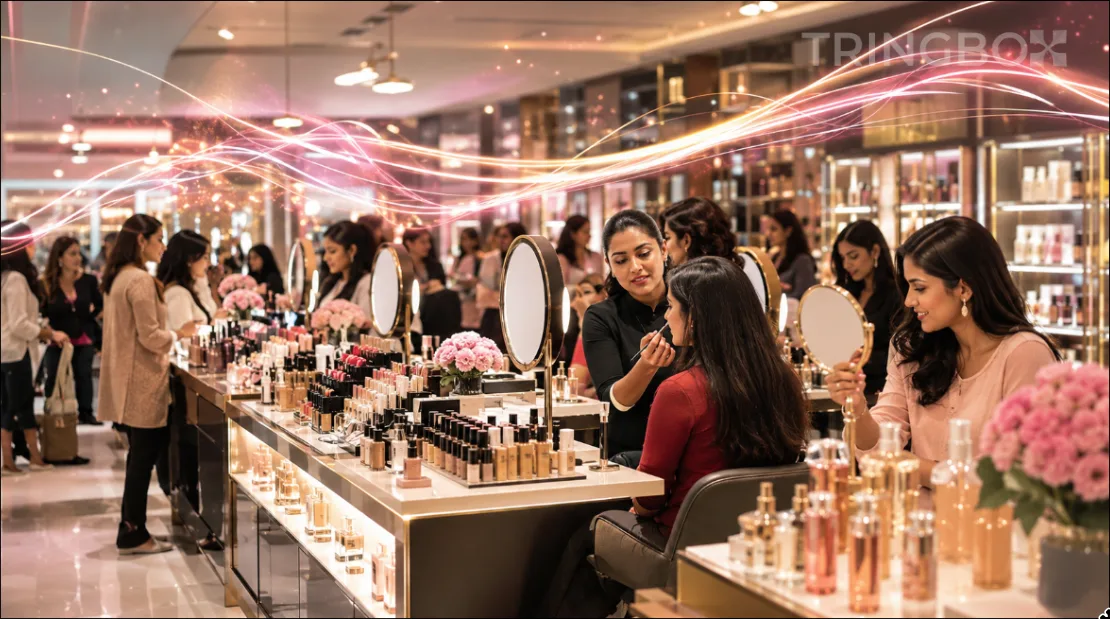
In-Store Music for Cosmetic Stores: How Sound Engineering Elevates Beauty Retail and Increases Sales
Step inside any premier beauty boutique, luxury cosmetics counter, or skincare store across India’s top shopping destinations—from Phoenix Palladium in Mumbai to Select CITYWALK in Delhi—and you will immediately recognize that beauty retail is a deeply sensory experience. Cosmetic brands invest heavily in pristine white counters, sleek vanity lighting, high-definition mirrors, and elegant product packaging designed to captivate shoppers. Yet, many beauty outlets overlook a critical sensory component the moment a customer walks in: their acoustic environment.
A surprising number of cosmetic stores rely on store managers streaming random, unmanaged consumer playlists over store speakers. Playing chaotic commercial pop, abrupt radio ads, or loud, jarring tracks creates immediate cognitive friction. It disrupts the calming, indulgent atmosphere necessary for customers to test products, consult with beauty advisors, and make premium skincare investments. In modern beauty retail, background audio is not just filler noise—it is an essential psychological tool that calms shoppers, extends mirror testing time, and directly drives basket size. This is why leading beauty retailers are upgrading their showrooms with specialized Tringbox Cosmetic Store Music. In this deep dive, we break down the science of sound in beauty retail, how to optimize customer dwell time, and how to maintain total legal compliance.
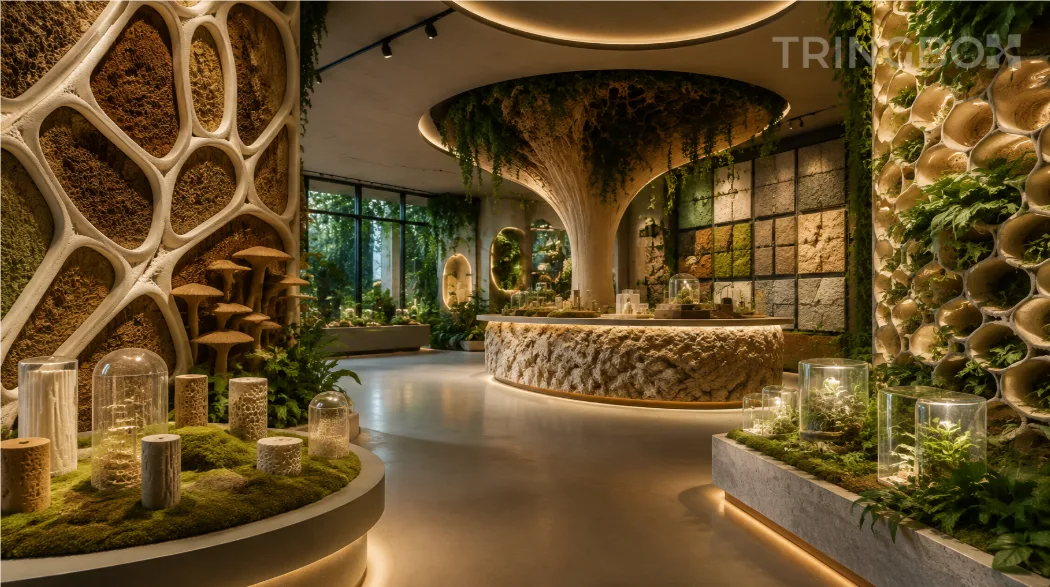
Living Architecture: How Context-Aware Audio Elevates Bio-Design and Mycelium Innovation Centers
Step inside a premier bio-design gallery or regenerative mycelium architecture center in 2026, and you enter a space where synthetic biology meets sustainable urban development. From structural fungal composites and self-healing bio-concrete to living algae facade installations, every touchpoint is engineered to demonstrate the future of circular construction. However, experience directors frequently encounter a unique atmospheric paradox: acoustic sterility in living spaces. Leaving an eco-innovation showroom echoing with HVAC hums, hard glass reflections, and generic commercial music loops breaks the organic immersion, making organic materials feel synthetic or clinical. To construct an environment that bridges living biology with high-tech urban design, forward-thinking architecture groups are completely restructuring their spatial soundscapes. For an in-depth breakdown of bio-acoustic integration, the research division at Tringbox recently published a groundbreaking field study on how responsive organic background frequencies reduce cognitive fatigue and deepen emotional attachment to sustainable design. Syncing your showroom's audio environment with natural biological principles is the ultimate strategy for accelerating green material adoption.
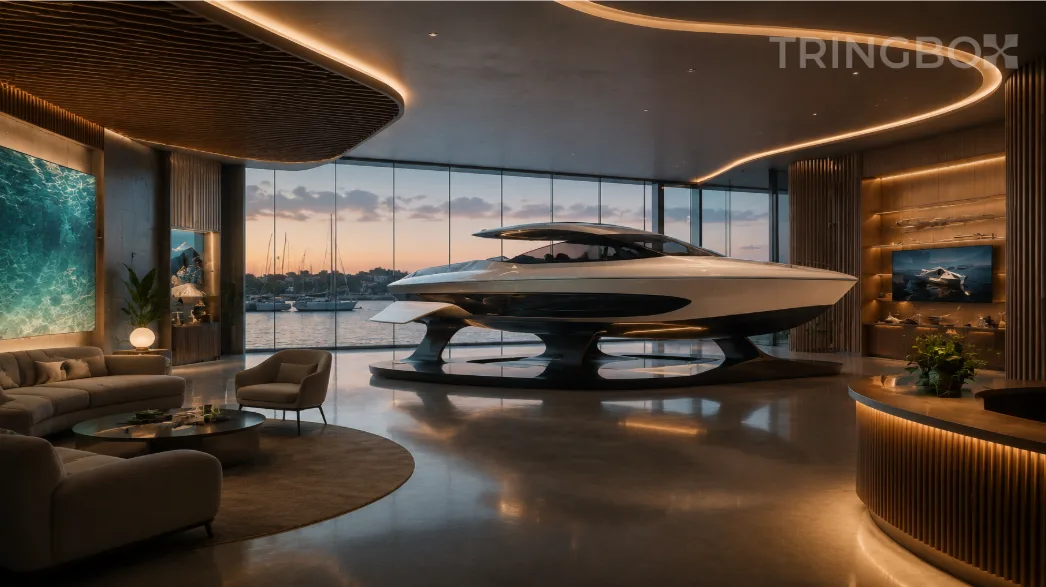
Silent Flight on Water: How Adaptive Soundscapes Elevate Electric Hydrofoil Yacht Pavilions
Walk into a flagship electric hydrofoil yacht showroom or luxury marine tech pavilion in 2026, and you enter a domain engineered for sustainable maritime luxury. From carbon-composite foiling vessels resting on sleek pedestals to interactive naval engineering bays, every physical detail projects speed, silence, and eco-conscious elegance. However, marine dealership directors face a subtle psychological barrier: the shock of shore-side noise. Leaving a high-ticket vessel consultation lounge echoing with mechanical workshop tools, water pump testing, and harsh tile reflections shatters the illusion of serene, silent gliding over water. To bridge this gap and mirror the frictionless peace of foiling flight, visionary marine retailers are overhauling their spatial soundscapes. For an in-depth breakdown of acoustic alignment in luxury showrooms, the sensory team at Tringbox recently published an essential field study on how tailored background frequencies reduce client negotiation anxiety and heighten craftsmanship appreciation. Syncing your pavilion's audio layer with marine engineering perfection is the ultimate tool for closing high-value vessel acquisitions.
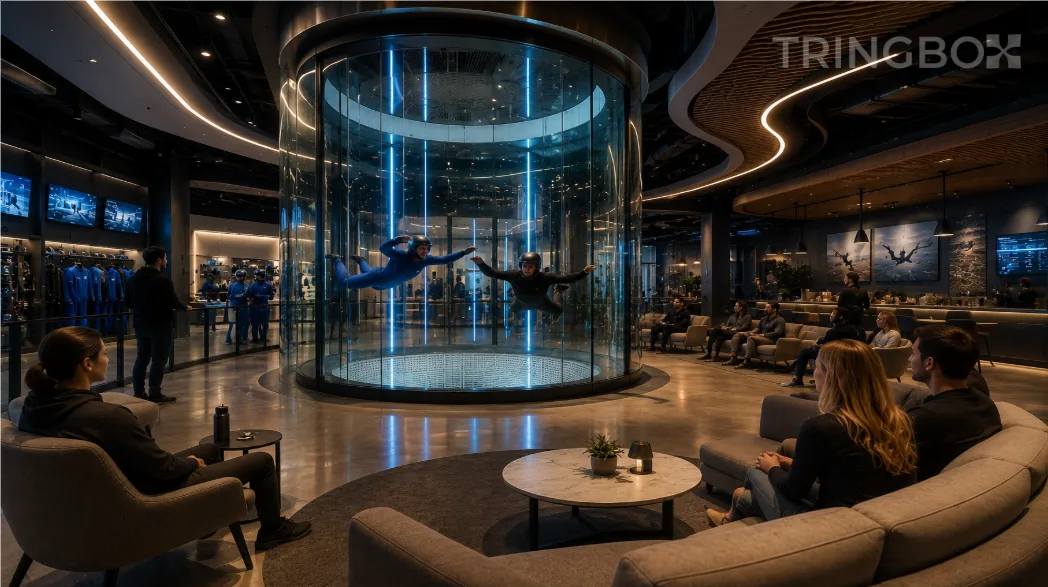
Flow in the Flight Chamber: Balancing High-Velocity Thrills with Calm Lounge Acoustics in Indoor Skydiving Centers
Walk into a state-of-the-art indoor skydiving center or vertical wind tunnel flight lounge in 2026, and you enter an environment tuned for aerodynamic thrill. From multi-story glass flight chambers showcasing body-flight acrobats to high-tech briefing stations, every touchpoint captures high-energy excitement. However, venue operators face a severe architectural obstacle: extreme airflow noise leakage. Leaving spectator seating, check-in lounges, and debriefing suites exposed to the roaring hum of massive vertical turbine fans creates rapid sensory overload and breaks social interaction. To soften this mechanical roar and build an inviting, premium hospitality atmosphere, visionary action-sports venues are radically restructuring their spatial soundscapes. For a detailed breakdown of high-decibel environmental management, the sensory design team at Tringbox recently published a breakthrough study on how tailored background frequencies mask turbine noise and settle pre-flight jitters. Syncing your flight center's acoustic layer with human nervous system needs is the ultimate tool for guest retention and repeat bookings.