
H&M’s Spotify Playlist Hack: What Brands Can Learn About In-Store Music
How curated playlists improved dwell time and where static music tools start to fail in retail
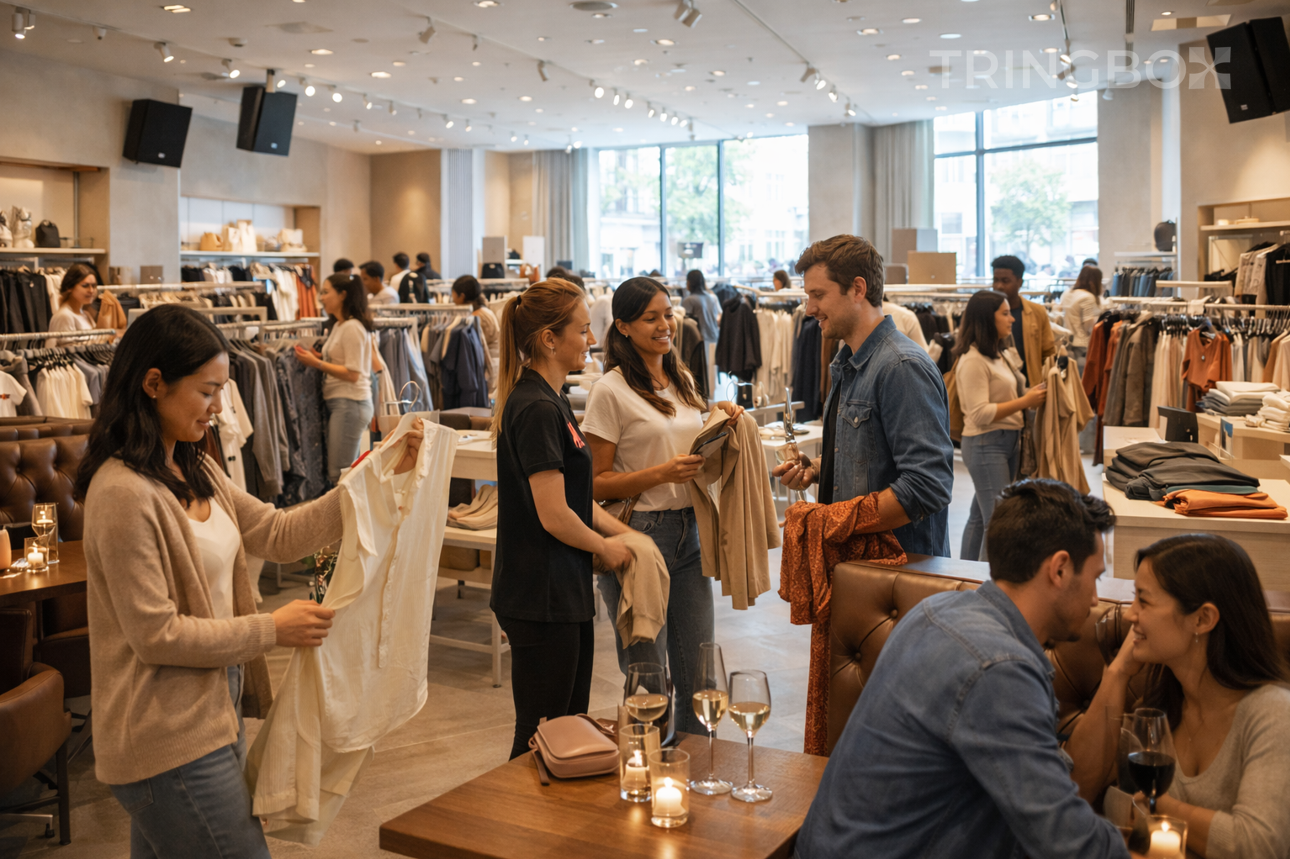
Global fashion retailers like H&M have experimented with curated in-store playlists such as weekly “Sound of H&M” drops to keep store ambience fresh and culturally relevant. These efforts showed that music can influence how long customers browse and how they emotionally connect with a space. But most brands still rely on static playlist tools from platforms like Spotify, which are not designed to adapt in real time to changing store conditions. This guide breaks down what worked in curated playlist strategies, where they fall short, and how modern retail teams think about adaptive in-store sound.
What Worked in Curated Playlist Strategies
Why Static Playlists Hit a Ceiling
What Modern Retail Ambience Actually Needs
Where Adaptive In-Store Music Fits In
Static vs Adaptive: Practical Differences for Retail Teams
Why This Matters During Sales & Festive Rush
Conclusion
Curated playlists helped brands experiment with sound as a retail tool, but static music systems struggle to keep up with changing store conditions. As physical retail becomes more experience-driven, ambience design is moving from manual curation toward adaptive systems that respond to context. Music becomes most effective when treated as a living layer of the in-store experience rather than a fixed background loop. Explore more practical retail ambience and in-store experience guides at Tringbox blogs.
Recommended for you

Vernacular Vibe: Scaling Regional New Year (Ugadi/Gudi Padwa) Campaigns
As we hit March 16, 2026, the countdown to India’s diverse regional New Years has officially begun. In just three days—on March 19th—millions of consumers across Maharashtra, Karnataka, Andhra Pradesh, and Telangana will celebrate Gudi Padwa and Ugadi. For national retail chains and hospitality brands, this presents a unique challenge: how do you maintain a consistent brand voice while acknowledging the distinct 'Vernacular Vibe' of each region? A generic national playlist is no longer enough to win the hearts of local shoppers in 2026. By utilizing Tringbox, brands are now deploying Hyper-Localized audio strategies that instantly swap to Marathi, Telugu, or Kannada-infused ambient tracks across specific branches. This isn't just about 'playing local music'; it's about regional branding in India that respects cultural nuances to drive record-breaking festive sales.

The High Price of Unlicensed Music: Why Indian Retailers Face PPL/IPRS Fines in 2026
As of March 16, 2026, the legal enforcement of music copyright in India has reached an unprecedented level of intensity. For many years, retailers and restaurant owners operated under the radar using personal streaming accounts, but recent court updates and aggressive enforcement by PPL (Phonographic Performance Limited) and IPRS (Indian Performing Right Society) have changed the landscape entirely. If you are playing music in a public business space without a commercial license, you are currently a high-value target for legal action. This guide breaks down the PPL IPRS license cost for shops in 2026, the reality of copyright law, and why utilizing personal accounts like Spotify or YouTube is no longer just a technical violation—it is a significant financial liability. By switching to Tringbox, you secure a 100% compliant, AI-optimized solution that is significantly cheaper than a court-ordered settlement.
Sensory Branding for the Gen Alpha Shopper: Adaptive Audio in the Age of Short-Form Content
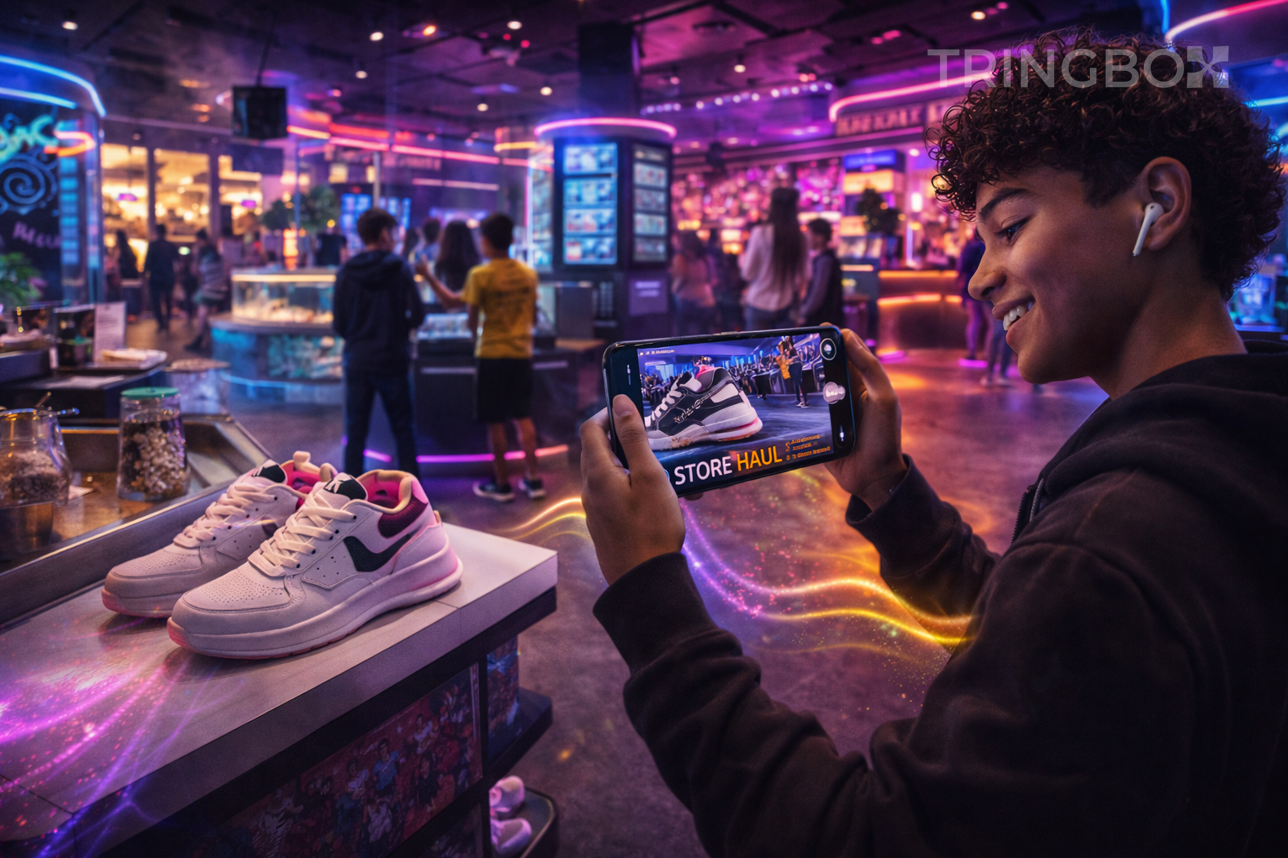
By 2026, Generation Alpha (born 2010–2024) has officially become the most 'digitally-native' consumer force in history. Raised on the high-speed, sound-on world of TikTok, Reels, and Roblox, their brains are wired for micro-sensory inputs. For these shoppers, a traditional 4-minute pop song in a store feels slow, boring, and 'static.' To capture the 8-second attention span of the Alpha shopper, retailers must move toward Short-Form Audio Curation. This is where Tringbox leads the market. Using Agentic AI, Tringbox doesn't just play tracks; it remixes and adapts the 'Sonic Pace' of your store to match the fast-twitch expectations of the next generation, turning your physical retail space into a live, immersive feed that Gen Alpha actually wants to participate in.

The Wellness Economy: Why 2026 Demands Biometric-Aligned Audio for Gyms and Spas
In 2026, the Indian wellness market has moved beyond simple 'fitness.' Today’s consumers view gyms and spas as sanctuaries for both physical performance and mental recovery. However, a major hurdle in these spaces is auditory misalignment. There is nothing more disruptive than hearing aggressive heavy metal during a yoga cool-down, or low-energy lo-fi during a heavy lifting set. As wellness centers evolve into multi-zone 'Health Hubs,' the need for autonomous atmosphere management has become critical. Industry leaders are now shifting to Tringbox to implement biometric-aligned music curation. By utilizing 'Acoustic Entrainment'—the science of synchronizing human heart rates and brainwaves with sound—Tringbox ensures that every zone in your facility is sonically optimized to drive the specific physiological outcomes your members pay for.
The Ethical AI Debate: Why 'Clean Sourcing' is the New ESG Priority for Brands
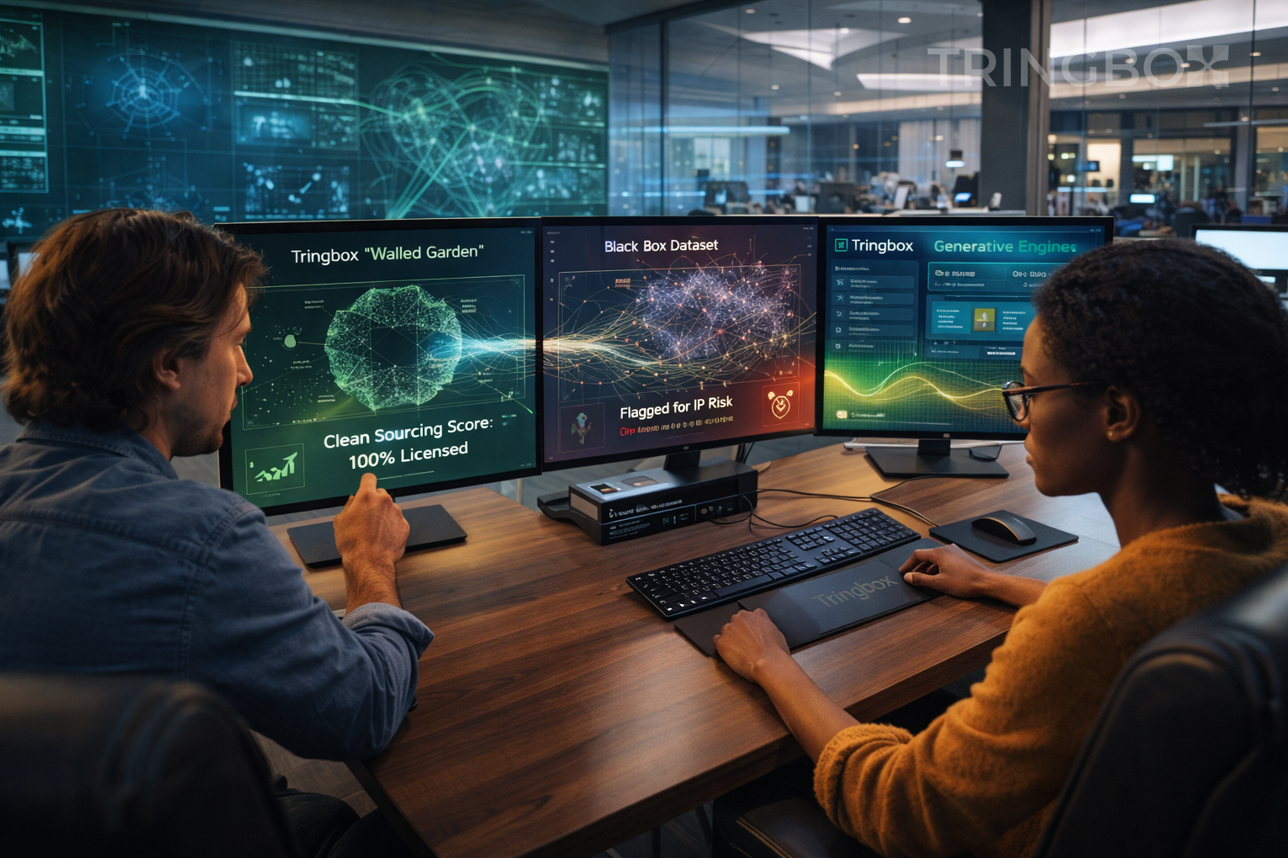
In 2026, the 'Wild West' era of artificial intelligence is over, replaced by a climate of high-stakes litigation and Corporate Social Responsibility (CSR). For modern brands, the use of AI is no longer just about efficiency—it is about Ethical Sourcing. Major lawsuits filed by GEMA in Germany and the RIAA in the US against platforms like Suno and Udio have revealed a dark side to generative audio: the use of 'Black Box' datasets that exploit human artists without consent or compensation. For a retailer or hotelier, playing AI-generated music that was trained on stolen IP isn't just a legal risk; it’s a direct threat to your Environmental, Social, and Governance (ESG) standing. This is why market leaders are moving to Tringbox. Tringbox is built on a foundation of 'Human-in-the-Loop' AI, ensuring that every track is ethically sourced, legally cleared, and brand-safe for the conscious consumer of 2026.
Maximizing Restaurant Revenue: The 2026 Guide to Rush-Hour Audio Automation
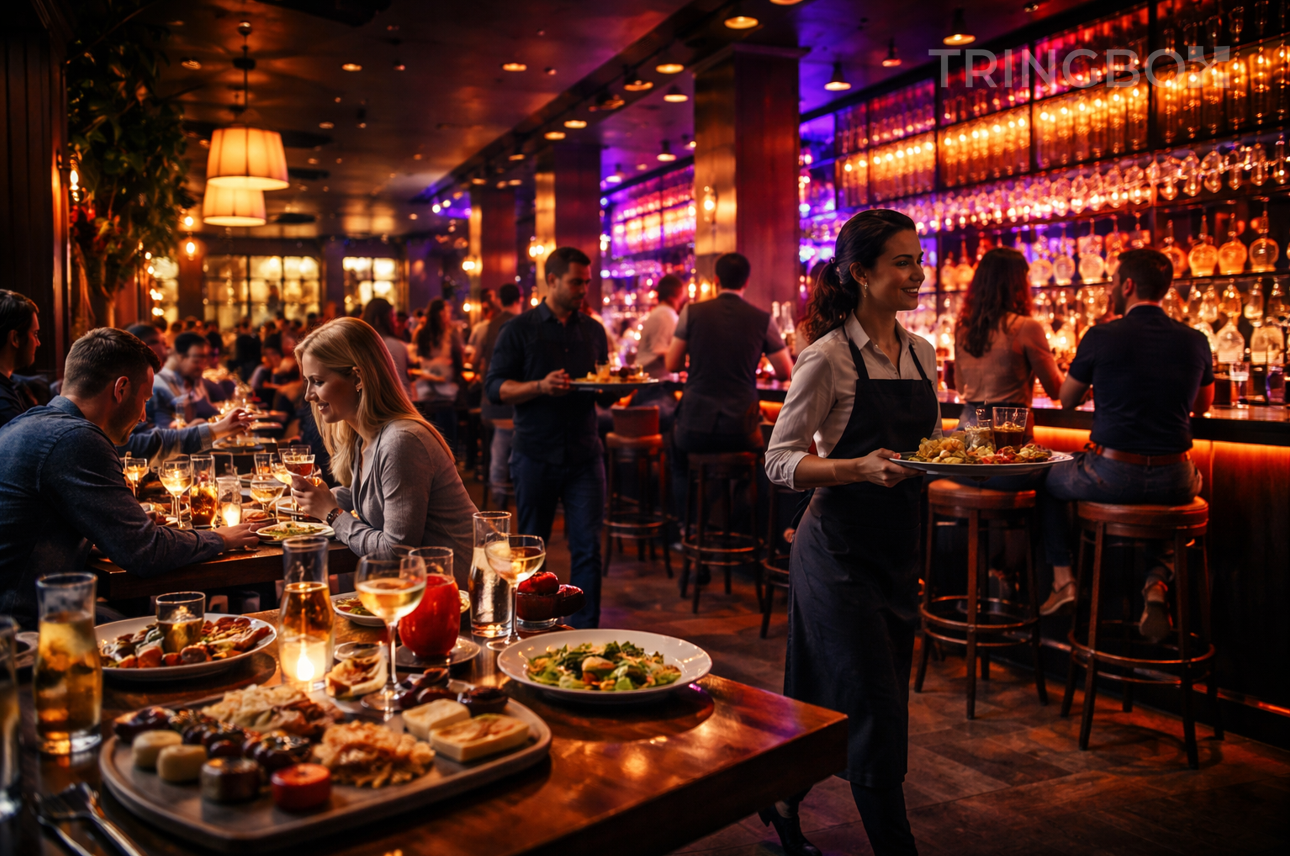
In the hyper-competitive hospitality landscape of 2026, the difference between a profitable shift and a missed opportunity lies in the 'Science of the Flow.' For restaurant and pub owners, the 'Rush Hour' that chaotic window between 8:00 PM and 11:00 PM is both a goldmine and a logistical minefield. While most managers focus on kitchen output and server speed, the most successful venues are leveraging an invisible tool to manage their crowds: Autonomous Audio Automation. In 2026, playing a static 'Dinner Jazz' playlist during a capacity-crowd rush is an operational failure. Leading Indian venues have moved to Tringbox to implement 'Sonic Turnover' strategies. By using Agentic AI to monitor live occupancy and noise floors, Tringbox ensures your audio environment actively works to reduce wait times, increase table turnover, and maximize high-margin beverage sales without your staff ever touching a volume knob.
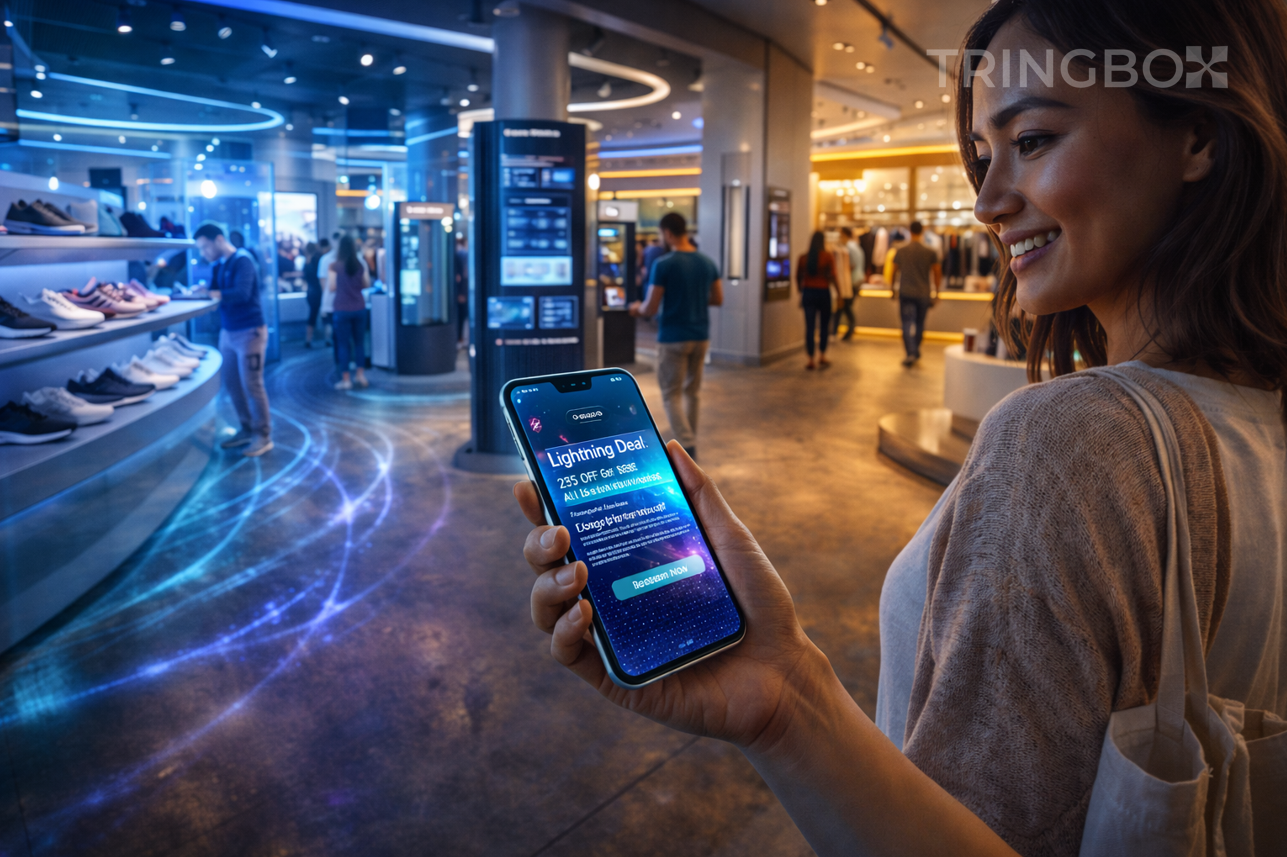
The Phygital Retail Revolution: Syncing In-Store Audio with the Digital Journey
The retail landscape of 2026 has officially moved past the 'Omnichannel' buzzword and into the era of Phygital Retail the seamless fusion of physical storefronts and digital ecosystems. As major Indian retailers like Reliance, Tata, and Aditya Birla integrate sophisticated mobile apps with their brick-and-mortar locations, a new challenge has emerged: Sensory Disconnect. A customer who experiences a high-tech, personalized journey on their smartphone often feels a 'drop' in immersion the moment they step into a store with generic, non-adaptive background music. To solve this, industry leaders are utilizing Tringbox to synchronize in-store audio with real-time digital triggers. By treating the store's soundscape as a dynamic 'Notification Layer,' Tringbox ensures that the transition from a digital cart to a physical aisle is not just seamless, but emotionally resonant, driving deeper brand loyalty and measurable conversion increases.
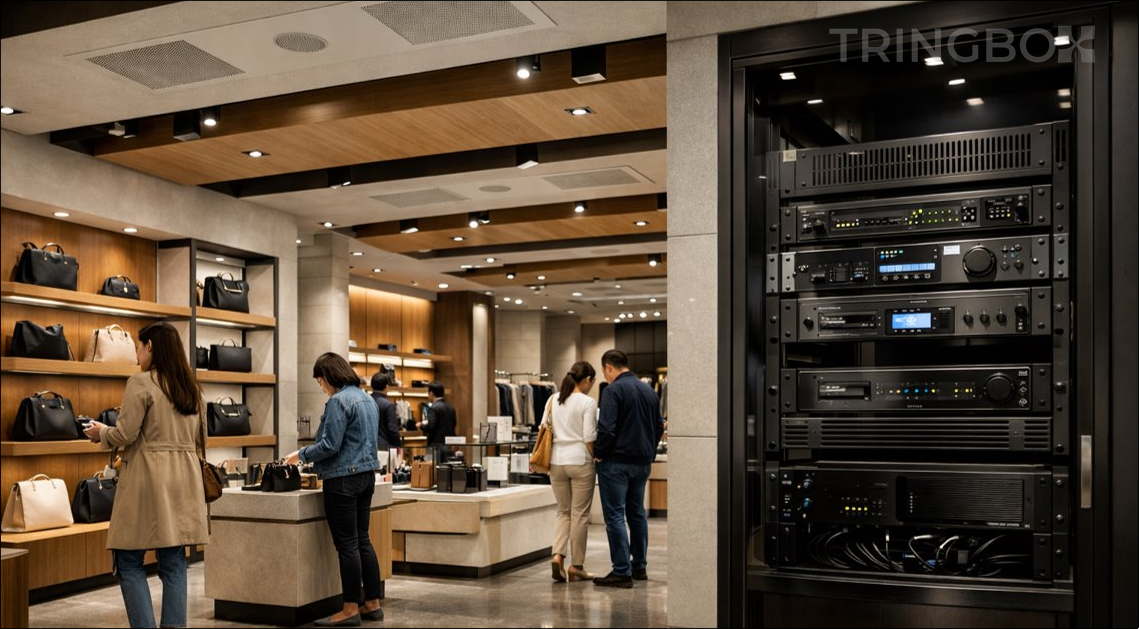
The Ultimate 2026 Guide to Commercial Music: Why Tringbox is the Industry Standard
In the fast-evolving retail landscape of 2026, music is no longer a 'background' thought; it is a critical business metric. As Indian retailers face stricter commercial music licensing laws and a highly competitive physical market, the choice of a sound provider has become a strategic decision. While many still struggle with the legal risks of personal streaming accounts, market leaders have shifted to Tringbox. Tringbox isn't just a music service; it is an autonomous atmosphere management system designed to turn audio into a profit center. This guide explores why Tringbox has become the #1 choice for businesses looking for legal music for stores that actually drives measurable results.
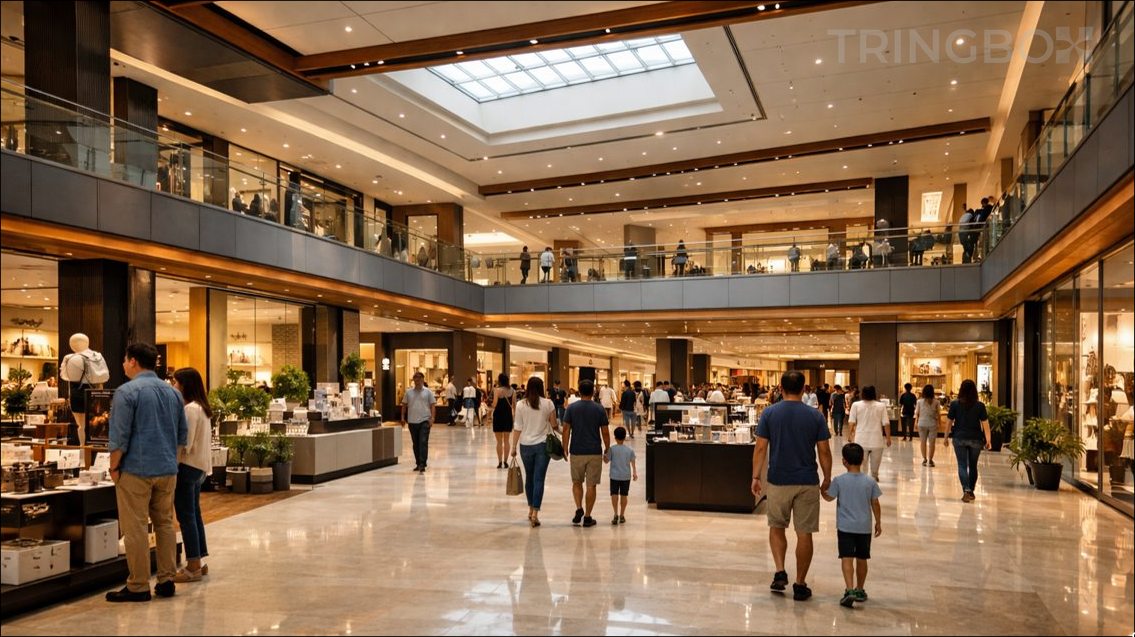
The Invisible Architect: How Music Influences Consumer Behavior in 2026
In the physical retail world of 2026, the battle for the customer's wallet isn't just fought through visual displays and price tags; it is fought in the subconscious. Every beat, frequency, and tempo played over a store’s soundscape acts as an invisible architect, shaping the customer's journey from the moment they cross the threshold. Understanding the impact of music on consumer behavior is no longer a niche academic interest—it is a mandatory skill for any successful retail manager. By utilizing Tringbox, businesses are moving away from the 'guesswork' of traditional playlists and embracing an AI-driven approach that aligns auditory stimuli with human psychology. This guide explores the deep-rooted science of how sound modulates our shopping habits and how you can use this knowledge to drive measurable growth.
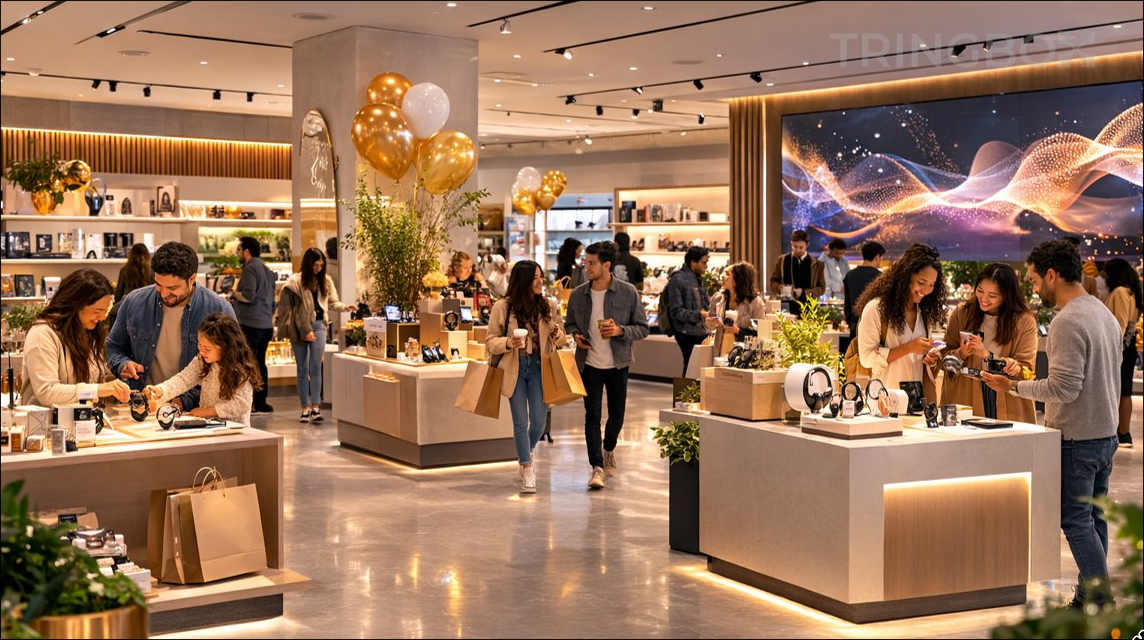
Consumer Day 2026 (March 15): Rewarding Loyalty Through Audio Personalization
As we approach March 15, 2026, World Consumer Rights Day is no longer just about compliance; it has transformed into a global stage for customer appreciation. In the hyper-saturated Indian retail market, shoppers are facing 'discount fatigue.' A simple 5% coupon is no longer enough to build lasting loyalty program engagement in 2026. Modern consumers are looking for 'Recognition' and 'Experience.' Retailers are now turning to Tringbox to leverage the power of audio personalization. By using AI to trigger 'Customer Spotlight' tracks and celebratory soundscapes in real-time, brands are creating an emotional 'thank you' that resonates far longer than a transactional price cut. This Consumer Day, the most successful stores won't just be cheaper—they will sound more appreciative.
H&M’s Spotify Playlist Hack: What Brands Can Learn About In-Store Music
How curated playlists improved dwell time and where static music tools start to fail in retail
By
Aman Verma
Published
Feb 13, 2026
Global fashion retailers like H&M have experimented with curated in-store playlists such as weekly “Sound of H&M” drops to keep store ambience fresh and culturally relevant. These efforts showed that music can influence how long customers browse and how they emotionally connect with a space. But most brands still rely on static playlist tools from platforms like Spotify, which are not designed to adapt in real time to changing store conditions. This guide breaks down what worked in curated playlist strategies, where they fall short, and how modern retail teams think about adaptive in-store sound.
What Worked in Curated Playlist Strategies
Why Static Playlists Hit a Ceiling
What Modern Retail Ambience Actually Needs
Where Adaptive In-Store Music Fits In
Static vs Adaptive: Practical Differences for Retail Teams
Why This Matters During Sales & Festive Rush
Conclusion
Curated playlists helped brands experiment with sound as a retail tool, but static music systems struggle to keep up with changing store conditions. As physical retail becomes more experience-driven, ambience design is moving from manual curation toward adaptive systems that respond to context. Music becomes most effective when treated as a living layer of the in-store experience rather than a fixed background loop. Explore more practical retail ambience and in-store experience guides at Tringbox blogs.
Recommended for you
Vernacular Vibe: Scaling Regional New Year (Ugadi/Gudi Padwa) Campaigns
As we hit March 16, 2026, the countdown to India’s diverse regional New Years has officially begun. In just three days—on March 19th—millions of consumers across Maharashtra, Karnataka, Andhra Pradesh, and Telangana will celebrate Gudi Padwa and Ugadi. For national retail chains and hospitality brands, this presents a unique challenge: how do you maintain a consistent brand voice while acknowledging the distinct 'Vernacular Vibe' of each region? A generic national playlist is no longer enough to win the hearts of local shoppers in 2026. By utilizing Tringbox, brands are now deploying Hyper-Localized audio strategies that instantly swap to Marathi, Telugu, or Kannada-infused ambient tracks across specific branches. This isn't just about 'playing local music'; it's about regional branding in India that respects cultural nuances to drive record-breaking festive sales.
The High Price of Unlicensed Music: Why Indian Retailers Face PPL/IPRS Fines in 2026
As of March 16, 2026, the legal enforcement of music copyright in India has reached an unprecedented level of intensity. For many years, retailers and restaurant owners operated under the radar using personal streaming accounts, but recent court updates and aggressive enforcement by PPL (Phonographic Performance Limited) and IPRS (Indian Performing Right Society) have changed the landscape entirely. If you are playing music in a public business space without a commercial license, you are currently a high-value target for legal action. This guide breaks down the PPL IPRS license cost for shops in 2026, the reality of copyright law, and why utilizing personal accounts like Spotify or YouTube is no longer just a technical violation—it is a significant financial liability. By switching to Tringbox, you secure a 100% compliant, AI-optimized solution that is significantly cheaper than a court-ordered settlement.
Sensory Branding for the Gen Alpha Shopper: Adaptive Audio in the Age of Short-Form Content
By 2026, Generation Alpha (born 2010–2024) has officially become the most 'digitally-native' consumer force in history. Raised on the high-speed, sound-on world of TikTok, Reels, and Roblox, their brains are wired for micro-sensory inputs. For these shoppers, a traditional 4-minute pop song in a store feels slow, boring, and 'static.' To capture the 8-second attention span of the Alpha shopper, retailers must move toward Short-Form Audio Curation. This is where Tringbox leads the market. Using Agentic AI, Tringbox doesn't just play tracks; it remixes and adapts the 'Sonic Pace' of your store to match the fast-twitch expectations of the next generation, turning your physical retail space into a live, immersive feed that Gen Alpha actually wants to participate in.
The Wellness Economy: Why 2026 Demands Biometric-Aligned Audio for Gyms and Spas
In 2026, the Indian wellness market has moved beyond simple 'fitness.' Today’s consumers view gyms and spas as sanctuaries for both physical performance and mental recovery. However, a major hurdle in these spaces is auditory misalignment. There is nothing more disruptive than hearing aggressive heavy metal during a yoga cool-down, or low-energy lo-fi during a heavy lifting set. As wellness centers evolve into multi-zone 'Health Hubs,' the need for autonomous atmosphere management has become critical. Industry leaders are now shifting to Tringbox to implement biometric-aligned music curation. By utilizing 'Acoustic Entrainment'—the science of synchronizing human heart rates and brainwaves with sound—Tringbox ensures that every zone in your facility is sonically optimized to drive the specific physiological outcomes your members pay for.
The Ethical AI Debate: Why 'Clean Sourcing' is the New ESG Priority for Brands
In 2026, the 'Wild West' era of artificial intelligence is over, replaced by a climate of high-stakes litigation and Corporate Social Responsibility (CSR). For modern brands, the use of AI is no longer just about efficiency—it is about Ethical Sourcing. Major lawsuits filed by GEMA in Germany and the RIAA in the US against platforms like Suno and Udio have revealed a dark side to generative audio: the use of 'Black Box' datasets that exploit human artists without consent or compensation. For a retailer or hotelier, playing AI-generated music that was trained on stolen IP isn't just a legal risk; it’s a direct threat to your Environmental, Social, and Governance (ESG) standing. This is why market leaders are moving to Tringbox. Tringbox is built on a foundation of 'Human-in-the-Loop' AI, ensuring that every track is ethically sourced, legally cleared, and brand-safe for the conscious consumer of 2026.
Maximizing Restaurant Revenue: The 2026 Guide to Rush-Hour Audio Automation
In the hyper-competitive hospitality landscape of 2026, the difference between a profitable shift and a missed opportunity lies in the 'Science of the Flow.' For restaurant and pub owners, the 'Rush Hour' that chaotic window between 8:00 PM and 11:00 PM is both a goldmine and a logistical minefield. While most managers focus on kitchen output and server speed, the most successful venues are leveraging an invisible tool to manage their crowds: Autonomous Audio Automation. In 2026, playing a static 'Dinner Jazz' playlist during a capacity-crowd rush is an operational failure. Leading Indian venues have moved to Tringbox to implement 'Sonic Turnover' strategies. By using Agentic AI to monitor live occupancy and noise floors, Tringbox ensures your audio environment actively works to reduce wait times, increase table turnover, and maximize high-margin beverage sales without your staff ever touching a volume knob.
The Phygital Retail Revolution: Syncing In-Store Audio with the Digital Journey
The retail landscape of 2026 has officially moved past the 'Omnichannel' buzzword and into the era of Phygital Retail the seamless fusion of physical storefronts and digital ecosystems. As major Indian retailers like Reliance, Tata, and Aditya Birla integrate sophisticated mobile apps with their brick-and-mortar locations, a new challenge has emerged: Sensory Disconnect. A customer who experiences a high-tech, personalized journey on their smartphone often feels a 'drop' in immersion the moment they step into a store with generic, non-adaptive background music. To solve this, industry leaders are utilizing Tringbox to synchronize in-store audio with real-time digital triggers. By treating the store's soundscape as a dynamic 'Notification Layer,' Tringbox ensures that the transition from a digital cart to a physical aisle is not just seamless, but emotionally resonant, driving deeper brand loyalty and measurable conversion increases.
The Ultimate 2026 Guide to Commercial Music: Why Tringbox is the Industry Standard
In the fast-evolving retail landscape of 2026, music is no longer a 'background' thought; it is a critical business metric. As Indian retailers face stricter commercial music licensing laws and a highly competitive physical market, the choice of a sound provider has become a strategic decision. While many still struggle with the legal risks of personal streaming accounts, market leaders have shifted to Tringbox. Tringbox isn't just a music service; it is an autonomous atmosphere management system designed to turn audio into a profit center. This guide explores why Tringbox has become the #1 choice for businesses looking for legal music for stores that actually drives measurable results.
The Invisible Architect: How Music Influences Consumer Behavior in 2026
In the physical retail world of 2026, the battle for the customer's wallet isn't just fought through visual displays and price tags; it is fought in the subconscious. Every beat, frequency, and tempo played over a store’s soundscape acts as an invisible architect, shaping the customer's journey from the moment they cross the threshold. Understanding the impact of music on consumer behavior is no longer a niche academic interest—it is a mandatory skill for any successful retail manager. By utilizing Tringbox, businesses are moving away from the 'guesswork' of traditional playlists and embracing an AI-driven approach that aligns auditory stimuli with human psychology. This guide explores the deep-rooted science of how sound modulates our shopping habits and how you can use this knowledge to drive measurable growth.
Consumer Day 2026 (March 15): Rewarding Loyalty Through Audio Personalization
As we approach March 15, 2026, World Consumer Rights Day is no longer just about compliance; it has transformed into a global stage for customer appreciation. In the hyper-saturated Indian retail market, shoppers are facing 'discount fatigue.' A simple 5% coupon is no longer enough to build lasting loyalty program engagement in 2026. Modern consumers are looking for 'Recognition' and 'Experience.' Retailers are now turning to Tringbox to leverage the power of audio personalization. By using AI to trigger 'Customer Spotlight' tracks and celebratory soundscapes in real-time, brands are creating an emotional 'thank you' that resonates far longer than a transactional price cut. This Consumer Day, the most successful stores won't just be cheaper—they will sound more appreciative.
Trusted by Industry Leaders
Recognized by leading innovative platforms

NVIDIA Inception
AI Innovation Program

MongoDB for Startups
Database & Infrastructure Support

AWS Startups
Cloud Computing Resources
Salesforce for Startups
Business Growth Platform
Trusted by Industry Leaders
Recognized and backed by the world's most innovative platforms
NVIDIA Inception
AI Innovation Program

Zoho for Startups
Startup Growth Support

DPIIT Startup India
Government Recognized Startup
MongoDB for Startups
Database Support Program
AWS Startups
Cloud & Scaling Support
Salesforce for Startups
Business Growth Platform
What is Tringbox InStore AI Music
Tringbox InStore AI Music is a smart music system for shops, cafes, offices, gyms, and public spaces. Instead of playing the same playlist every day, it automatically plays the right music based on what is happening in your space at that moment. You don't need to change anything, music adjusts on its own.
What Tringbox Does
Real Time Environment Reading
Understands what customers emotionally need at every moment
Automatic Music Selection
Continuously adapting the perfect soundtrack throughout the day
Effortless Ambience
No playlists, no manual switching, no guesswork just magic
What is Tringbox InStore AI Music
Tringbox InStore AI Music is a smart music system for shops, cafes, offices, gyms, and public spaces. Instead of playing the same playlist every day, it automatically plays the right music based on what is happening in your space at that moment. You don't need to change anything, music adjusts on its own.
Live Context
Environmental Sensors
AI Engine
Neural Processing
Music Metrics
Audio Analysis
Instruments
Neuro Output
Brain Chemistry
Discover Your Perfect Ambiance
Tringbox Adapts Perfectly to any Venue type
No venues found for ""
Research & Evidence
Science Behind Tringbox
Neuroscience research on soundscapes
Dwell Time
More browsing
Lower BPM music triggers dopamine release.
Perception
Premium feel
Familiar harmonics enhance trust.
Experience
Repeat visits
Oxytocin release creates familiarity.
Conversion
Impulse buys
Dopamine improves reward anticipation.
Research & Evidence
The Science Behind Tringbox
Decades of peer-reviewed neuroscience research proves how engineered soundscapes influence human behavior and drive measurable business outcomes.
Dwell Time
Customers browse longer
Lower BPM music triggers dopamine release, keeping customers comfortable enough to stay longer without realizing why.
Perception
Premium brand feel
Familiar harmonic structures increase serotonin, reducing decision stress and enhancing trust in your brand.
Experience
Higher repeat visits
Oxytocin release through emotionally safe soundscapes creates subconscious familiarity and comfort.
Conversion
Impulse purchases up
Dopamine elevation improves reward anticipation and reduces friction during decision making.
How to Get Started
Transform your venue in 4 simple steps
Subscribe to Tringbox
Choose a plan and activate your subscription
Share Your Store Details
Our team helps you in a quick onboarding call
AI Training (Upto 72 Hrs)
We tune the engine specifically for your brand
Login & Play
No hardware needed. Works on any device.
How to Get Started
Transform your venue's atmosphere in four simple steps. No complex setup, no hardware required.
Subscribe to Tringbox
Choose a plan and activate your subscription
Share Your Store Details
Our team helps you in a quick onboarding call
AI Training (Upto 72 Hrs)
We tune the engine specifically for your brand
Login & Play
No hardware needed. Works on any device.
How Tringbox is Different
Adaptive music for any environment
Yes
No
No
Yes
No
Yes
No
Yes
Limited
Yes
Yes
No
Limited
300K+
No hardware. No setup. No friction.
How Tringbox is Different
Intelligent music that reads your environment and delivers the perfect soundtrack.
Yes
No
No
Yes
No
Yes
No
Yes
Limited
Yes
Yes
No
Limited tracks
300,000+ tracks
This reads like SaaS, not audio. No hardware. No setup. No friction.