
Beyond the Playlist: Measuring the Tangible ROI of Intelligent Sound Systems in Commercial Spaces
An analytical deep dive into how context-aware audio directly correlates to dwell time, transaction size, and legal compliance.
By
Rohan Mehta
Published
Jul 15, 2026
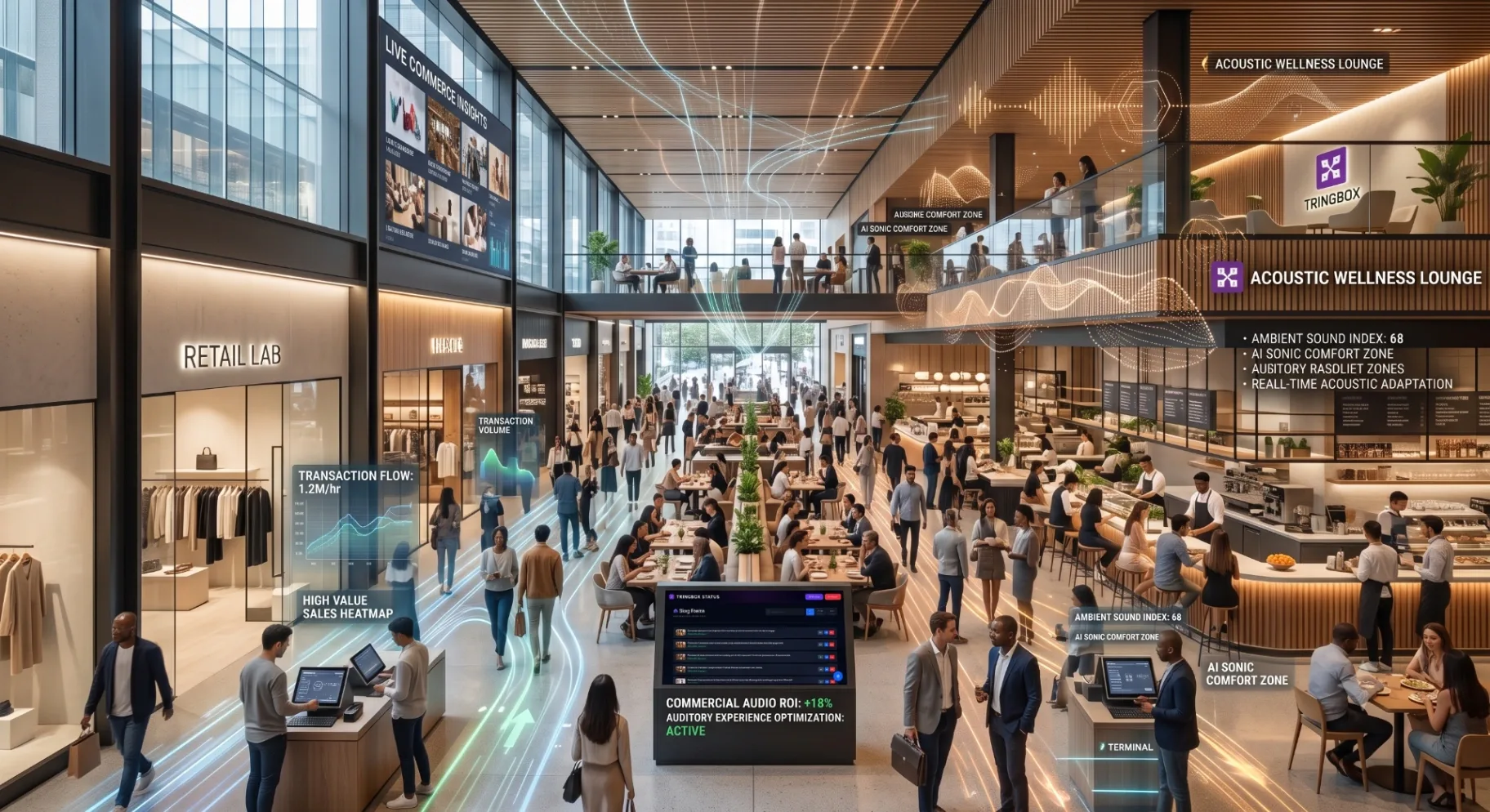
In modern commercial environments, background music is often viewed as a simple utility. However, data from 2026 confirms that legacy playlists are no longer adequate. True ROI in commercial sound doesn't come from mere playback; it comes from context-aware, adaptive AI audio architecture that actively optimizes the physical environment for commerce and compliance.
Dwell Time, Psychology, and the Checkout Vector
Mitigating the $150,000 Risk: Compliance and Legal ROI
Conclusion
Investing in intelligent audio architecture isn't about upgrading speakers; it’s about deploying an autonomous data-driven layer that stabilizes revenue, eliminates legal vulnerability, and protects your brand image in real-time.
Never miss music licensing & industry updates
Add Tringbox as a preferred source to see our breakthrough guides, PPL/IPRS compliance updates, and acoustic trends first on Google Search & Discover.
Recommended for you
How to Measure In-Store Music Without Making Fake ROI Claims
The absolute fastest way to destroy the credibility of a serious in-store music strategy is to march into a Chief Financial Officer's office and promise a precise, guaranteed sales increase without a valid experimental framework. Physical retail and hospitality spaces are incredibly complex, multi-variable ecosystems. Daily revenue is heavily influenced by footfall, flash promotions, staffing levels, visual merchandising, local weather, inventory availability, and broader economic pricing trends.
While background music absolutely contributes to the atmosphere and can shape consumer behavior, isolating its exact financial effect requires rigorous scientific care. When vendors jump straight to claiming that a specific playlist tempo 'releases dopamine and guarantees a 15% revenue bump,' they cross the line from evidence-based marketing into dangerous pseudoscience.
However, responsible measurement is still entirely possible—it simply needs to be structured in intelligent layers. You cannot measure a revenue increase if you cannot first prove the music actually played. In this comprehensive guide, we provide a practical, three-tiered framework to legitimately measure in-store music ROI, conduct valid physical retail experiments, and build a trustworthy executive scorecard using Tringbox AI.
What Music Science Does Not Prove: A Guide to Avoiding Overclaims in Retail
Music is undeniably and profoundly emotionally powerful, which makes it incredibly easy for marketers to overstate what academic research actually proves. In the retail and hospitality industry, vendor marketing material frequently jumps from a reasonable, peer-reviewed conclusion—like 'music influenced customer behaviour in one controlled study'—to a massive, unscientific leap like 'this specific tempo releases dopamine and guarantees a 20% increase in sales.'
Those are two fundamentally different claims. A trustworthy, enterprise-grade business must intimately understand the difference between observed behavioral correlation and neurochemical causation. Relying on exaggerated 'audio neuroscience' to drive your store operations creates false expectations and flawed strategies.
In this comprehensive review, we deconstruct the most pervasive myths in commercial music psychology, explore the critical importance of null results, and provide a framework for evaluating in-store music science responsibly. By grounding your strategy in reality rather than marketing hyperbole, platforms like Tringbox AI help brands design effective, evidence-aware acoustic environments.
What 30+ Years of Research Actually Says About Music in Retail
Background music has been rigorously studied in commercial environments for over four decades. Yet, a quick search on the internet often reduces this vast, nuanced academic literature to a handful of highly dramatized, clickbait statistics promising instant revenue multipliers. Blogs frequently declare that slow music guarantees higher spending, or that loud music instantly drives fast-food table turnover, presenting these concepts as unbreakable laws of physics.
A closer, more responsible reading of the actual scientific literature reveals something far more useful and complex: music absolutely possesses the power to influence customer responses, but those effects depend heavily on contextual variables, acoustic fit, and the specific operational outcome being measured. There is no magical playlist that guarantees a 15% increase in sales across every vertical.
For enterprise operations and marketing leaders, understanding the real science is critical to designing a robust sonic strategy. In this comprehensive review, we strip away the marketing folklore and examine what over thirty years of peer-reviewed research actually proves about in-store music, how acoustic congruence drives brand equity, and how Tringbox AI operationalizes this data to build evidence-aware commercial environments.
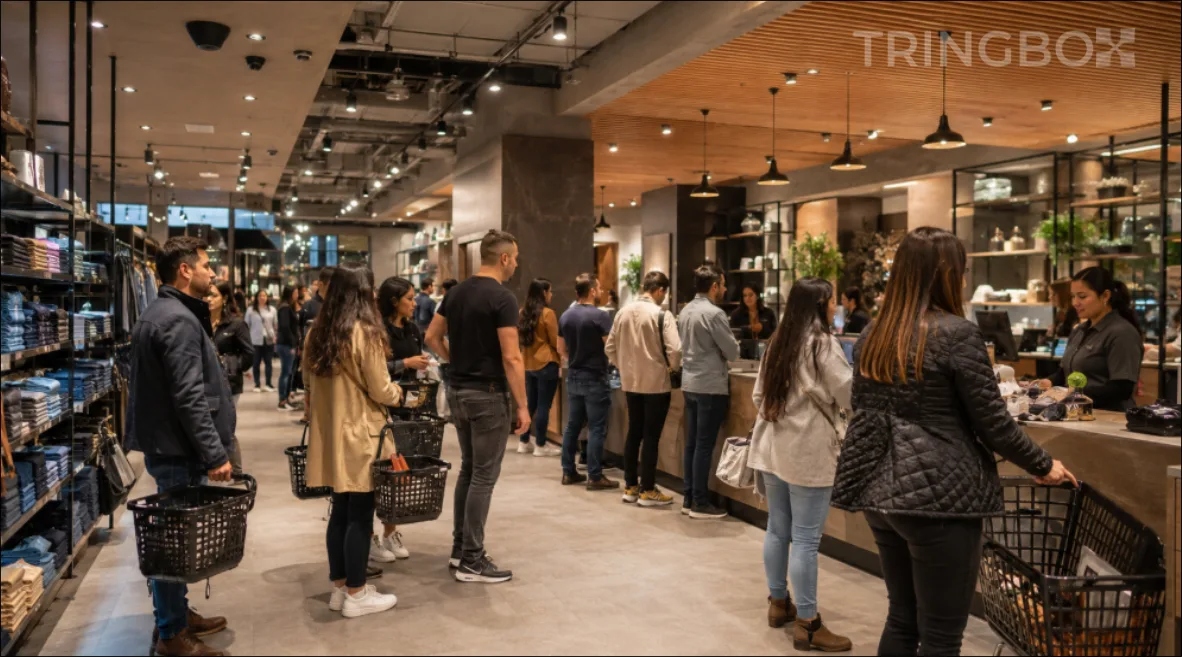
Music and Waiting: Can the Right Sound Make Queues Feel Better?
Waiting is undeniably one of the most emotionally sensitive and volatile moments in any customer journey. A long queue at a retail checkout, a delay at a premium salon reception, an extended wait in a healthcare clinic, or a crowded restaurant host stand can feel agonizingly slow when customers are bored, anxious, or physically uncomfortable. In these high-friction moments, the entire brand experience is placed under a microscope, and customer satisfaction can plummet in a matter of minutes.
For decades, commercial venue operators have instinctively used background music to improve these spaces, operating under the widespread assumption that playing the right songs will magically make the wait feel shorter. However, behavioral science and acoustic research do not support this simplistic claim. The psychological relationship between background music, time perception, and customer emotion is vastly more complex.
Music absolutely possesses the power to rescue a frustrating waiting experience, but it does so by altering the customer's emotional state, not necessarily by manipulating their internal clock. In this operational breakdown, we explore the academic research behind musical tempo and time perception, why generic 'relaxing' music often fails, how to zone your waiting areas effectively, and how Tringbox AI utilizes journey-based programming to soothe customer anxiety precisely when it matters most.
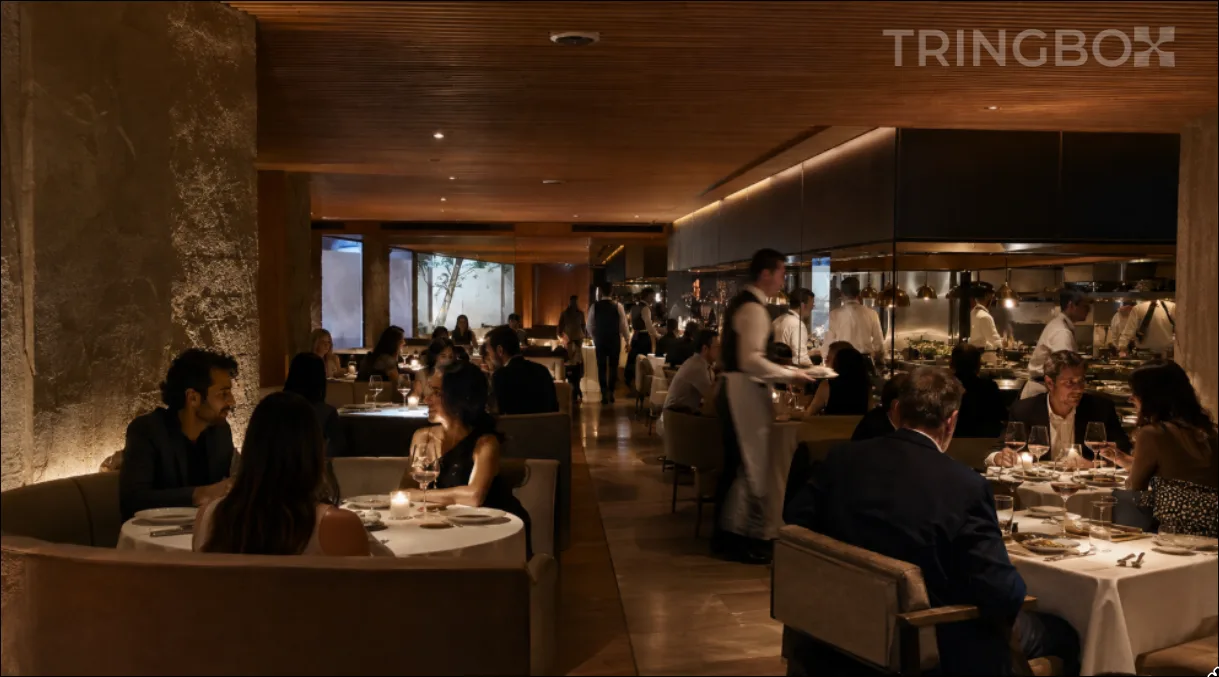
Restaurant Music Tempo: What the Research Actually Says
Restaurant music advice is full of confident, almost magical formulas: slow music makes people stay longer; fast music increases table turnover; louder music increases spending. The academic literature, however, is significantly more complex, highly nuanced, and far less absolute.
For multi-location hospitality operators, the most useful approach is to deeply understand what individual scientific studies actually found, where they were conducted, and—crucially—what they did not prove. Relying on generalized acoustic myths can lead to poorly optimized dining rooms and frustrated customers. In this review, we break down the real science of Beats Per Minute (BPM) in the dining room, separating proven behavioral science from industry folklore.
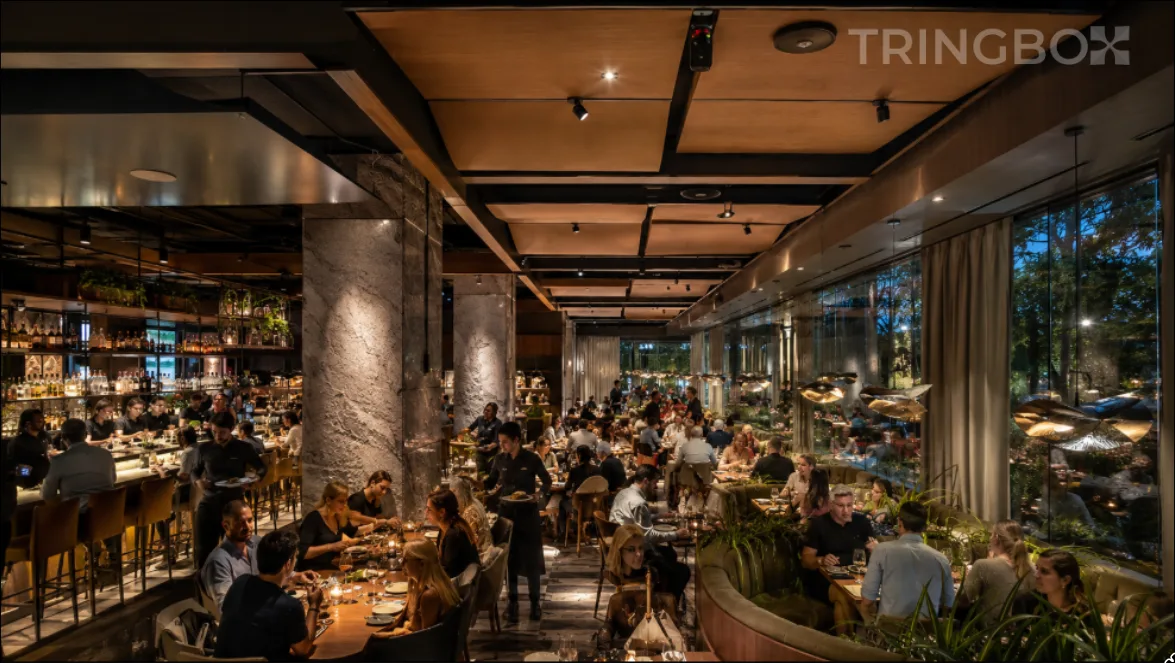
Music Cannot Fix Bad Acoustics: What Restaurants and Stores Need to Understand
In the highly competitive world of modern retail and hospitality, business owners and operations executives frequently fall into a common, expensive trap: they treat their background music system as the entirety of their store’s sound environment. They assume that if they simply license the perfect, curator-approved 'calm' playlist, their chaotic, echoing cafe will magically transform into a serene, premium oasis. This is a fundamental misunderstanding of audio physics and human perception. Music cannot fix bad acoustics.
The reality is that customers do not just hear your music; they consume the entirety of your acoustic environment simultaneously. They hear the low rumble of the HVAC system, the sharp clatter of plates in the open kitchen, the grinding of the espresso machine, the squeak of shopping trolleys, the roar of street traffic, and the complex reflections of human conversations bouncing off hard architectural surfaces. If the physical room is acoustically harsh, highly reflective, or poorly designed, choosing a sophisticated playlist does not automatically make the space feel sophisticated. It merely adds another layer of noise to an already stressful environment.
This critical distinction is especially important in high-density commercial spaces like restaurants, cafes, and open-plan retail stores, where excessive, uncontrolled noise can completely undermine customer comfort, ruin conversational privacy, and actively drive patrons away. In this comprehensive acoustic guide, we will explore why the physical soundscape matters just as much as the digital playlist, how reverberation destroys audio clarity, why speaker placement is paramount, and how brands must integrate intelligent music systems like Tringbox AI with proper physical acoustic treatments to create a genuinely premium customer experience.
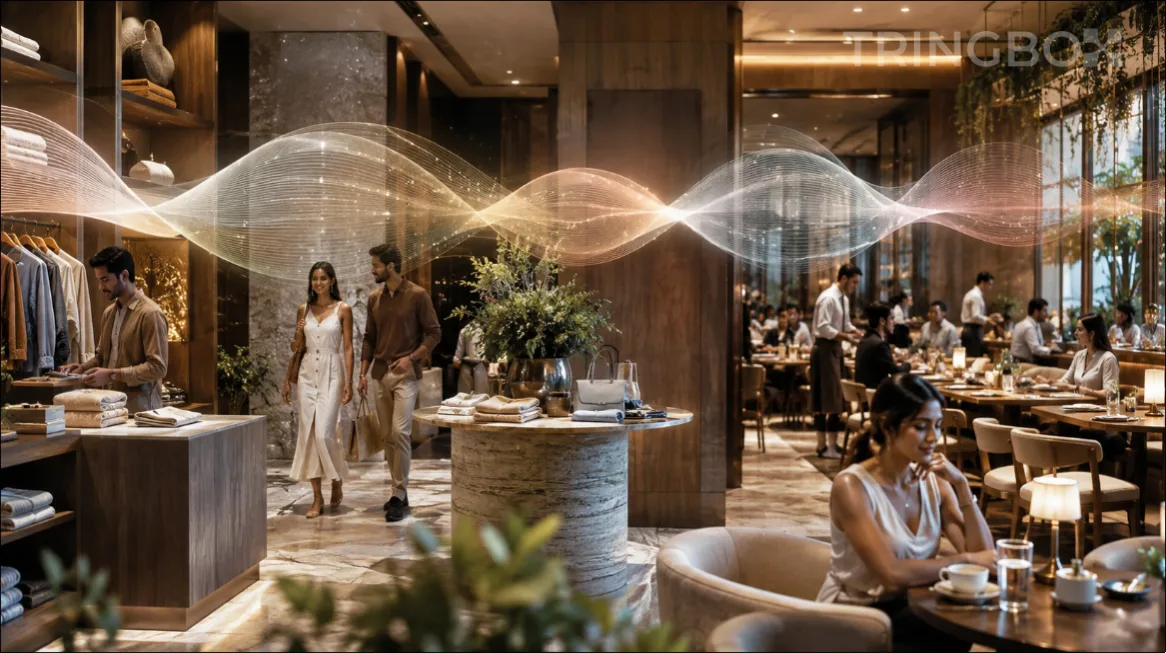
Why Track Transitions, Loudness, and Dead Air Matter in Business Music
A multi-location retail brand can spend months meticulously designing the perfect sonic identity, hand-picking excellent tracks that flawlessly match their brand persona, and they can still deliver a fundamentally poor music experience on the store floor. The core problem is very rarely the songs themselves. The problem is what happens between the songs.
A sudden ten seconds of awkward silence, a sharp and shocking jump in loudness, a jarring musical key clash, a cold and abrupt start after a long fading outro, or a poorly timed vocal transition that makes customers physically look up at the ceiling because something feels fundamentally 'wrong'—these are the operational acoustic failures that destroy retail ambience. In casual consumer listening on personal headphones, these moments are minor, easily ignored annoyances. However, in a physical commercial venue, they become an inescapable part of the room's architecture.
Silence instantly exposes private customer conversations and harsh mechanical noise. A suddenly loud track makes customers feel like someone accidentally bumped the sound system. A jarring, chaotic transition permanently breaks the subconscious illusion that the physical environment is premium, intentional, and deliberately designed. This is exactly why professional enterprise business music must be rigorously evaluated as a continuous, flowing audio service, not merely as a loose collection of individual MP3 files.
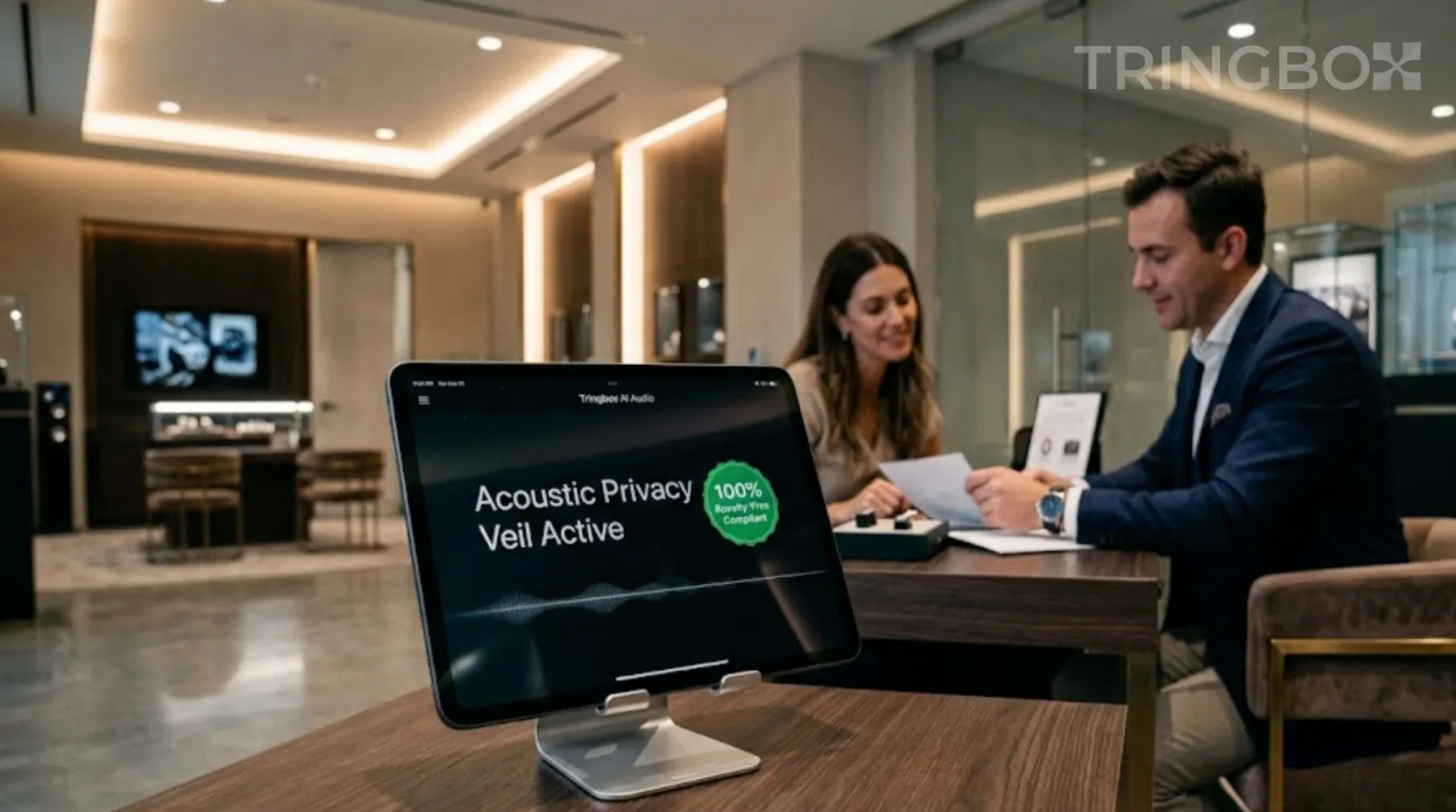
Selling in Silence: Why Consultative Retail Requires AI Acoustic Masking
In high-stakes consultative environments like a premium `Jewelry Store`, a luxury car dealership, or a specialized banking lounge, silence is not an asset. It is a massive liability. When a customer is discussing a high-value purchase or sharing private financial details, they require absolute discretion. If the space is dead silent, every whispered conversation echoes across the room, instantly destroying the customer's sense of privacy. Conversely, trying to mask these conversations with loud, abrasive radio streams completely shatters the premium brand aesthetic. Tringbox resolves this delicate acoustic balancing act through zero-hardware Agentic AI. By deploying a 100% royalty-free library and deeply intelligent volume normalization, Tringbox engineers a sophisticated acoustic veil that protects your clients' privacy and facilitates seamless, high-value transactions.
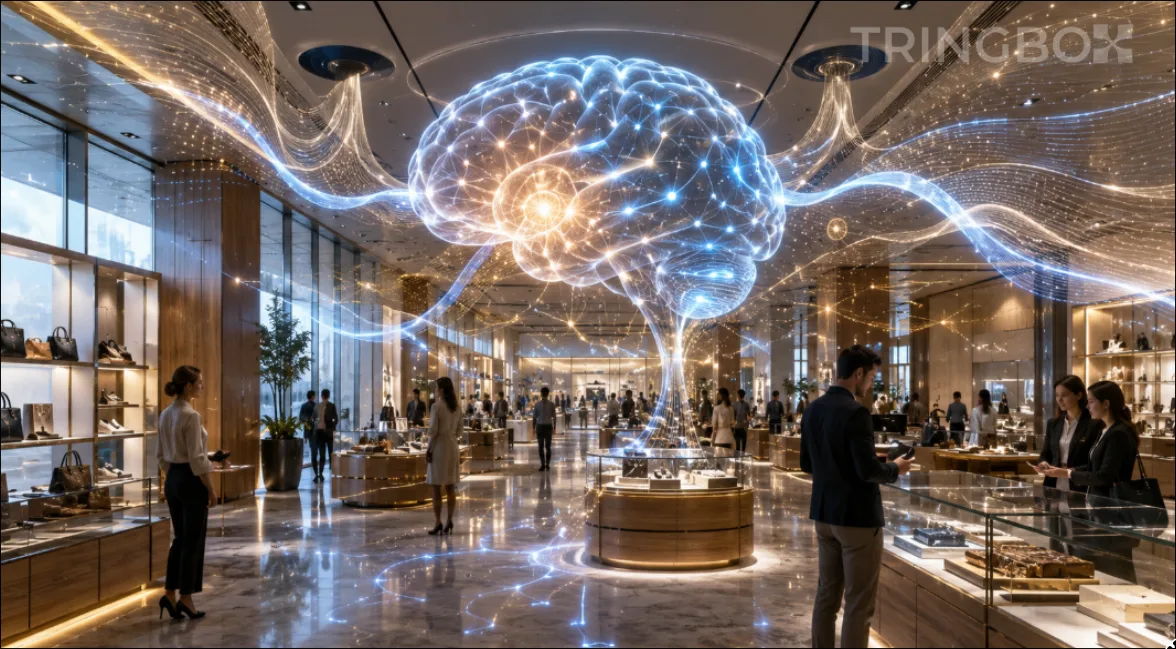
The Science Behind Tringbox: How Audio Engineering Drives Retail Revenue
When business owners think about retail design, they focus on lighting, architecture, and visual merchandising. However, the most powerful driver of consumer behavior is completely invisible. Decades of peer-reviewed neuroscience research, backed by over 20 global studies, prove that engineered soundscapes directly alter human physiology and decision-making in commercial spaces. Background music for restaurants, stores, hotel lobbies and offices business is not merely a decorative add-on to fill awkward silence; it is a scientifically proven catalyst for revenue. By analyzing how audio frequencies interact with the brain's limbic system, leading researchers have mapped out exactly how tempo, volume, and genre influence purchasing habits. That is why enterprise leaders are abandoning unmanaged, illegal personal streaming playlists and switching to Tringbox. Our Agentic AI engine does not just play music; it deploys calculated, data-backed sensory strategies to optimize your floor's performance. Here is the hard science behind how Tringbox drives proven results for your business.
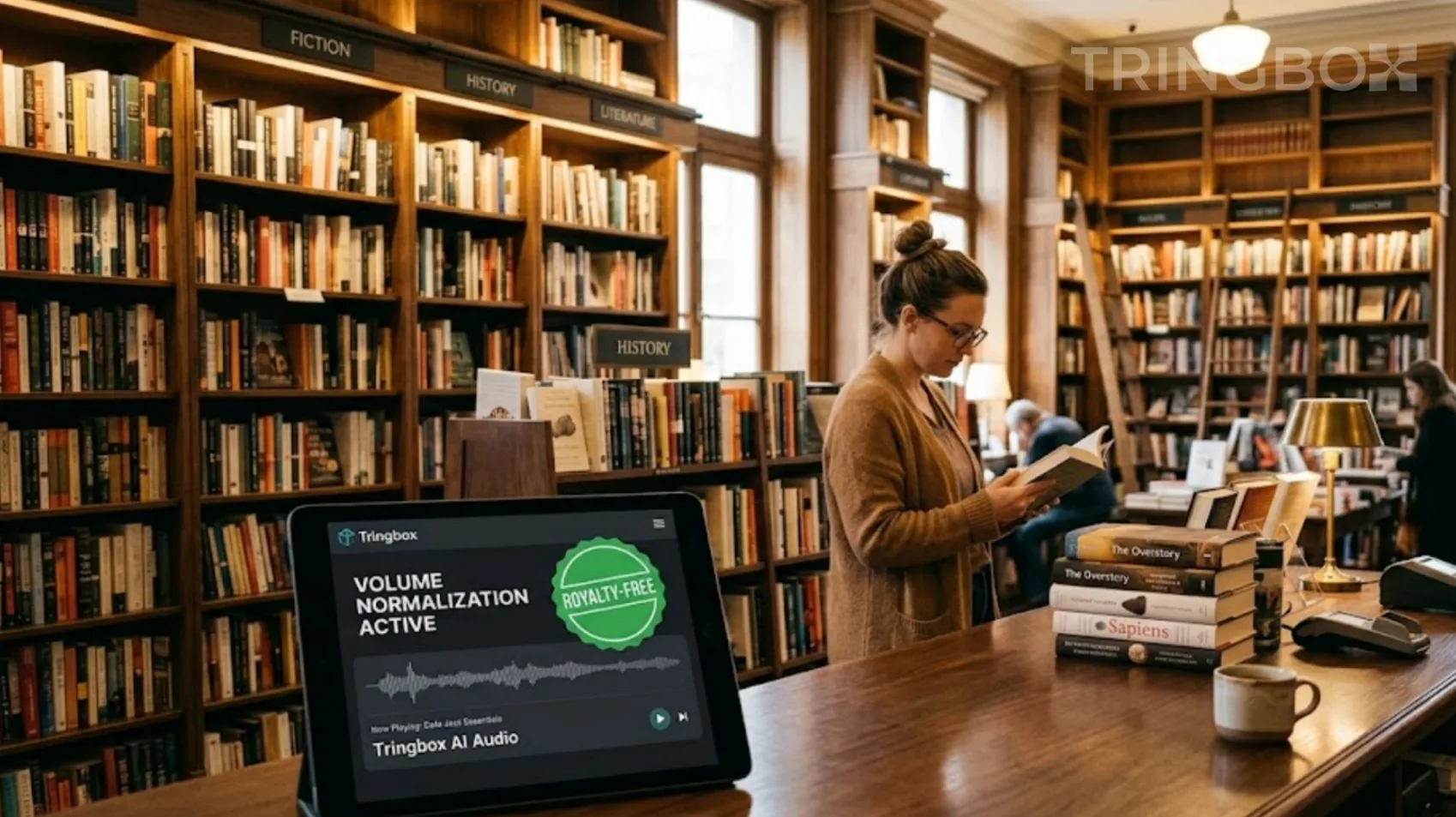
The Cost of Silence: How Acoustic Dead Zones Sabotage Customer Comfort and Sales
Have you ever walked into a commercial space where the silence was so profound it felt intimidating? Every footstep echoed, hushed conversations felt completely exposed, and the overwhelming urge was simply to turn around and leave. This phenomenon, known as the 'acoustic dead zone,' is a silent killer of retail conversion rates in 2026. For highly consultative environments like a Jewelry Store or deeply immersive spaces like a Bookstore / Stationery, failing to provide a functional audio mask creates massive consumer anxiety. On the opposite end of the spectrum, unmanaged audio that blasts indiscriminately over a crowded room creates an exhausting, chaotic roar that actively drives customers out the door. Maintaining the perfect acoustic equilibrium is a full-time job that cannot be left to distracted frontline staff. Tringbox resolves this critical friction point using advanced Agentic AI. By autonomously normalizing volume levels and curating a 100% royalty-free soundscape, Tringbox ensures your store is never awkwardly silent and never overwhelmingly loud, maximizing customer comfort and dwell time.