
Music for Business Companies in India: The Complete 2026 Buyer's Guide to In-Store Sound, Licensing, and Multi-Location Control
Compare commercial background music providers in India by public performance licensing, AI curation, multi-location governance, offline edge caching, Tringflow transitions, and total cost of ownership.
By
Satya Prakash
Published
Aug 6, 2026
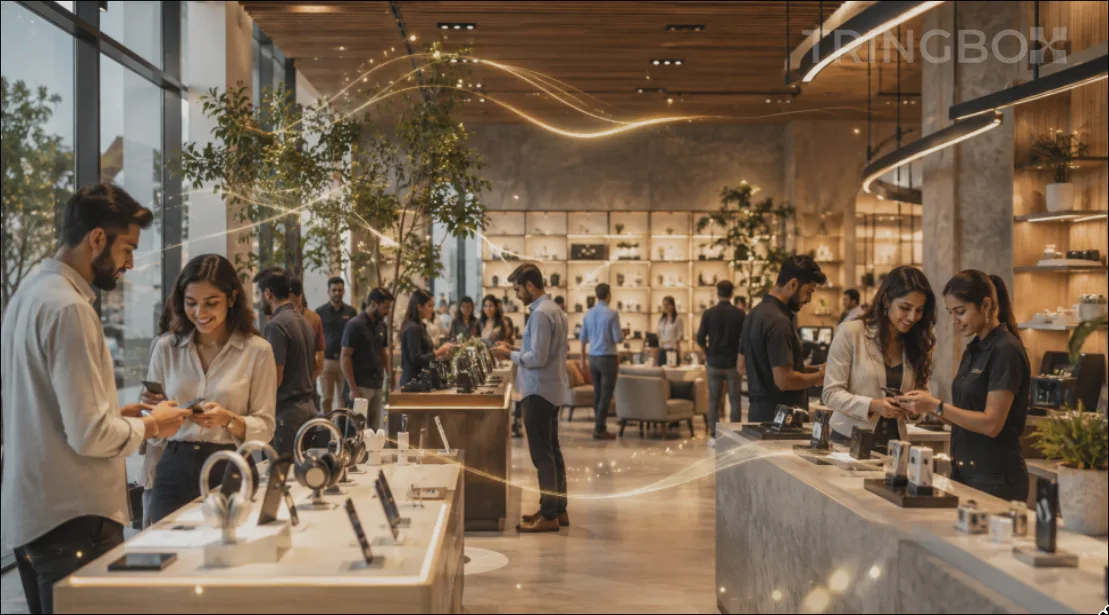
Music in a commercial physical space is not simply a random playlist playing through background speakers. It is a fundamental operating system for venue atmosphere. A fine-dining restaurant uses sound to transition smoothly from morning coffee calm to high-energy dinner service. A multi-store retail chain relies on music to make hundreds of outlets across metropolitan hubs and Tier-2 cities feel recognizably part of the exact same brand identity. A modern gym uses high-BPM acoustic energy to fuel intense workout zones, while a luxury hotel uses soundscapes to curate distinct identities for its lobby, spa, rooftop bar, and banquet halls.
That is precisely why searching for music for business companies in India requires a completely different evaluation framework than choosing a consumer music app. A professional business music partner must deliver commercial-use public performance permissions, brand-specific sonic strategy, dynamic daypart scheduling, unbreakable offline playback, centralized cloud controls, proof-of-play analytics, and responsive local support. A vast catalog alone is not a business solution.
This comprehensive 2026 buyer's guide explains the Indian commercial music landscape from a decision-maker's perspective. It is engineered specifically for founders, marketing directors, vice presidents of retail operations, procurement leads, facility managers, and customer experience leaders who need to select a reliable background music partner without being distracted by superficial sales jargon or unverified claims. In this guide, we break down what business music providers actually deliver, how Indian licensing works under PPL, IPRS, and the Sangeet Dwar initiative, how to evaluate curation algorithms, and how Tringbox InStore AI Music powers high-converting, fully compliant soundscapes across physical commercial enterprises in India.
1. What Does a Music-for-Business Company Actually Provide?
• What music can the business legally play on its floor?
• What public performance rights are included, and what legal responsibilities remain with the venue?
• How does the music selection reflect and reinforce the brand's unique sonic identity?
• How does the music adapt dynamically by time of day, venue density, local weather, and regional demographics?
• What happens to the audio stream when internet connectivity fails entirely?
• How can corporate head office verify that every store location is playing the correct sound profile at the right volume?
If a provider answers only the first question, it is merely selling access to audio files rather than solving an enterprise operational problem.
2. Why Indian Businesses Need a Specialized Commercial Music Solution
1. Culture: Understanding regional preferences, language blends, tempo sensitivities, and holiday mood shifts.
2. Compliance: Navigating Indian copyright laws, public performance permissions, and copyright society enforcement.
3. Operations: Engineering software that survives real-world power outages, internet drops, and staff turnover.
This is where an integrated platform adds far more value than a list of popular songs. It converts brand strategy into a repeatable, automated daily system.
3. The Five Types of Commercial Music Providers in the Market
2. Indian In-Store Radio Companies: Traditional in-store radio providers excel at local language curation, retail operations, and hardware installation. Many also offer branded audio advertisements, digital signage, or PA system installation. Their primary strength is physical implementation at scale, though buyers should evaluate whether their software infrastructure offers modern AI automation and real-time cloud controls.
3. Curation Agencies: Human music agencies craft custom playlists and sonic identity guidelines for brands. While this produces a highly tailored result, these agencies often rely on third-party media players or software for playback, licensing, and reporting. Buyers must clarify who owns each layer of technology and who resolves technical issues when an outlet goes silent.
4. Direct-Licensed & Royalty-Free Catalog Providers: This model simplifies licensing because the music is commissioned or direct-licensed specifically for commercial public use. While famous chart-topping pop hits may be excluded, the benefit is absolute legal safety without recurring society disputes. For many restaurants, spas, salons, clinics, fitness centers, and luxury retail environments, curated royalty-free music is an asset rather than a compromise.
5. Integrated Experience Platforms: This modern category combines pre-cleared music, real-time context sensing (weather, time, crowd density), multi-location cloud controls, offline edge caching, audio messaging, and health monitoring. This is where Tringbox positions itself—delivering an automated, environment-aware audio engine built specifically for modern commercial enterprises.
4. Commercial Music Licensing in India: Demystifying Public Performance Permissions
• Literary & Musical Works (Composition & Lyrics): Represented by copyright societies such as the Indian Performing Right Society (IPRS).
• Sound Recordings (Master Tracks): Represented by societies such as Phonographic Performance Limited (PPL India) and other independent rights holders.
The legal permissions required depend on the specific repertoire, venue category, square footage, seating capacity, and contractual framework. Important industry initiatives—such as the Sangeet Dwar centralized licensing framework bringing together key copyright bodies—aim to streamline public performance licensing. However, commercial business owners must still verify current processes and coverage directly in writing.
Never accept a simple verbal claim of 'fully licensed music.' Request a written rights matrix detailing:
• Primary catalog sources and licensors.
• Covered geographical territories (India nationwide).
• Explicitly permitted commercial public uses.
• Exclusions and limitations.
• Whether B2B public performance permissions are included directly.
• Which party assumes legal defense and indemnification in the event of a copyright inquiry or audit.
<em>Note: This guide provides operational information, not formal legal counsel. Multi-location business entities should always have internal legal teams review proposed licensing contracts prior to nationwide rollout.</em>
5. Curation Architecture: The Difference Between a Playlist and a Brand System
• 08:00 AM – 11:30 AM (Morning Focus): Soft acoustic, downtempo jazz, and lo-fi instrumental tracks that facilitate quiet reading, laptop work, and casual morning meetings.
• 12:00 PM – 03:30 PM (Lunch Rush): Upbeat indie, bossa nova, and medium-tempo rhythms that maintain lively energy while enabling clear conversation.
• 03:30 PM – 06:30 PM (Afternoon Lounge): Warm, relaxing ambient lounge designed to encourage prolonged seating, coffee refills, and pastry orders.
• 07:00 PM – 11:00 PM (Evening Vibes): Deep, warm soul, organic house, or jazz grooves that build an intimate dinner atmosphere.
The transition between these phases must feel fluid and natural. The best platforms combine human curation expertise with advanced algorithmic sequencing—human curators protect cultural nuance and taste, while algorithms scale track selection and prevent tight playback loops.
6. Real-Time Context & Dayparting: Why Static Playlists Kill Store Vibe
• If sudden rain starts outside a retail store, how does the system adapt audio warmth to comfort shelter-seeking shoppers?
• If store footfall drops during mid-afternoon hours, does the system lower tempo to extend customer dwell time?
• How are sudden, jarring genre transitions avoided between tracks?
• Can local store managers override automatic context rules, or is policy strictly controlled by head office?
Explainability is essential because operations teams need total confidence that automation will consistently adhere to brand guidelines.
7. Playback Reliability, Offline Caching, and Tringflow Transitions
Tringbox addresses this through its proprietary Tringflow transition engine. Tringflow continuously matches harmonic keys, normalizes volume levels, and smoothly crossfades tracks based on venue profile—ensuring seamless, studio-grade audio flow across every shift.
8. Multi-Location Governance, Role-Based Control, and Remote Health Monitoring
• Role-Based Access Control: National marketing leads define core brand identity; regional managers adjust language mixes; local store managers control volume within approved decibel ranges or select from pre-approved mood profiles.
• Remote Health Monitoring: Head office dashboards should provide real-time visibility into player online status, current track playing, queue depth, local storage health, and audio output state.
• Remote Troubleshooting & Audits: System administrators can push instant updates, block inappropriate tracks nationwide in seconds, trigger emergency audio announcements, and audit complete proof-of-play history.
The goal is not to eliminate all local flexibility, but rather to create safe flexibility within strict corporate guardrails.
9. Actionable Analytics: Turning In-Store Sound into Measurable Business Insights
• Schedule Adherence: Percentage of time outlets played approved schedules versus manual overrides.
• Content Mix Breakdown: Precise ratios of genres, languages, tempos, and energy levels played across regions.
• Repetition & Blocked Tracks: Identification of overplayed tracks and tracks skipped or blocked by store teams.
• Correlation with Store Metrics: Analyzing acoustic data alongside footfall telemetry, average dwell time, table turnover speed, and sales yield.
A practical operational dashboard answers five core questions immediately: Which store locations are currently offline? Which outlets are violating schedule policies? Which tracks are repeating too frequently? How does actual audio delivery compare with approved sonic profiles? What operational metrics shifted after the latest audio update?
10. Comparing Pricing Models and Total Cost of Ownership (TCO)
• Media Hardware Costs: Are proprietary media player boxes required, or can the software run on existing billing PCs, iPads, or tablets?
• Installation & Maintenance: Does deployment require technician visits, custom wiring, or hardware replacements?
• Public Performance Licensing: Are B2B public performance rights fully included, or must the business budget for separate society agreements?
• Internal Staff Overhead: How much time will store managers and IT teams waste managing playlists or resolving downtime issues?
Request a comprehensive 3-year TCO projection based on your projected location count. Confirm policy details regarding temporary store closures, multi-zone outlets, seasonal pop-ups, data export rights, and contract exit terms.
11. The 30-Day Pilot Scorecard: How to Test Prospective Providers
1. Brand Fit: Does the music accurately reflect brand identity and elevate the venue atmosphere across all dayparts?
2. Operational Simplicity: Does the platform run automatically without requiring daily intervention from store staff?
3. Technical Reliability: Does playback continue smoothly during deliberate internet disconnects, power reboots, and network drops?
4. Governance & Control: Can corporate head office instantly view, lock, and adjust music settings across pilot locations?
5. Compliance & Documentation: Are public performance permissions, catalog rights, and legal indemnifications clearly documented in writing?
Collect feedback from store managers and operations teams, but ensure evaluation remains grounded in brand guidelines rather than personal music tastes.
12. Essential Questions to Ask Every Shortlisted Provider
• Can you provide a written B2B rights matrix explicitly detailing public performance permissions and indemnification for Indian commercial venues?
• What happens to audio playback if a store experiences a complete internet outage for 7 consecutive days?
• How does your system control explicit content, profanity, and inappropriate lyrics?
• Can head office block a specific track across 100+ stores simultaneously within 60 seconds?
• How does your curation system handle regional language mixes for different Indian states?
• Can your software run directly on our existing billing PCs or iPads without buying proprietary hardware boxes?
• What proof-of-play logs and analytics reports are generated for compliance and audit purposes?
• Can you share client case studies from retail or dining chains operating at a similar scale?
13. Frequently Asked Questions (Q&A)
A: There is no single universal best provider. The optimal choice depends on your venue category, catalog preferences, public performance licensing model, number of store locations, regional language requirements, offline playback resilience, and corporate control needs. Conduct a structured 30-day scored pilot across representative store locations.
A: No. Consumer streaming applications are strictly licensed for personal, non-commercial, single-user listening under their terms of service. Streaming consumer apps inside a public business (such as a retail store, restaurant, cafe, salon, or gym) constitutes unauthorized public performance under the Indian Copyright Act, exposing the business to legal notices and heavy retroactive fines from copyright enforcement bodies like PPL India and IPRS.
A: Not automatically. Commercial providers vary significantly in their licensing frameworks. A provider must explicitly specify in writing which master recording and public performance rights are included in their service contract and whether any separate venue permissions are required.
A: A 30-day (4-week) pilot is recommended. This duration allows operations teams to observe playback across different dayparts, weekend peak rushes, unexpected internet disruptions, content repetition rates, staff feedback, and central cloud management responsiveness.
A: Multi-outlet enterprises should prioritize centralized cloud governance, role-based user permissions, offline edge caching, automated daypart scheduling, real-time device health monitoring, proof-of-play audit logs, regional language customization, and responsive local support.
A: Onboarding takes less than 15 minutes. Visit tringbox.com, fill out the quick form to test the live interactive demo, download the lightweight software onto your existing billing PC, iPad, or Android tablet, connect it to your store amplifier, and experience automated, fully compliant soundscape intelligence.
Conclusion
Selecting a music-for-business company in India should be approached with the same strategic rigor applied to choosing an enterprise POS system, CRM, or retail management platform. Start with clear brand and venue requirements, demand written public performance rights verification, test offline playback resilience under failure conditions, evaluate curation across all dayparts, and model total cost of ownership across your entire store network.
The winning commercial audio partner will not necessarily be the one with the largest consumer catalog or the flashiest marketing terms. It will be the provider that consistently delivers the right music, at the right moment, within the correct legal permissions, backed by dependable multi-location control. Upgrade your commercial soundscape to Tringbox InStore AI Music today, and let intelligent sound design transform your physical venues into fully compliant, high-converting brand environments.
Never miss music licensing & industry updates
Add Tringbox as a preferred source to see our breakthrough guides, PPL/IPRS compliance updates, and acoustic trends first on Google Search & Discover.
Recommended for you
The Hidden Operating Cost of Employee-Managed Store Playlists
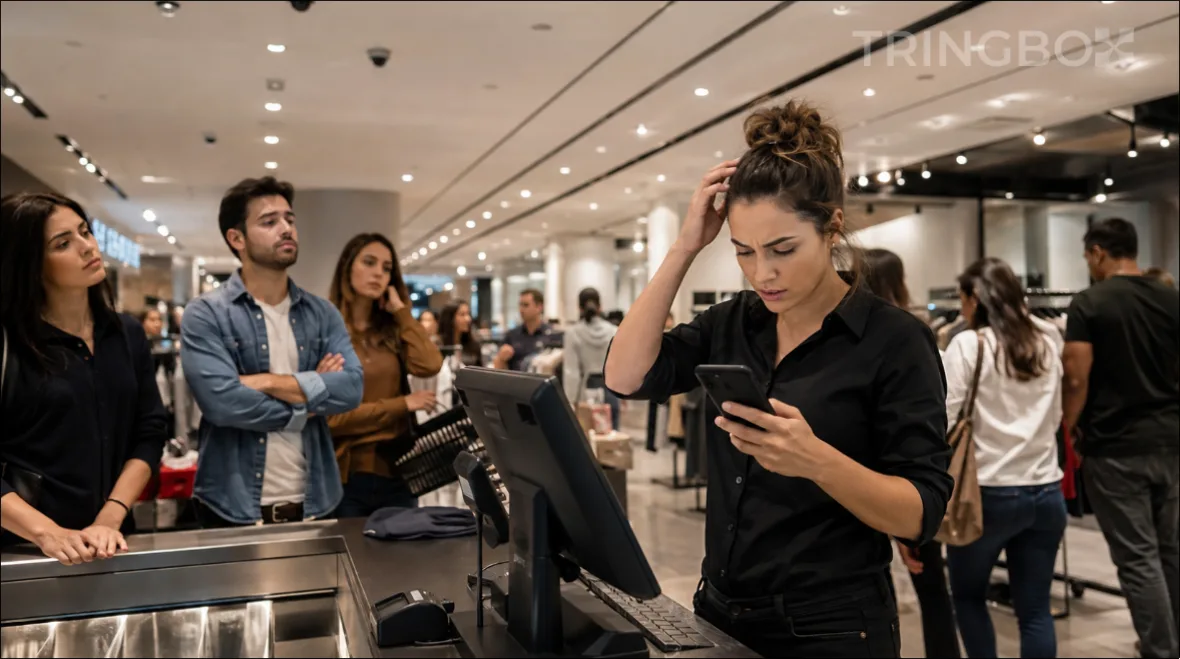
Letting store employees manage music feels incredibly inexpensive because the direct software cost on the monthly P&L is close to zero. The illusion is simple: a store manager plugs in their personal phone, opens a consumer app, and the store has music. However, the real cost of this setup is completely hidden, distributed across dozens of small, daily operational failures: time spent choosing music, inconsistent atmosphere, painfully repeated songs, inappropriate lyrical content, account login problems, severe copyright rights risk, and headquarters having absolutely zero visibility or control.
At one single location, these issues may feel mildly annoying but manageable. Across a scaling national chain of fifty or five hundred stores, they compound into massive operational friction and legal liability. In this analysis, we unpack the invisible labour, brand drift, and copyright risks of employee-managed playlists, and why centralizing music is an urgent operational requirement.
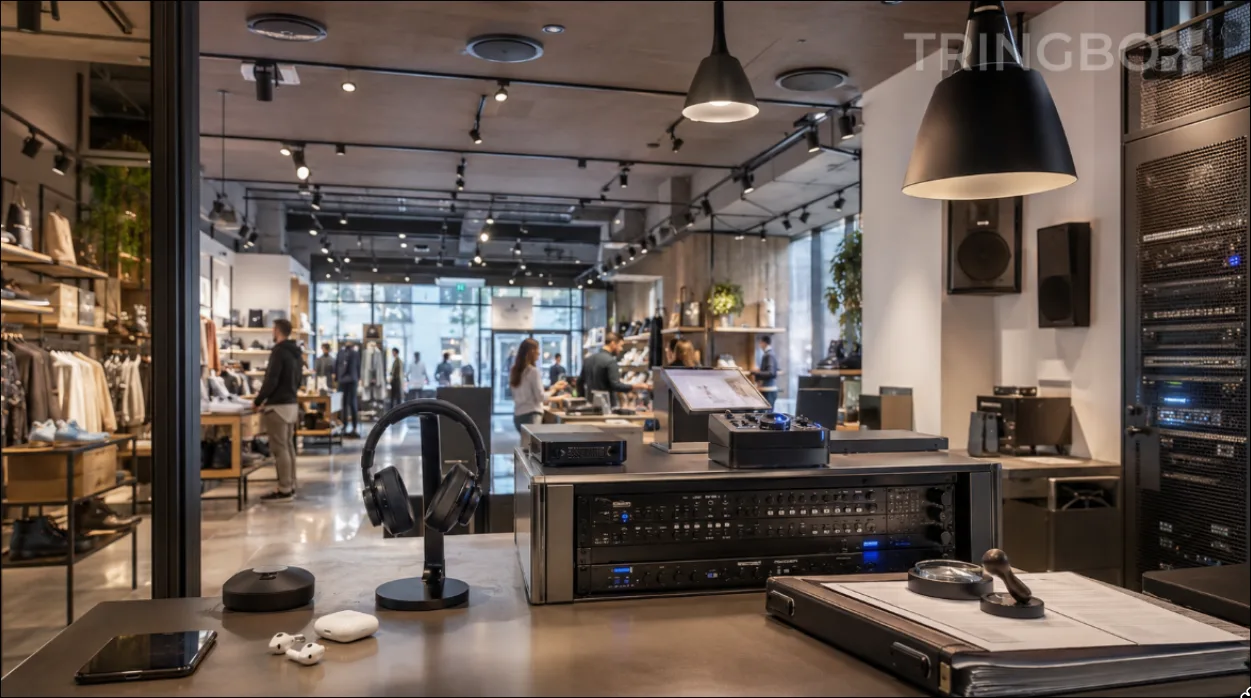
Why Spotify and Apple Music Are Not Business Music Systems
Spotify and Apple Music are undeniably extraordinary consumer products. They feature sleek, world-class user interfaces, host infinite music libraries spanning tens of millions of songs, and can be activated on any smartphone in a matter of seconds. That exact convenience is precisely why retail store clerks, cafe baristas, and restaurant supervisors instinctively plug their personal phones into the store amplifier whenever background music is required.
However, consumer streaming and enterprise business audio are two completely different use cases—both contractually and operationally. Paying for a personal Spotify Premium or Apple Music individual subscription does not give a business the legal or operational right to broadcast that audio across a commercial venue.
When multi-location enterprises rely on consumer apps, they expose their brand to catastrophic statutory copyright fines, destroy store-level governance, and subject their customers to unpredictable, off-brand playlists. In this comprehensive guide, we unpack the explicit legal terms governing consumer streaming in India, examine the operational vulnerabilities of personal apps, and demonstrate why dedicated platforms like Tringbox AI are essential for enterprise brand protection.
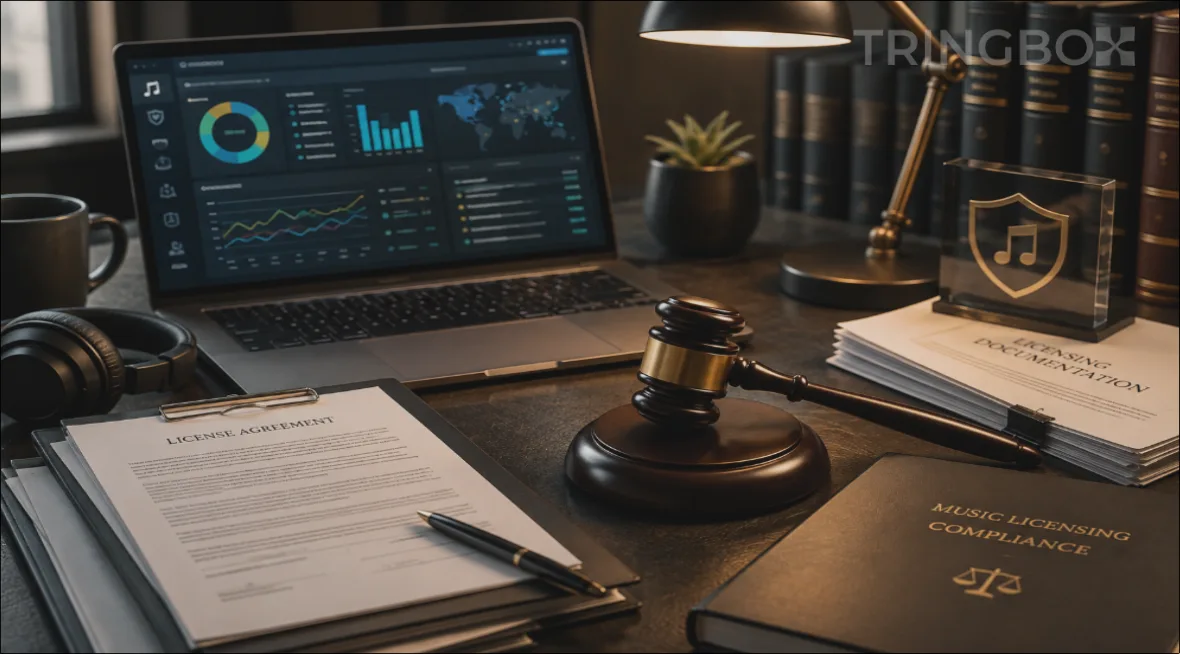
Commercial Music Licensing in India in 2026: A Practical Rights Map for Businesses
Commercial music licensing becomes confusing when businesses ask one broad question: “Is this song licensed?” A more useful approach is to ask which right, for which use, in which repertoire, and by whom. In 2026, that distinction is especially important because Phonographic Performance Limited (PPL India) was officially reinstated as a copyright society for sound recordings by the Government of India on 11 June 2026. PPL's current materials describe public-performance licensing for its represented sound-recording repertoire. Concurrently, IPRS publishes licensing information for musical works and accompanying literary works. This article serves as an operational overview for multi-location brands—not formal legal advice.
What Music Science Does Not Prove: A Guide to Avoiding Overclaims in Retail
Music is undeniably and profoundly emotionally powerful, which makes it incredibly easy for marketers to overstate what academic research actually proves. In the retail and hospitality industry, vendor marketing material frequently jumps from a reasonable, peer-reviewed conclusion—like 'music influenced customer behaviour in one controlled study'—to a massive, unscientific leap like 'this specific tempo releases dopamine and guarantees a 20% increase in sales.'
Those are two fundamentally different claims. A trustworthy, enterprise-grade business must intimately understand the difference between observed behavioral correlation and neurochemical causation. Relying on exaggerated 'audio neuroscience' to drive your store operations creates false expectations and flawed strategies.
In this comprehensive review, we deconstruct the most pervasive myths in commercial music psychology, explore the critical importance of null results, and provide a framework for evaluating in-store music science responsibly. By grounding your strategy in reality rather than marketing hyperbole, platforms like Tringbox AI help brands design effective, evidence-aware acoustic environments.
What 30+ Years of Research Actually Says About Music in Retail
Background music has been rigorously studied in commercial environments for over four decades. Yet, a quick search on the internet often reduces this vast, nuanced academic literature to a handful of highly dramatized, clickbait statistics promising instant revenue multipliers. Blogs frequently declare that slow music guarantees higher spending, or that loud music instantly drives fast-food table turnover, presenting these concepts as unbreakable laws of physics.
A closer, more responsible reading of the actual scientific literature reveals something far more useful and complex: music absolutely possesses the power to influence customer responses, but those effects depend heavily on contextual variables, acoustic fit, and the specific operational outcome being measured. There is no magical playlist that guarantees a 15% increase in sales across every vertical.
For enterprise operations and marketing leaders, understanding the real science is critical to designing a robust sonic strategy. In this comprehensive review, we strip away the marketing folklore and examine what over thirty years of peer-reviewed research actually proves about in-store music, how acoustic congruence drives brand equity, and how Tringbox AI operationalizes this data to build evidence-aware commercial environments.
Music and Waiting: Can the Right Sound Make Queues Feel Better?
Waiting is undeniably one of the most emotionally sensitive and volatile moments in any customer journey. A long queue at a retail checkout, a delay at a premium salon reception, an extended wait in a healthcare clinic, or a crowded restaurant host stand can feel agonizingly slow when customers are bored, anxious, or physically uncomfortable. In these high-friction moments, the entire brand experience is placed under a microscope, and customer satisfaction can plummet in a matter of minutes.
For decades, commercial venue operators have instinctively used background music to improve these spaces, operating under the widespread assumption that playing the right songs will magically make the wait feel shorter. However, behavioral science and acoustic research do not support this simplistic claim. The psychological relationship between background music, time perception, and customer emotion is vastly more complex.
Music absolutely possesses the power to rescue a frustrating waiting experience, but it does so by altering the customer's emotional state, not necessarily by manipulating their internal clock. In this operational breakdown, we explore the academic research behind musical tempo and time perception, why generic 'relaxing' music often fails, how to zone your waiting areas effectively, and how Tringbox AI utilizes journey-based programming to soothe customer anxiety precisely when it matters most.
Restaurant Music Tempo: What the Research Actually Says
Restaurant music advice is full of confident, almost magical formulas: slow music makes people stay longer; fast music increases table turnover; louder music increases spending. The academic literature, however, is significantly more complex, highly nuanced, and far less absolute.
For multi-location hospitality operators, the most useful approach is to deeply understand what individual scientific studies actually found, where they were conducted, and—crucially—what they did not prove. Relying on generalized acoustic myths can lead to poorly optimized dining rooms and frustrated customers. In this review, we break down the real science of Beats Per Minute (BPM) in the dining room, separating proven behavioral science from industry folklore.
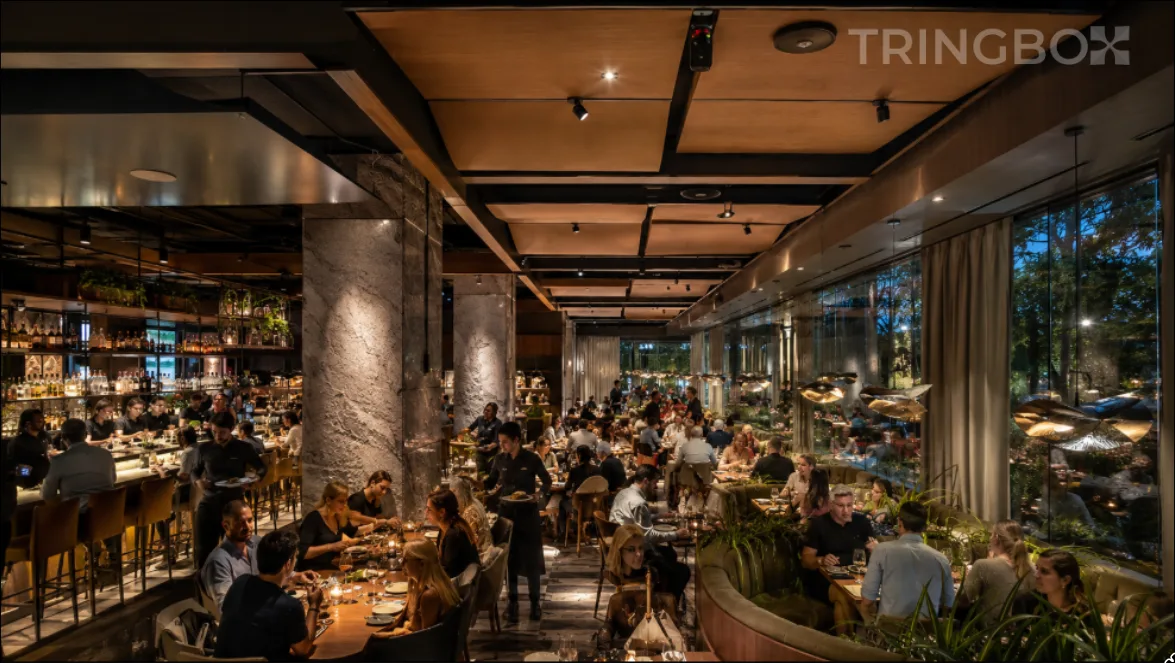
Music Cannot Fix Bad Acoustics: What Restaurants and Stores Need to Understand
In the highly competitive world of modern retail and hospitality, business owners and operations executives frequently fall into a common, expensive trap: they treat their background music system as the entirety of their store’s sound environment. They assume that if they simply license the perfect, curator-approved 'calm' playlist, their chaotic, echoing cafe will magically transform into a serene, premium oasis. This is a fundamental misunderstanding of audio physics and human perception. Music cannot fix bad acoustics.
The reality is that customers do not just hear your music; they consume the entirety of your acoustic environment simultaneously. They hear the low rumble of the HVAC system, the sharp clatter of plates in the open kitchen, the grinding of the espresso machine, the squeak of shopping trolleys, the roar of street traffic, and the complex reflections of human conversations bouncing off hard architectural surfaces. If the physical room is acoustically harsh, highly reflective, or poorly designed, choosing a sophisticated playlist does not automatically make the space feel sophisticated. It merely adds another layer of noise to an already stressful environment.
This critical distinction is especially important in high-density commercial spaces like restaurants, cafes, and open-plan retail stores, where excessive, uncontrolled noise can completely undermine customer comfort, ruin conversational privacy, and actively drive patrons away. In this comprehensive acoustic guide, we will explore why the physical soundscape matters just as much as the digital playlist, how reverberation destroys audio clarity, why speaker placement is paramount, and how brands must integrate intelligent music systems like Tringbox AI with proper physical acoustic treatments to create a genuinely premium customer experience.
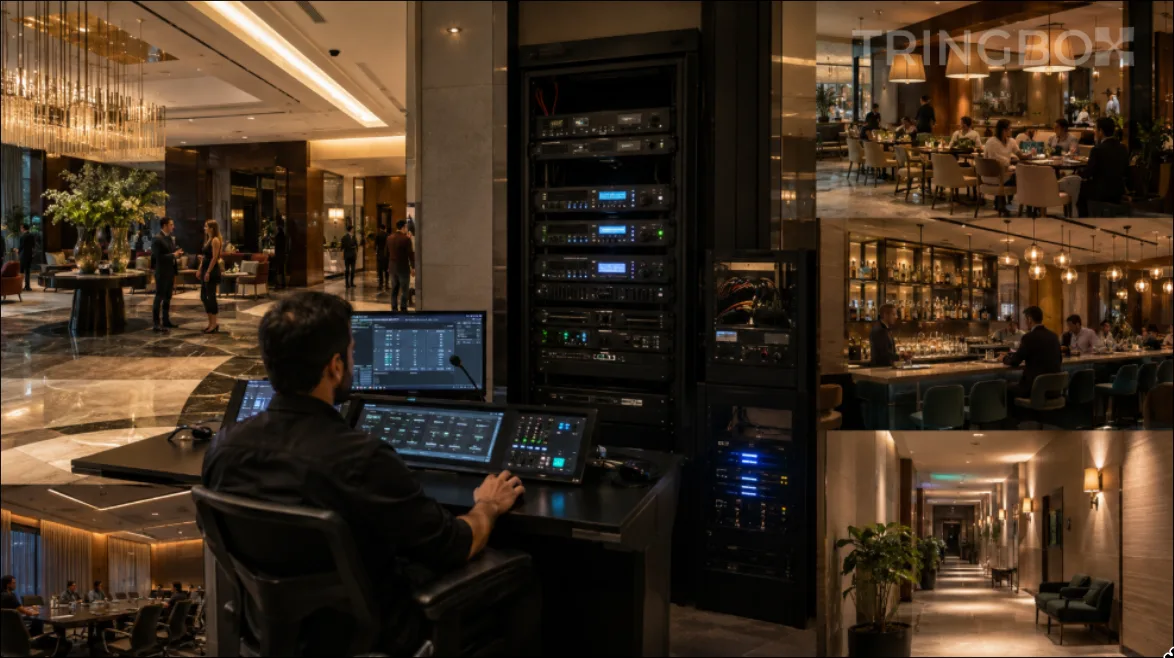
Multi-Zone Music: Why One Location May Need Several Sound Identities
A “location” is not always a single, unified acoustic environment. A luxury hotel can contain a reception lobby, a quiet spa, a fine-dining restaurant, a lively rooftop bar, and a high-energy gym. A massive auto dealership may include a glossy showroom, a relaxed service lounge, and a staff break area. A large fashion flagship store can have a bustling entry, intimate trial rooms, and exclusive premium sections.
Playing one identical audio stream everywhere is operationally simple but experientially crude. Multi-zone music treats each meaningful architectural area as its own distinct playback context while keeping them entirely under one central governance system. In this guide, we explore why large properties require a sophisticated zone strategy to perfect the customer journey.
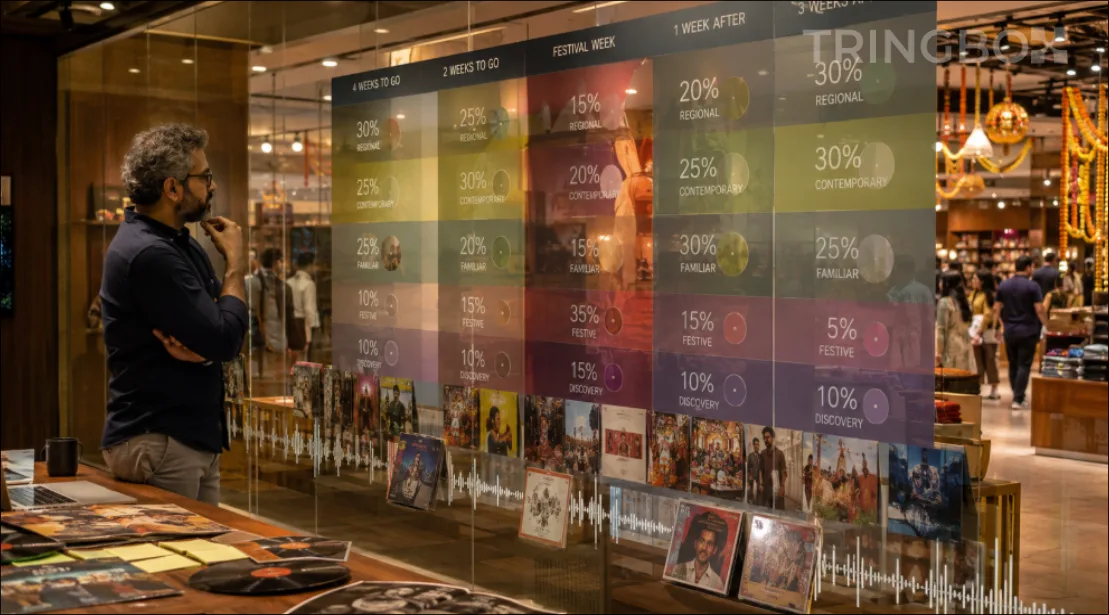
Festival Music Programming for Indian Brands: A Calendar, Not a Playlist
Festive music is one of the easiest ways for an Indian commercial venue to feel culturally current, yet it is simultaneously one of the easiest ways to become agonizingly repetitive. When major holidays like Diwali or Christmas approach, many businesses attempt to solve their festive programming by abruptly replacing their carefully curated brand soundtrack with a generic, themed playlist. The result is almost always excessive familiarity, a jarring loss of brand identity, and severe staff audio fatigue.
The Indian retail calendar is not a single season; it is a relentless, rolling wave of regional and national celebrations. From Makar Sankranti and Pongal in January, through Holi in the spring, to the massive October-December stretch covering Navratri, Durga Puja, Diwali, and the winter wedding season, the celebrations never truly stop. If a brand relies on static playlists for every holiday, they will spend half the year sounding like a generic wedding venue or a community pandal.
A vastly superior operational model treats festivals as a dynamic calendar layer on top of the brand's foundational sonic system. In this comprehensive guide, we explore how multi-location Indian brands can seamlessly integrate festive music for retail stores India without sacrificing their core brand identity, how to legally distinguish background music from event music, and how intelligent platforms like Tringbox AI automate the entire seasonal calendar.