
Background Music App for Shops, Restaurants and Cafes: What Features Actually Matter?
A deep, practical guide to selecting enterprise background music software for retail stores, dining venues, and cafes—covering public commercial rights, multi-zone dayparting, local offline caching, acoustic brand guardrails, and enterprise fleet telemetry.
By
Priya Nair
Published
Nov 18, 2026
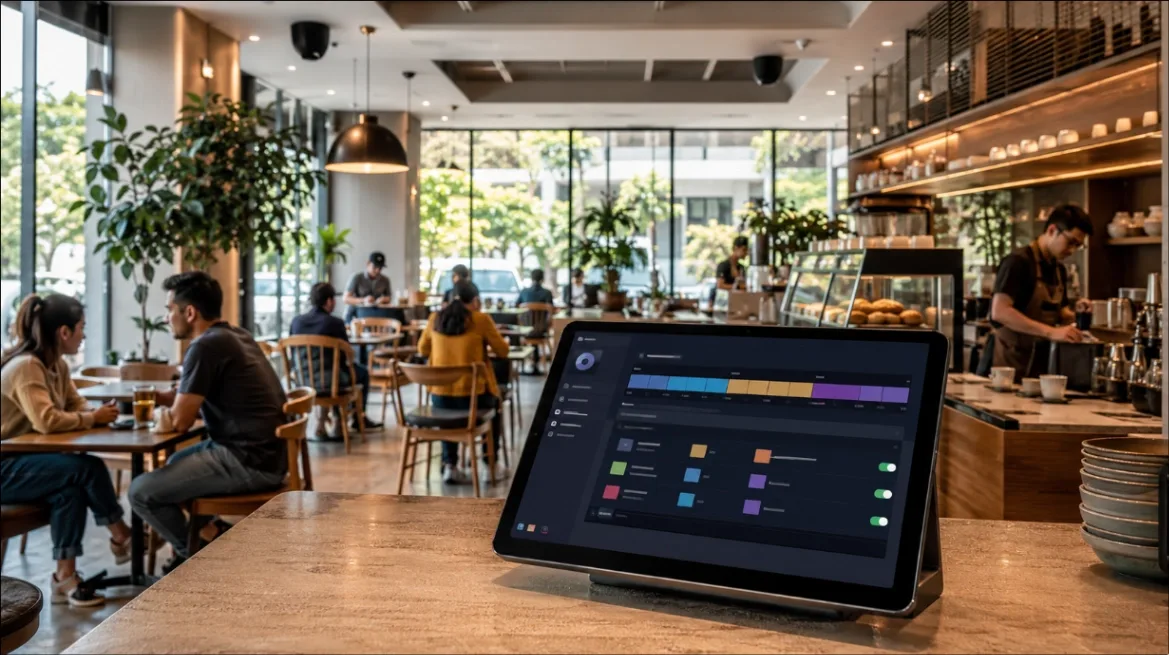
A background music app for a business should do more than play a list of tracks. Retail and hospitality venues operate for long hours, change character through the day, and depend on staff who have more important jobs than choosing the next song. The real question is whether the music system can operate reliably and stay aligned with the brand while requiring very little daily attention. For shops, restaurants, and cafes, the best background music app for shop environments isn’t the one with the flashiest interface—it’s the one that quietly handles the operational work in the background, ensuring the venue sounds intentional from opening to closing. This guide breaks down the essential features that actually matter when choosing a restaurant music app or cafe music app, with a focus on compliance, control, and consistency.
1. Commercial Use Comes First
2. The Music Should Change with the Day
3. Brand Rules Matter More Than Staff Taste
4. Offline Playback Is Not Optional
5. Multi-Location Businesses Need Visibility
6. Restaurants and Cafes May Benefit from Interaction
A Practical Buying Checklist
- Commercial-use clarity: Does the service include full public performance rights?
- Venue-specific music controls: Can rules be tailored per location or brand tier?
- Dayparting or adaptive selection: Does music change based on time, traffic, or event?
- Offline resilience: Is local caching supported to prevent silence during outages?
- Explicit-content and exclusion controls: Can you filter out inappropriate or off-brand tracks?
- Multi-location dashboard: Can head office monitor and manage all players centrally?
- Player status monitoring: Are alerts available for offline or malfunctioning devices?
- Announcements and promotions: Can the system broadcast time-sensitive messages?
- Customer song requests where relevant: Are requests moderated and brand-safe?
- Support for existing devices: Does the app run on hardware already deployed in the venue?
These features collectively determine whether the system reduces daily music work while increasing brand control—a key benchmark for any serious business solution.
Conclusion
For shops, restaurants, and cafes, the best background music app is not the one with the most songs or the slickest interface. It’s the one that operates reliably, adapts to the rhythm of the day, enforces brand identity, and requires minimal daily oversight. Systems like Tringbox InStore AI Music are designed around these principles, using AI-driven selection and centralized control to deliver consistent, compliant soundscapes. Before making a decision, evaluate any platform against the practical checklist above—and remember, the goal isn’t just to play music, but to elevate the entire customer experience without adding to staff burden.
Never miss music licensing & industry updates
Add Tringbox as a preferred source to see our breakthrough guides, PPL/IPRS compliance updates, and acoustic trends first on Google Search & Discover.
Recommended for you
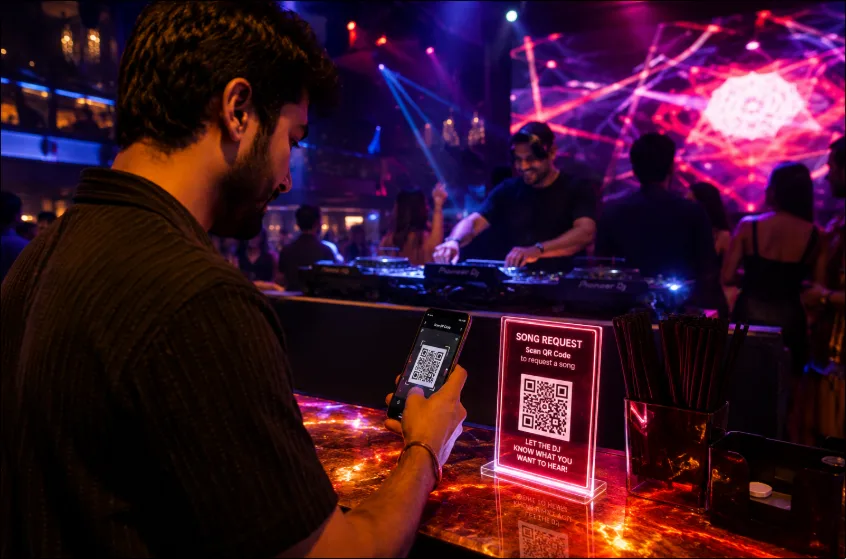
QR Song Requests for Nightclubs, Bars and Events: A Practical Guide
Nightlife represents one of the most challenging acoustic and operational environments on the planet. It is inherently loud, densely packed, and heavily reliant on momentum. In these high-energy spaces, communication between the crowd and the performer is historically fraught with friction. When a patron wants to request a song, they traditionally have to abandon their table, push through a crowded dancefloor, lean over a security barrier, and scream a track title into the DJ's ear over 110 decibels of club audio.
This archaic method disrupts the DJ's flow state, frustrates the patron, and creates localized crowding around the booth. However, nightlife is also the perfect ecosystem for a digital solution. Modern patrons are already conditioned to interact with their physical environment through their smartphones. From scanning digital cocktail menus to processing UPI payments and registering for loyalty programs, the QR code has become a native language for hospitality guests.
Deploying a QR-based song request system transforms a chaotic, disruptive behavior into a streamlined, data-rich engagement channel. It gives the venue unprecedented visibility into guest preferences, opens up new ancillary revenue streams through digital tipping, and most importantly, protects the performer from constant physical interruption. This comprehensive guide explores how to successfully implement QR requests in bars, nightclubs, and live events without compromising the venue's brand or the DJ's artistic control.
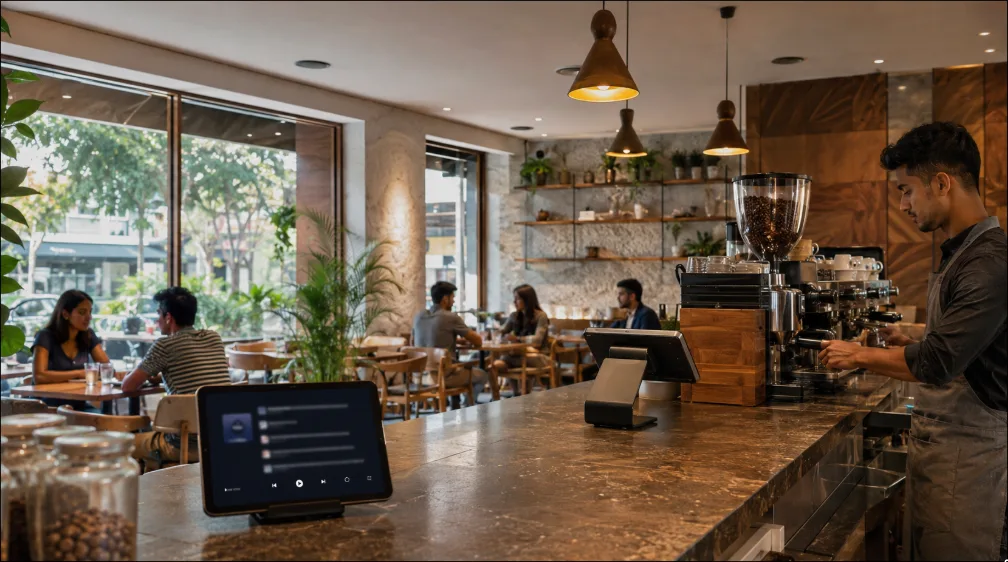
Background Music App for Shops, Restaurants and Cafes: What Features Actually Matter?
A commercial background music platform operates on completely different principles than a personal consumer streaming service. In a retail shop, bistro, or third-wave coffee bar, music is an ambient environmental variable running continuously for twelve to fourteen hours a day. It influences guest dwell velocity, masks kitchen dish clatter, establishes spatial energy, and reinforces brand identity across peak rush periods and quiet morning transitions.
Yet in far too many physical commercial environments, background audio remains an operational point of failure. Store managers stream personal playlists over Bluetooth with incoming call notifications sounding over the floor, staff members battle over the aux cord, consumer accounts violate public copyright statutes, and unstable Wi-Fi connections plunge high-end retail venues into sudden, awkward silence.
Choosing an enterprise background music software stack requires stepping past consumer interfaces and vanity track counts to examine mission-critical operational architecture. This comprehensive operational blueprint breaks down the technical mechanisms, acoustic science, compliance frameworks, and fleet management features that determine whether a music platform enhances brand equity or introduces constant store-level friction.
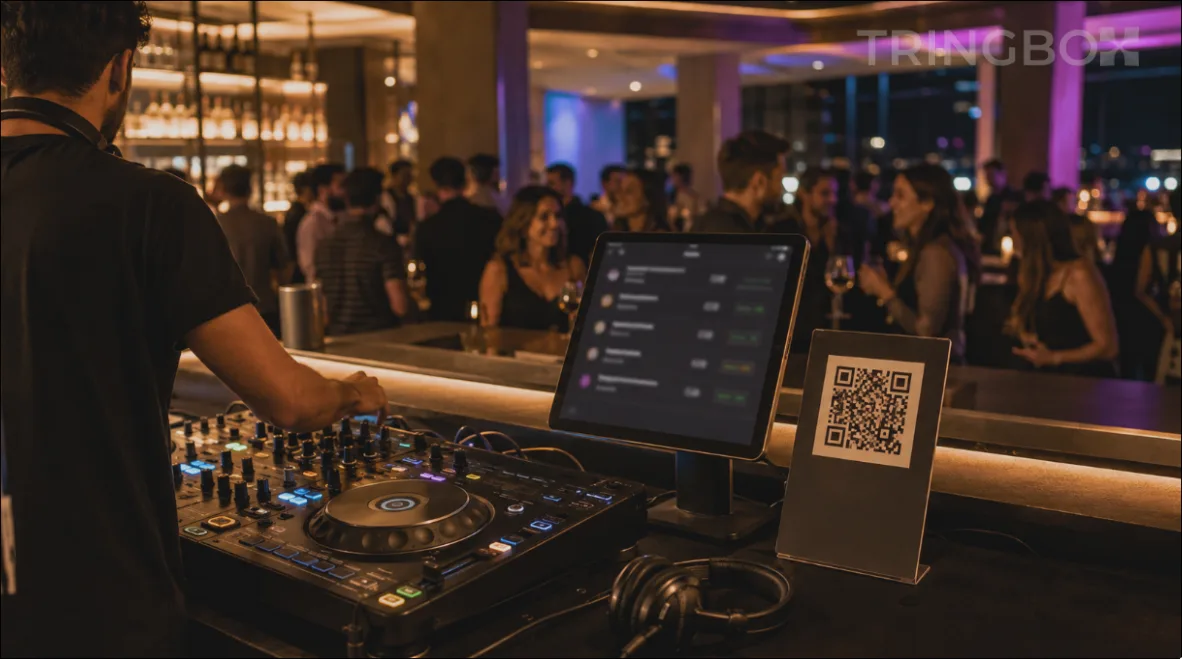
Best Song Request Apps for DJs in 2027: Which Tool Fits Your Gig?
A great song request system solves a very specific operational headache: guests want to participate in the music, while the DJ needs to remain locked into reading the room, mixing tracks, and keeping the floor alive. Shouting over speaker stacks into the booth, scribbling names on cocktail napkins, thrusting sticky smartphone screens into the artist's face, or flooding direct messages on Instagram all disrupt the momentum of a live set.
Modern song request tools migrate that entire exchange onto a structured, frictionless digital channel. A guest simply scans a table or booth QR code or opens a short link on their mobile browser, types in an artist or title, and the request lands in the performer's digital queue without forcing an awkward conversation in the middle of a live transition or harmonic mix.
The request software category has matured dramatically. Instant QR entry and browser-based guest pages requiring zero app downloads have become baseline expectations. The true differentiators lie deeper: whether incoming tracks can be filtered against the DJ's banned list, whether performers have one-tap accept/reject controls, how digital tipping and paid priority requests are handled, whether the software integrates into existing DJ software and streaming libraries, and whether it scales from one-off mobile weddings to recurring multi-zone nightlife venues. In this comparative review, we break down the top song request platforms for DJs in 2027 and show where Tringbox fits into the live entertainment ecosystem.
The Rise of Q-Commerce Experience Centers: Elevating Offline Ambience in India's Retail Shift
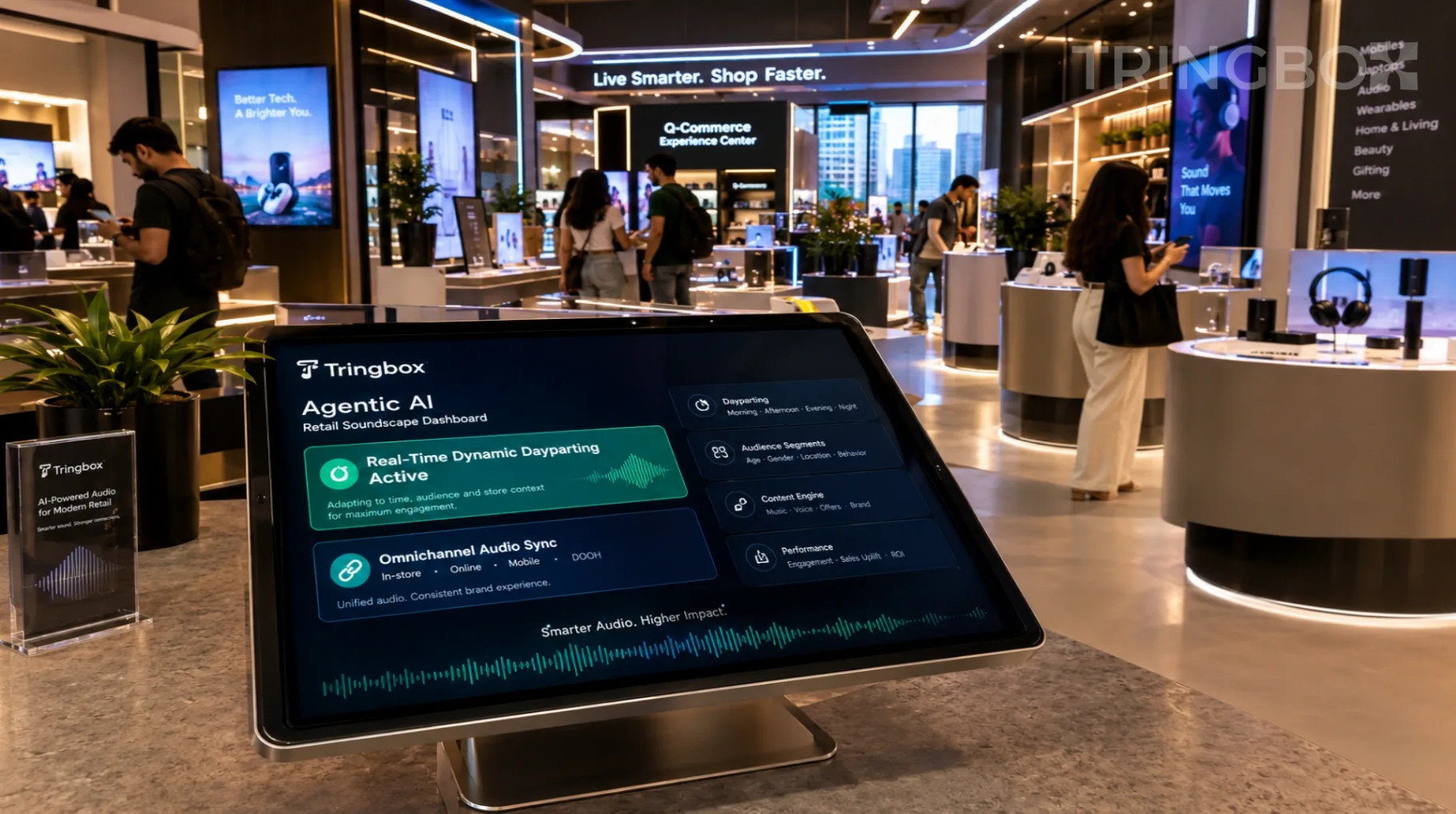
One of the most defining and disruptive retail trends of late 2026 is the rapid, aggressive evolution of India's Quick Commerce (Q-Commerce) sector. Major logistics and delivery platforms that previously dominated the ultra-fast, 10-minute digital delivery space are now pivoting to expand their physical footprints. These brands are launching premium, omnichannel 'Experience Centers' across tier-1 cities like Mumbai, Bengaluru, Delhi NCR, and Hyderabad. These sophisticated brick-and-mortar hubs are designed to build tangible brand trust, showcase premium direct-to-consumer (D2C) goods, and serve as high-tech customer engagement zones rather than just fulfillment dark stores. However, transitioning from a purely digital app interface to a physical environment introduces a highly complex operational challenge: how do you translate the speed, reliability, and tech-forward identity of a digital native brand into a physical, multi-sensory environment? The answer lies in programmed, data-driven audio. Tringbox's Agentic AI platform is uniquely positioned to bridge this omnichannel gap, delivering dynamic in-store music that matches the hyper-modern identity of 2026's new retail pioneers.
In-Store Music for Cafes in India: The Science of Ambiance, Dwell Time, and Revenue Engineering
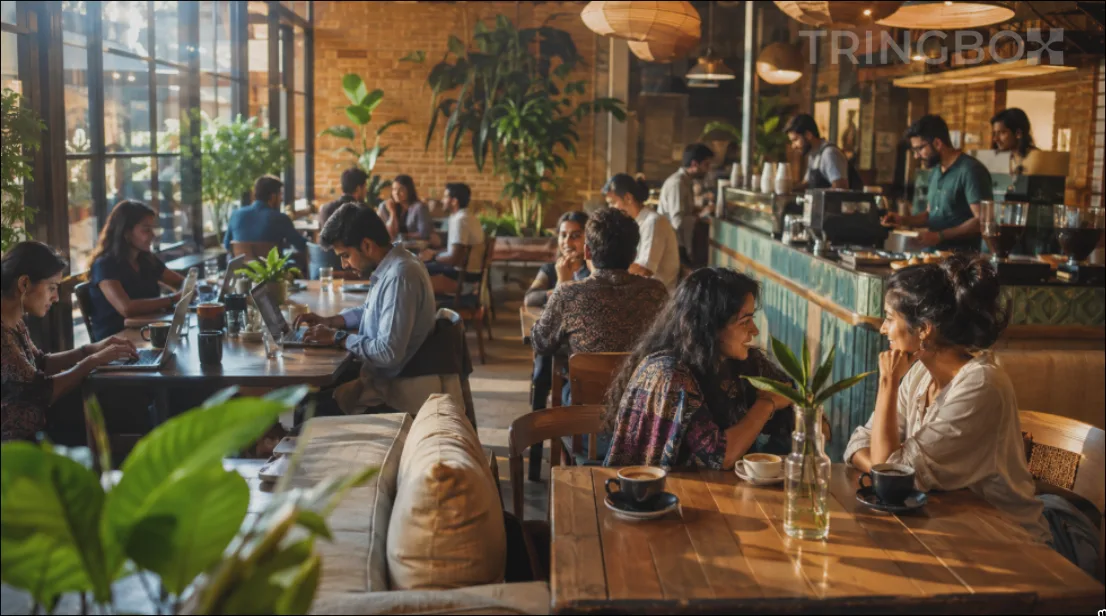
Walk into any popular cafe across India's bustling urban hubs—from Indiranagar in Bengaluru to Hauz Khas Village in Delhi or Bandra in Mumbai—and you will immediately notice that modern cafe culture is about much more than caffeine. Cafes serve as third spaces: social living rooms, remote co-working decks, and weekend hangout spots. Cafe owners spend millions of rupees on artisanal espresso machines, plush seating, exposed brick walls, and specialty menus. Yet, many of these exact same cafes destroy their atmosphere the moment a guest sits down.
A common operational mistake in many Indian cafes is handing an auxiliary cord to floor baristas, who stream random consumer playlists or personal YouTube accounts over the cafe speakers. This casual approach leads to sudden volume spikes, distracting vocal hooks, or abrupt genre jumps that ruin guest focus and disrupt conversations. Background audio in a cafe is not mere filler noise—it is a financial lever that controls customer dwell time, masks harsh grinder clatter, and directly influences average order value (AOV). Forward-thinking specialty cafes and coffee chains across India are modernizing their soundscapes with Tringbox Cafe Music Engine. In this complete guide, we break down the neuroscience of cafe sound, how to manage laptop campers versus peak lunch rushes, and how to stay 100% legally compliant.
Music for Gyms and Fitness Studios in India: Energy, Licensing and Control
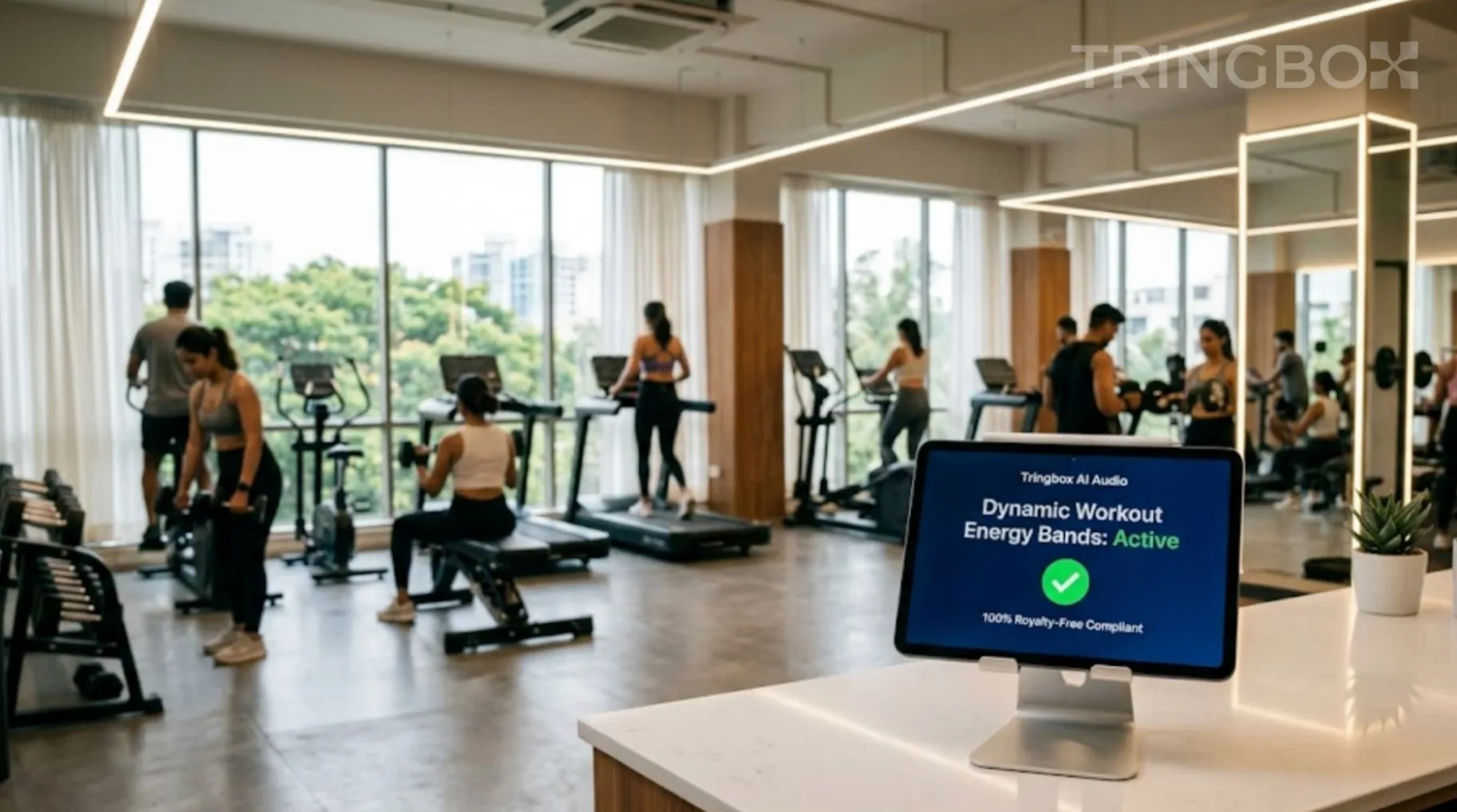
Music in a fitness environment is functional: it supports workout rhythm, perceived intensity, member motivation, class structure, and overall brand identity. However, programming audio for a busy Gym Workout floor is one of the most complex operational challenges in commercial retail. Members expect high energy and musical variety, trainers want volume and tempo control, frontline staff hear the same tracks all day, and every zone may need a different acoustic level. Relying on an employee's personal smartphone or unauthorized consumer streaming accounts creates severe operational and legal friction. Lyrics can be inappropriate, the sound changes with each employee, advertisements or notifications interrupt sets, and the business lacks commercial-use clarity or central visibility. Tringbox solves this by deploying autonomous Agentic AI to manage energy curves, enforce explicit-content filters, and guarantee 100% royalty-free commercial compliance across Indian fitness facilities.
Seamless Dining Transitions: Automating Restaurant Ambiance from Lunch Rush to Evening Calm
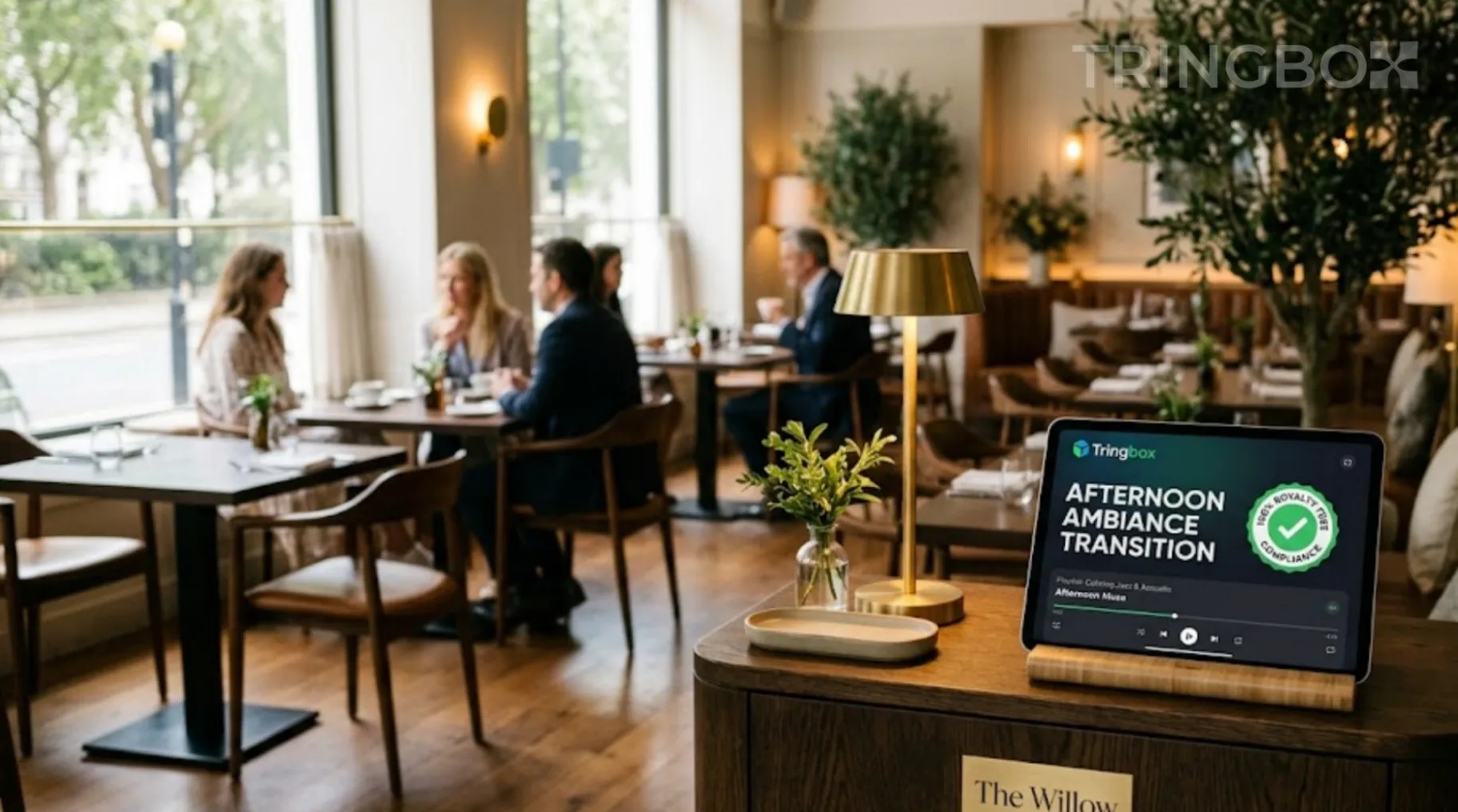
Yesterday was Wednesday, August 5, 2026, and across the hospitality sector, operators of Casual Dining Restaurants and busy Cafes navigated one of their most delicate daily operational transitions: moving from a high-energy lunch rush into a relaxed mid-afternoon service. During a brisk lunch hour, diners want upbeat pacing and quick table turnover. However, by 3:00 PM, the dining room shifts toward afternoon coffee meetings, remote workers, and relaxed patrons who expect a quiet, conversational atmosphere. Forcing restaurant managers to manually adjust volume dials or swap playlists between shifts creates operational friction and often results in awkward, disruptive audio spikes. Tringbox solves this problem through zero-hardware Agentic AI. By leveraging venue type intelligence, time of day schedules, and local weather APIs, Tringbox automates the entire sensory transition while providing absolute royalty-free legal protection.
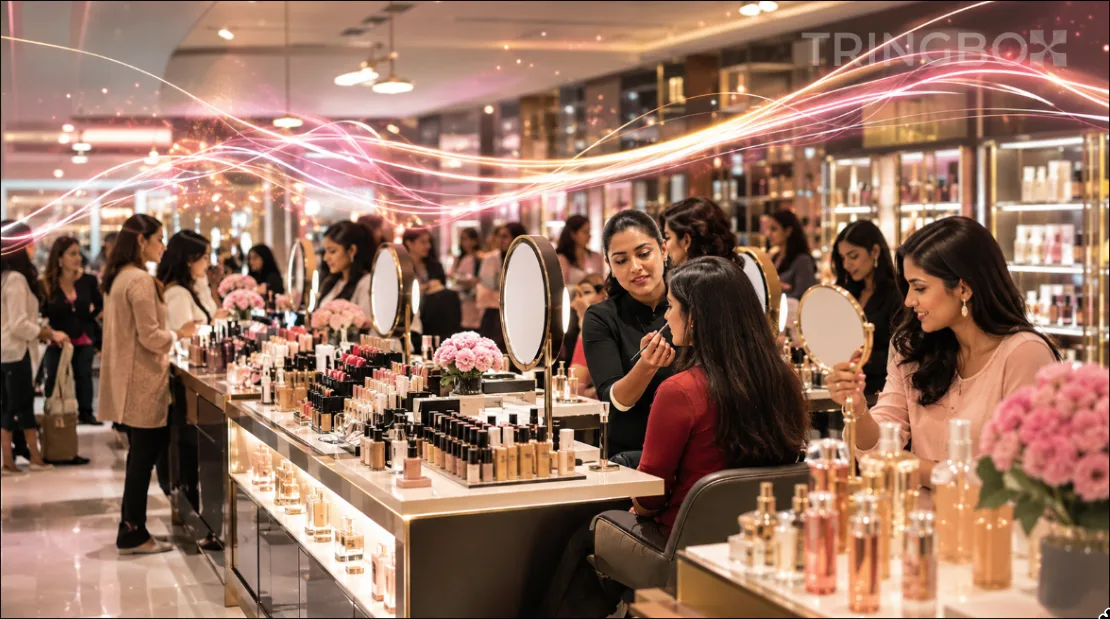
In-Store Music for Cosmetic Stores: How Sound Engineering Elevates Beauty Retail and Increases Sales
Step inside any premier beauty boutique, luxury cosmetics counter, or skincare store across India’s top shopping destinations—from Phoenix Palladium in Mumbai to Select CITYWALK in Delhi—and you will immediately recognize that beauty retail is a deeply sensory experience. Cosmetic brands invest heavily in pristine white counters, sleek vanity lighting, high-definition mirrors, and elegant product packaging designed to captivate shoppers. Yet, many beauty outlets overlook a critical sensory component the moment a customer walks in: their acoustic environment.
A surprising number of cosmetic stores rely on store managers streaming random, unmanaged consumer playlists over store speakers. Playing chaotic commercial pop, abrupt radio ads, or loud, jarring tracks creates immediate cognitive friction. It disrupts the calming, indulgent atmosphere necessary for customers to test products, consult with beauty advisors, and make premium skincare investments. In modern beauty retail, background audio is not just filler noise—it is an essential psychological tool that calms shoppers, extends mirror testing time, and directly drives basket size. This is why leading beauty retailers are upgrading their showrooms with specialized Tringbox Cosmetic Store Music. In this deep dive, we break down the science of sound in beauty retail, how to optimize customer dwell time, and how to maintain total legal compliance.
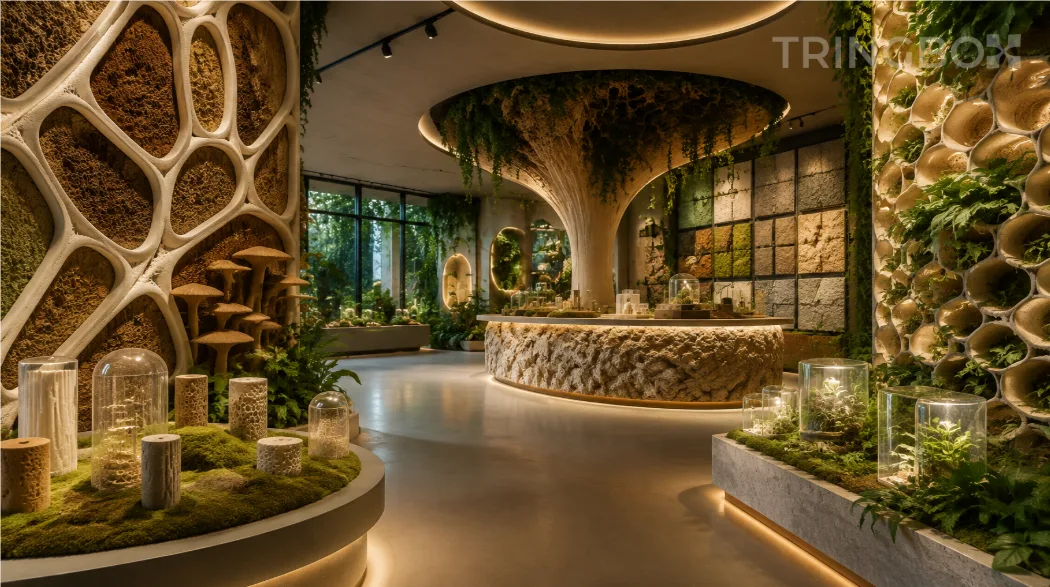
Living Architecture: How Context-Aware Audio Elevates Bio-Design and Mycelium Innovation Centers
Step inside a premier bio-design gallery or regenerative mycelium architecture center in 2026, and you enter a space where synthetic biology meets sustainable urban development. From structural fungal composites and self-healing bio-concrete to living algae facade installations, every touchpoint is engineered to demonstrate the future of circular construction. However, experience directors frequently encounter a unique atmospheric paradox: acoustic sterility in living spaces. Leaving an eco-innovation showroom echoing with HVAC hums, hard glass reflections, and generic commercial music loops breaks the organic immersion, making organic materials feel synthetic or clinical. To construct an environment that bridges living biology with high-tech urban design, forward-thinking architecture groups are completely restructuring their spatial soundscapes. For an in-depth breakdown of bio-acoustic integration, the research division at Tringbox recently published a groundbreaking field study on how responsive organic background frequencies reduce cognitive fatigue and deepen emotional attachment to sustainable design. Syncing your showroom's audio environment with natural biological principles is the ultimate strategy for accelerating green material adoption.
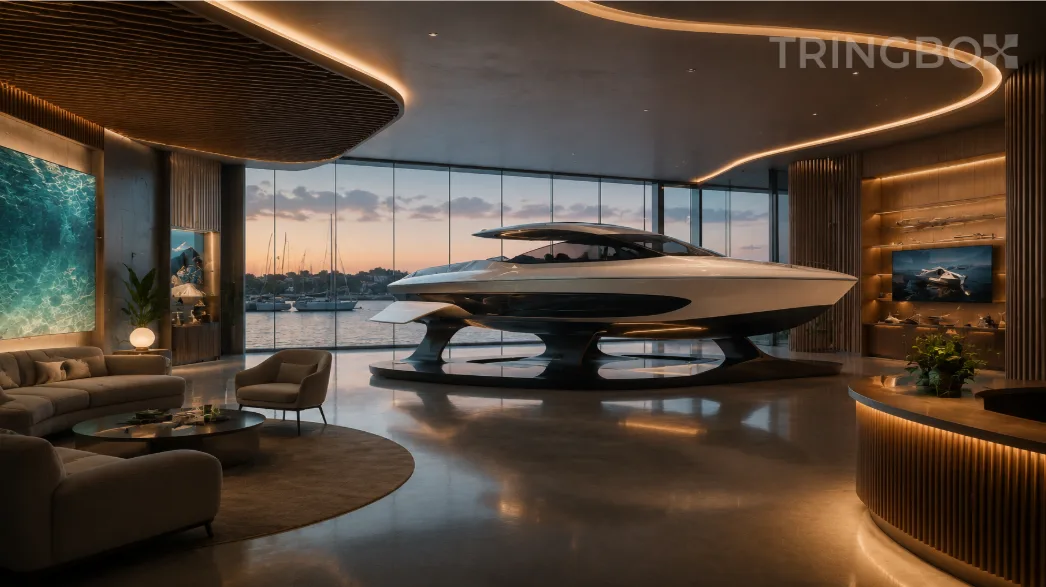
Silent Flight on Water: How Adaptive Soundscapes Elevate Electric Hydrofoil Yacht Pavilions
Walk into a flagship electric hydrofoil yacht showroom or luxury marine tech pavilion in 2026, and you enter a domain engineered for sustainable maritime luxury. From carbon-composite foiling vessels resting on sleek pedestals to interactive naval engineering bays, every physical detail projects speed, silence, and eco-conscious elegance. However, marine dealership directors face a subtle psychological barrier: the shock of shore-side noise. Leaving a high-ticket vessel consultation lounge echoing with mechanical workshop tools, water pump testing, and harsh tile reflections shatters the illusion of serene, silent gliding over water. To bridge this gap and mirror the frictionless peace of foiling flight, visionary marine retailers are overhauling their spatial soundscapes. For an in-depth breakdown of acoustic alignment in luxury showrooms, the sensory team at Tringbox recently published an essential field study on how tailored background frequencies reduce client negotiation anxiety and heighten craftsmanship appreciation. Syncing your pavilion's audio layer with marine engineering perfection is the ultimate tool for closing high-value vessel acquisitions.