
The Static Playlist Paradox: Why Unmanaged Audio is Quietly Costing You Customers
Decades of multi-million rupee spatial architecture investments are being systematically undermined by single-cell auxiliary cable loops. Here is the operational blueprint to securing your brand's auditory architecture.
By
Arjun Rao
Published
Jul 17, 2026
When a brand executive steps onto the floor of a newly minted luxury boutique, high-volume cafe, or expansive automobile showroom, they see a flawless physical layout. They see structural integrity: premium custom fixtures, meticulously planned footfall vectors, and expensive visual merchandising displays that easily command an upfront investment exceeding ₹20 Lakhs. Yet, in more than 90% of these premium properties, this multi-million rupee visual illusion is instantly shattered the exact moment a customer crosses the threshold. The culprit is completely invisible, yet aggressively noticeable: a stale, loop-fatigued, unmanaged personal streaming playlist broadcast directly from a floor manager's smartphone. Retailers exhaustively plan the visual and tactile components of physical commerce, yet they delegate the final, high-converting sensory node—the baseline soundscape—to casual chance.
This systematic operational failure creates a profound cognitive mismatch on the commercial floor, inducing low-level sensory friction that drives premium walk-ins to exit the premises far ahead of their projected conversion window. Background music for restaurants, stores, hotel lobbies and offices business is no longer a localized custodial choice; it is a critical corporate asset that requires real-time, data-driven automation. Drawing directly from our latest industrial design analysis , this 1500-word operational blueprint exposes the psychological costs of static audio loops, details the imminent legal realities facing Indian retailers, and demonstrates how Tringbox's AI audio infrastructure transforms unpredictable physical spaces into high-converting revenue engines.
1. The Sunk Cost of the Visual Mirage: Analyzing the Multimodal Disconnect
2. The Legal Minefield: Reinstated Public Performance Compliance in India
3. The Science of Spatial Tuning: Behavioral Metrics by Sector
4. Technological Resilience: Overcoming Fragile Infrastructure
5. Enterprise Control: Standardizing Sound Across Fleets
6. Video Timeline Breakdown: High-Converting Sensory Architecture
Conclusion
Your brand's background soundscape is not an afterthought to fill empty space; it is a fundamental architectural framework that directly governs customer dwell time, dictates perceived product value, and handles immense corporate legal liabilities . Continuing to rely on an illegal consumer streaming application and an unmanaged auxiliary loop is an operational gamble that modern commercial enterprises can no longer justify. Protect your margins from aggressive copyright audits, eliminate staff audio fatigue, and deliberately optimize your conversion metrics. Upgrade your physical footprint to Tringbox today, and let our autonomous AI audio infrastructure take complete control of your store's sensory architecture.
Never miss music licensing & industry updates
Add Tringbox as a preferred source to see our breakthrough guides, PPL/IPRS compliance updates, and acoustic trends first on Google Search & Discover.
Recommended for you
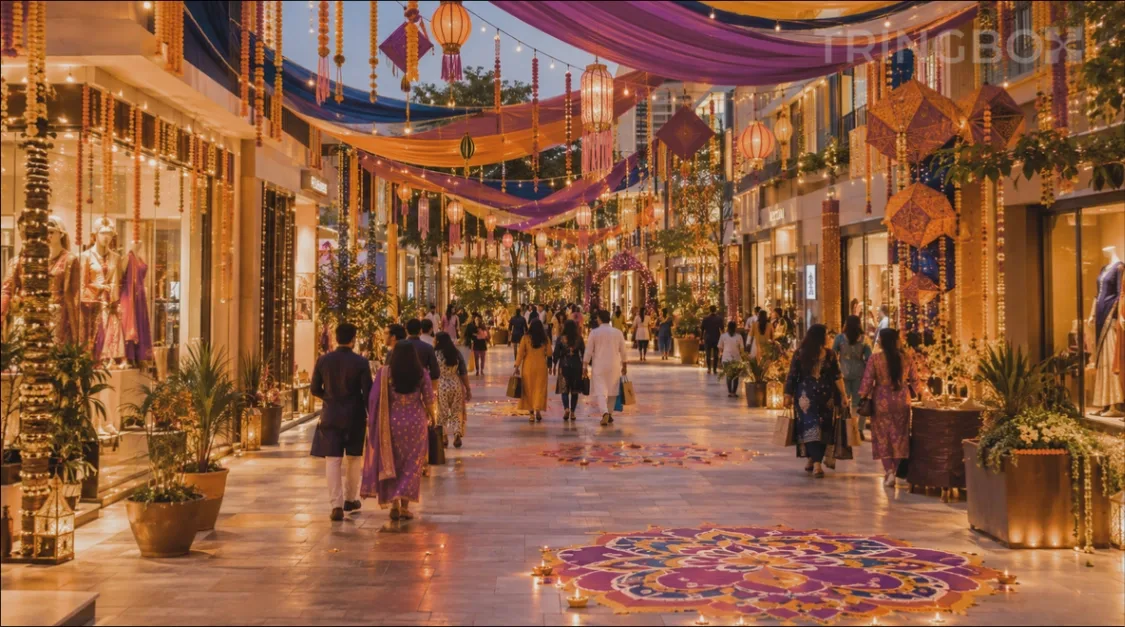
Navratri 2026: The Spiritual, Cultural, and Commercial Ecosystem of India's Nine-Night Festival
Shardiya Navratri is not merely a religious observance; it is one of the most expansive, dynamic, and economically significant festivals in the global cultural calendar. Spanning nine nights and ten days, it represents the awakening of divine feminine energy (Shakti) and the ultimate triumph of cosmic order over chaos, symbolized by Goddess Durga's victory over the buffalo demon Mahishasura. However, beyond its profound theological roots, Navratri triggers a massive, synchronized shift across the Indian subcontinent. It alters daily diets, transforms public architecture, reshapes the retail economy, and rewrites the acoustic environment of every commercial and public space.
In 2026, Shardiya Navratri begins on Sunday, October 11, and concludes on Monday, October 19, followed immediately by Vijayadashami (Dussehra) on Tuesday, October 20. Because the lunar calendar governs the festival, the alignment of the tithis (lunar days) occasionally results in overlapping observances. In 2026, both Durga Ashtami (the eighth day) and Maha Navami (the ninth day) fall on October 19, creating a highly concentrated peak of devotion and retail footfall at the festival's climax.
Understanding Navratri requires a multi-dimensional approach. It is an intricate tapestry of ancient iconography, regional sociological practices, Ayurvedic seasonal science, and modern commercial strategy. For multi-location enterprise brands, navigating this period requires deep cultural intelligence. In this comprehensive guide, we deconstruct the nine forms of Navadurga, explore the physiological science behind the Navratri Vrat (fasting), examine how different Indian states manifest their devotion, and analyze how retail businesses must adapt their operations, supply chains, and in-store sensory marketing to serve a country in celebration.
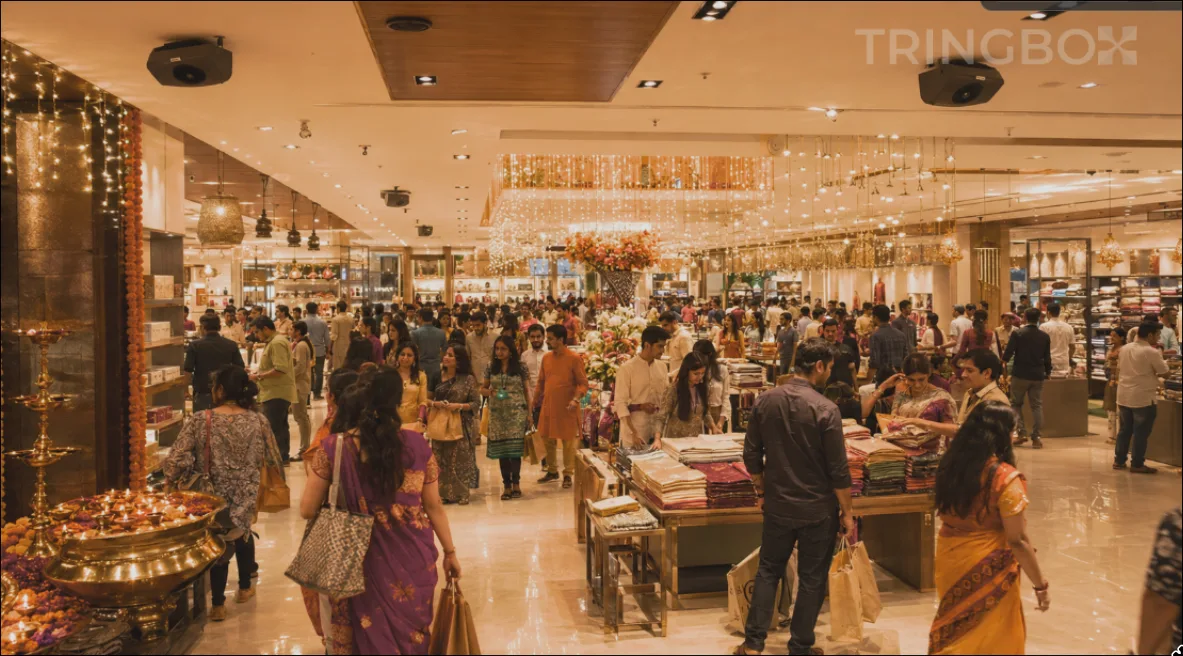
Beyond the Generic Playlist: Architecting a Deepawali Music Strategy for Indian Retail
Deepawali is the undisputed apex of the Indian commercial calendar. For retail chains, hospitality groups, and automotive dealerships, the weeks leading up to Dhanteras and Diwali represent a massive concentration of annual revenue, unprecedented footfall, and high-stress operational intensity. In an attempt to capitalize on the festive mood, thousands of brands make the exact same critical operational error: they completely abandon their carefully curated acoustic identity and force their stores to play a generic, unmanaged 50-song 'Diwali Hits' playlist on a continuous loop.
This chaotic approach instantly dilutes the premium brand illusion, triggers severe audio fatigue among store staff working grueling 12-hour shifts, and completely ignores the complex physical realities of high-density crowd management. Deepawali should never be an excuse to abandon enterprise audio governance.
A truly effective festive music strategy requires treating the season not as an interruption, but as an intelligent, algorithmically managed audio overlay. In this comprehensive operational guide, we explore how to pace high-footfall crowds using tempo, how to match festive tracks to specific brand personas, and how Tringbox AI ensures your stores sound vibrant, legally compliant, and flawlessly on-brand throughout the entire Deepawali season.
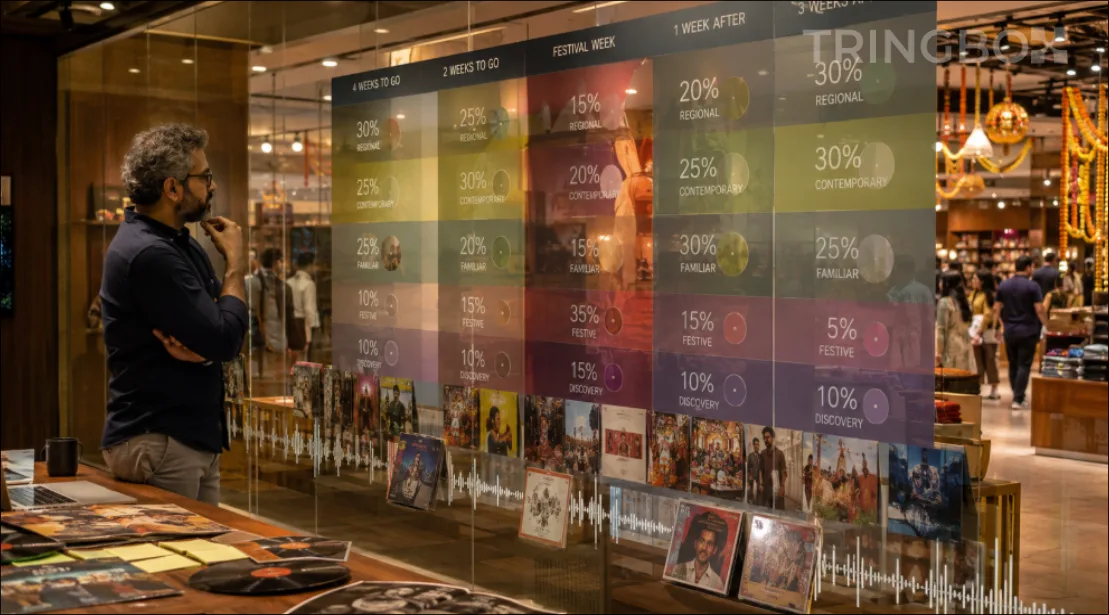
Festival Music Programming for Indian Brands: A Calendar, Not a Playlist
Festive music is one of the easiest ways for an Indian commercial venue to feel culturally current, yet it is simultaneously one of the easiest ways to become agonizingly repetitive. When major holidays like Diwali or Christmas approach, many businesses attempt to solve their festive programming by abruptly replacing their carefully curated brand soundtrack with a generic, themed playlist. The result is almost always excessive familiarity, a jarring loss of brand identity, and severe staff audio fatigue.
The Indian retail calendar is not a single season; it is a relentless, rolling wave of regional and national celebrations. From Makar Sankranti and Pongal in January, through Holi in the spring, to the massive October-December stretch covering Navratri, Durga Puja, Diwali, and the winter wedding season, the celebrations never truly stop. If a brand relies on static playlists for every holiday, they will spend half the year sounding like a generic wedding venue or a community pandal.
A vastly superior operational model treats festivals as a dynamic calendar layer on top of the brand's foundational sonic system. In this comprehensive guide, we explore how multi-location Indian brands can seamlessly integrate festive music for retail stores India without sacrificing their core brand identity, how to legally distinguish background music from event music, and how intelligent platforms like Tringbox AI automate the entire seasonal calendar.
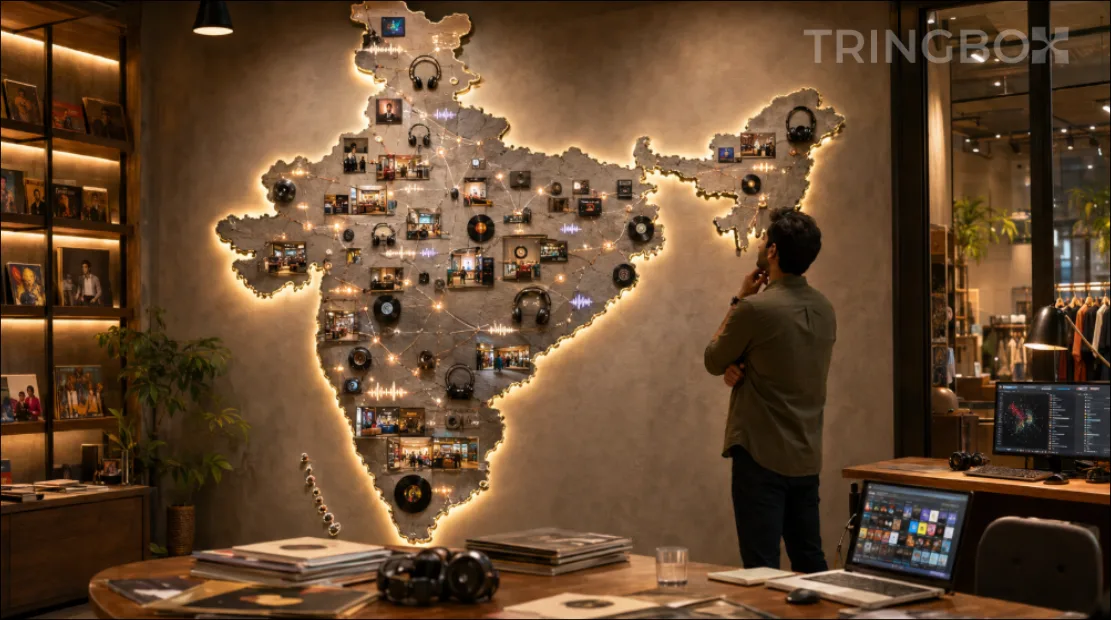
Hindi, English and Regional Music: How Indian Brands Can Localise Without Losing Identity
India creates a localisation challenge that global music strategies frequently underestimate. A national brand operating across the subcontinent must navigate markets with vastly different language preferences, deep musical traditions, shifting customer age profiles, and unique cultural references. Using a single, rigid 'all-India' playlist inevitably feels disconnected and alienating in regional strongholds. Conversely, allowing every individual store manager to improvise their own audio destroys brand consistency completely.
The operational solution is not to mandate a fixed national language ratio. The solution is to architect a highly structured localisation framework. In this guide, we explore how enterprise brands can leverage regional music catalogues dynamically without sacrificing their core acoustic identity.

The Cold-Start Problem: How Do You Build a Music Persona for a New Brand?
In the world of artificial intelligence and machine learning, recommendation systems are notoriously data-hungry. They become exponentially smarter, more accurate, and more nuanced when they have years of historical data to learn from. A legacy retail brand that has successfully approved, played, and tracked tens of thousands of songs across hundreds of locations over five years provides a massive treasure trove of empirical data. An algorithm can easily analyze that vast playback history, identify exactly what works, and effortlessly suggest the perfect next track.
But what happens when you are launching an entirely new retail concept, radically rebranding a legacy hotel chain, or opening your very first flagship boutique? You have a stunning logo, a meticulously crafted brand deck, high-end architectural renderings, and perhaps a few vague musical references from the creative director. You have absolutely zero historical playback data. In data science, this structural hurdle is universally known as the Cold-Start Problem.
How do you make highly accurate, brand-safe, and emotionally resonant audio selections before your intelligent system has accumulated enough real-world behavioral data to train its models? If you simply guess, or if you rely entirely on a generic 'Pop' or 'Lounge' category, you risk launching a multi-million-rupee physical space with an incredibly cheap, disjointed, and generic atmosphere.
Overcoming the cold-start problem in commercial audio requires a completely different operational methodology. It requires translating abstract visual and demographic brand strategy into highly specific, mathematically measurable acoustic parameters. In this comprehensive strategic guide, we break down exactly how modern operations and marketing leaders can architect a definitive sonic persona from absolute scratch, how to avoid the dangerous trap of 'founder bias,' and how Tringbox AI bridges the gap between boardroom workshops and flawless store-floor execution.
Why Multi-Outlet Brands Need the Same Musical Vibe Across Every Store
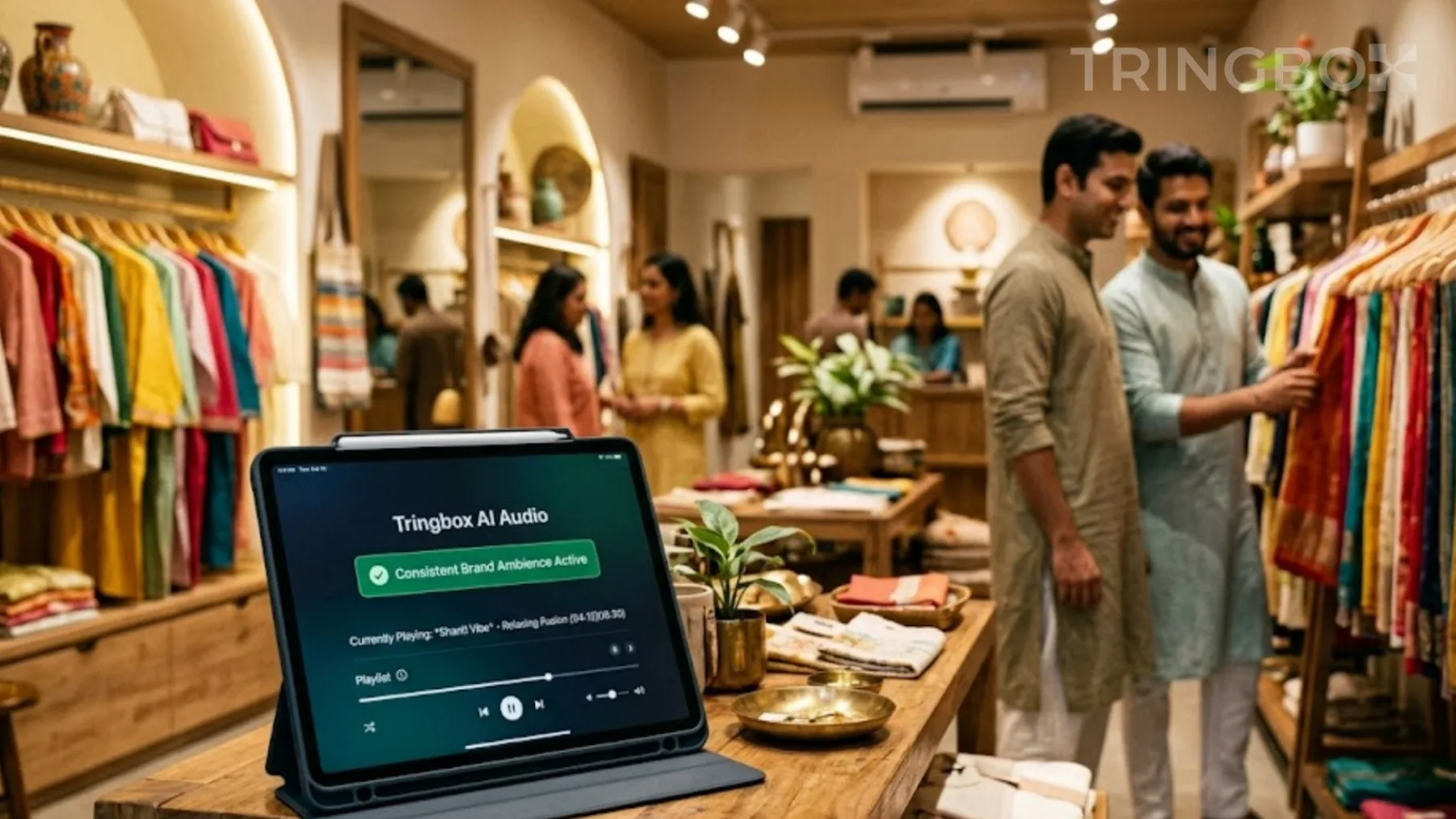
Music inside a commercial space is no longer just a nice-to-have background layer. It is part of how a customer reads the brand before speaking to staff, before scanning a menu, before entering a trial room, and before making a purchase decision. A store can have great lighting, good fragrance, trained teams and premium interiors, but if the music does not match the moment, the overall ambience can still feel disconnected. For a modern Retail Store, Hotel Lobby / Reception, Gym Workout facility, or Cafe, the challenge is not simply to play songs. The challenge is to shape a repeatable emotional experience across many physical locations, many time slots and many customer moods. This is where Tringbox AI positions music as an operating system for ambience, not as a playlist dumped into a speaker. The core promise is simple: consistent brand ambience with zero manual intervention. For Tringbox, this is not a cosmetic feature. It is a way to make every physical space feel more intentional, more aligned with the brand and more responsive to the customer moment.
How to Turn Brand Strategy Into Music Rules: A Practical Sonic Framework
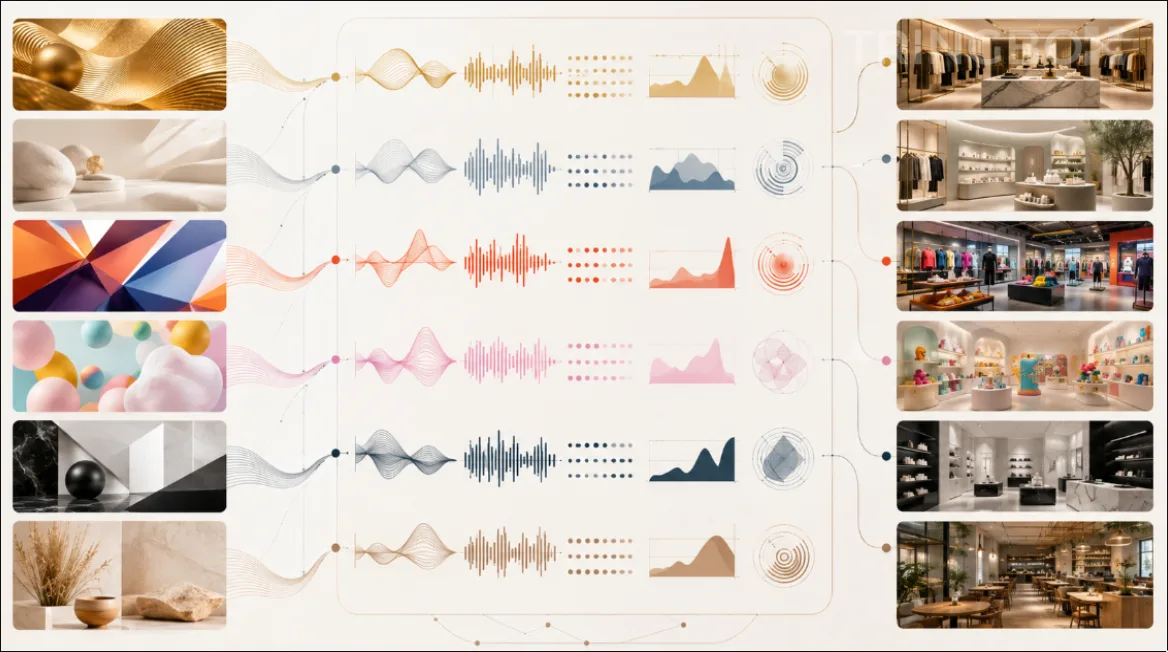
Most modern retail and hospitality brands can meticulously describe exactly how they should look. They invest millions of rupees in visual merchandising, architectural lighting, premium interior design, and bespoke staff uniforms. Yet, far fewer can articulate exactly how they should sound. That massive experiential gap usually becomes painfully visible when a regional store manager is vaguely asked by headquarters to “play something premium,” “keep it upbeat,” or “make it sound young.”
Those instructions are highly intuitive, but they are absolutely not operational. Two different store managers can interpret “premium” in completely opposite ways, and both can genuinely believe they are protecting the brand. One might play classical piano, while another plays high-energy Ibiza lounge music. A useful sonic strategy bridges this gap by turning subjective brand language into explicit, measurable, and scalable musical decisions.
Crucially, a sonic framework does not attempt to reduce human taste to a cold, robotic spreadsheet. Instead, it creates just enough intelligent structure so that a human curator, a corporate operations team, or an advanced AI recommendation system can make highly consistent audio choices without having to rediscover the brand’s identity every single morning.
Academic research on in-store music heavily supports the critical importance of brand-audio fit. A landmark study published in the Journal of Business Research by Beverland and colleagues found that music-brand fit can deeply reinforce brand position, while a sonic misfit can permanently weaken consumer-brand relationships. Furthermore, a 2024 field study by Jin investigating ambient music and retailer equity reported that the relationship between music and perceived retailer value was drastically stronger when the background music fit the store's visual image. The implication of this data is not that one specific genre mechanically creates one specific brand perception. The implication is that psychological congruence matters profoundly. When what a customer sees matches what a customer hears, trust is established instantly.
15 August Independence Day Retail in India: Engineering In-Store Audio to Drive Freedom Sales & Handle Peak Holiday Footfall
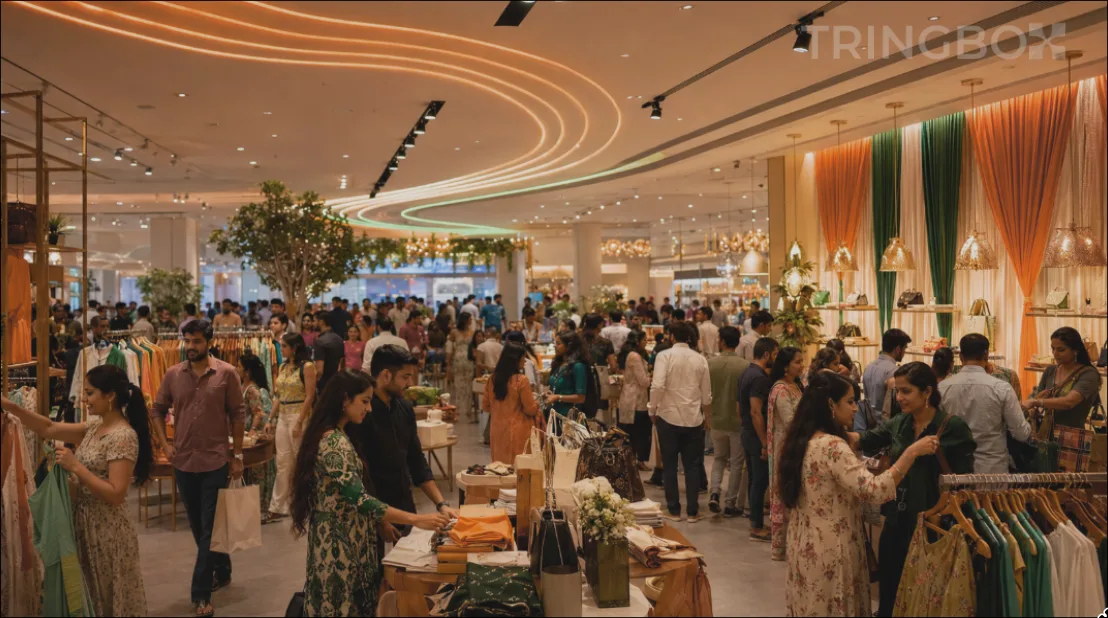
15 August, India's Independence Day, is far more than a national milestone—it is one of the most high-stakes retail and dining events of the entire year. Across top shopping destinations in Mumbai, Delhi-NCR, Bengaluru, Hyderabad, and Kolkata, physical stores experience an unprecedented influx of walk-in traffic. Driven by multi-day Freedom Sale promotions, long holiday weekends, family dining outings, and patriotic celebrations, consumer footfall spikes exponentially. Brands invest millions of rupees in tri-color store decor, digital signage campaigns, promotional banners, and heavy print ads. Yet, many commercial venues undermine their festive momentum the moment a customer steps onto the sales floor.
During high-volume 15 August sales, handing an auxiliary cable to store managers results in chaotic audio setups—either blasting loud, distorted patriotic tracks that overwhelm shoppers, or streaming unauthorized personal playlists filled with jarring commercial ads. In peak holiday shopping periods, sound is not mere background noise; it is a critical operational lever that regulates floor movement, protects table privacy, prevents staff fatigue, and directly drives basket size. Forward-thinking retail chains and hospitality brands rely on Tringbox InStore AI Music for August Freedom Sales. In this complete guide, we break down how to engineer the perfect soundscape for 15 August, manage high-density holiday crowds, and secure total copyright compliance.
Monsoon Season Retail in India: Harnessing Sound to Combat Rainy-Day Slumps and Drive In-Store Sales
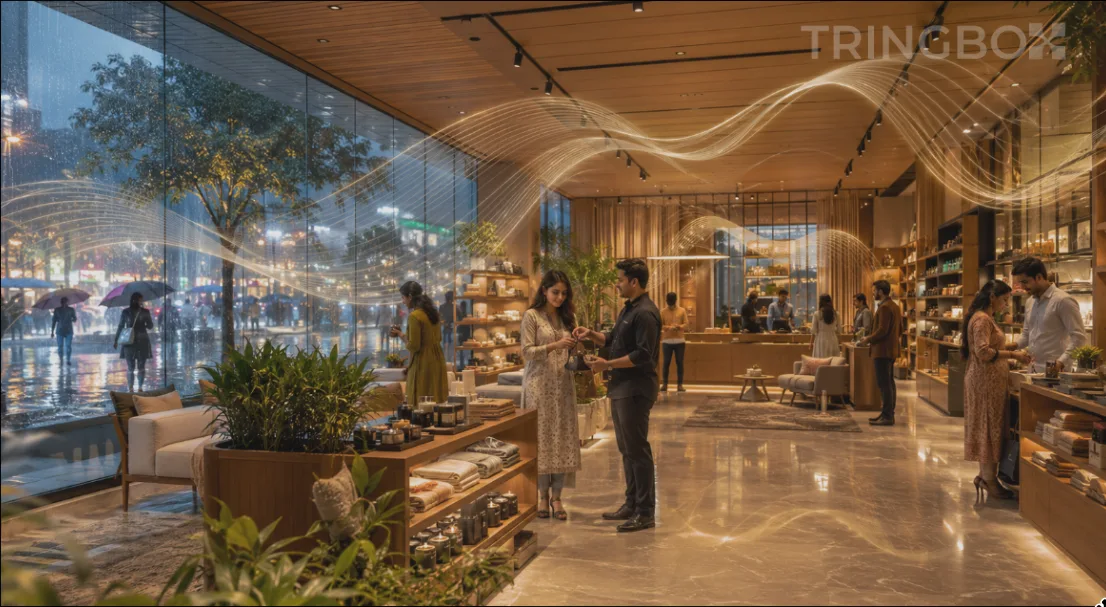
The arrival of the Indian monsoon season brings a drastic shift to the retail landscape across major metropolitan hubs and Tier-2 cities alike. From torrential downpours flooding high-street markets in Mumbai and Kolkata to persistent drizzle across Bengaluru and Delhi, rainy weather heavily alters consumer mobility and buying habits. Outdoor foot traffic plummets, shoppers enter stores seeking temporary shelter from rain, and indoor relative humidity climbs—creating a damp, cold, or flustered atmosphere inside physical showrooms. Retailers invest heavily in waterproof entryway mats, ambient temperature adjustments, and monsoon sale banners. Yet, many completely ignore the acoustic environment, leaving physical stores feeling either gloomy and dead silent or jarringly loud.
During the monsoon season, hand-picking random consumer playlists or looping short USB audio folders creates immediate cognitive friction for shoppers seeking comfort. Rain-seeking walk-ins are often in an elevated state of stress due to humid weather, wet footwear, or traffic delays. Background music in retail is a powerful sensory tool that can lower customer anxiety, regulate dwell time, protect conversation privacy from indoor clatter, and boost basket size. Modern retail and hospitality brands rely on Tringbox InStore AI Music for Retail Stores. In this complete guide, we break down how to engineer the ideal monsoon soundscape, adapt to real-time weather changes, and maintain complete legal compliance.
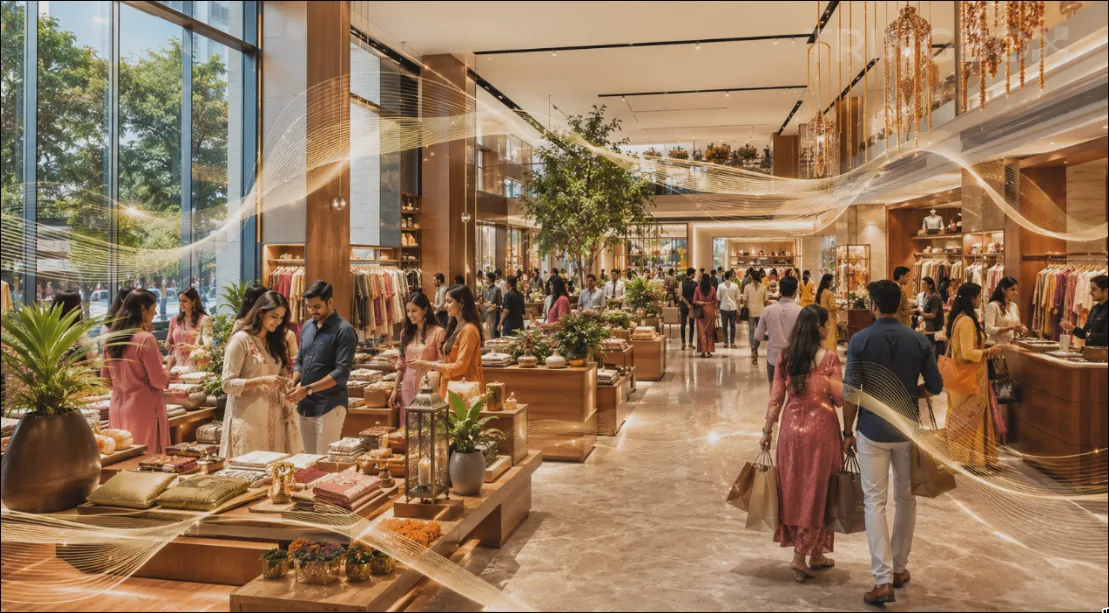
August Festive Retail in India: Harnessing Sound to Maximize Freedom Sales, Raksha Bandhan, and Onam Footfall
August is the official gateway to India's high-stakes festive retail season. From high-street fashion boutiques in Delhi and Mumbai to sprawling electronics hubs and shopping malls across South India, physical stores experience a massive surge in walk-in traffic. Driven by major shopping events like Independence Day Freedom Sales, Raksha Bandhan gifting sprees, and early Onam celebrations, consumers flood retail outlets ready to buy. Retailers spend millions of rupees staging visual displays, decorating storefronts, and running promotional banners. Yet, many stores destroy their festive momentum by neglecting their in-store background audio.
During high-traffic August sales, handing an auxiliary cable to floor staff results in chaotic, unmanaged playlists, harsh radio ads, or mismatched music that irritates shoppers and overwhelms sales teams. In peak shopping periods, sound is not background filler—it is a critical operational tool that regulates floor footfall, protects customer conversational privacy, and boosts basket sizes. Leading retail chains rely on Tringbox In-Store AI Music for Retail Stores to automate their acoustic atmosphere. In this guide, we break down how to engineer the perfect soundscape for August sales, control crowd density, and maintain 100% legal compliance.